




Technology Helps Flatbed Carrier Grow
JLE Industries’ goal is “to be the nation’s premier flatbed carrier.” The Pennsylvania-based company has grown from 15 trucks to 350 in just four years and has big plans for more growth this year and into next.

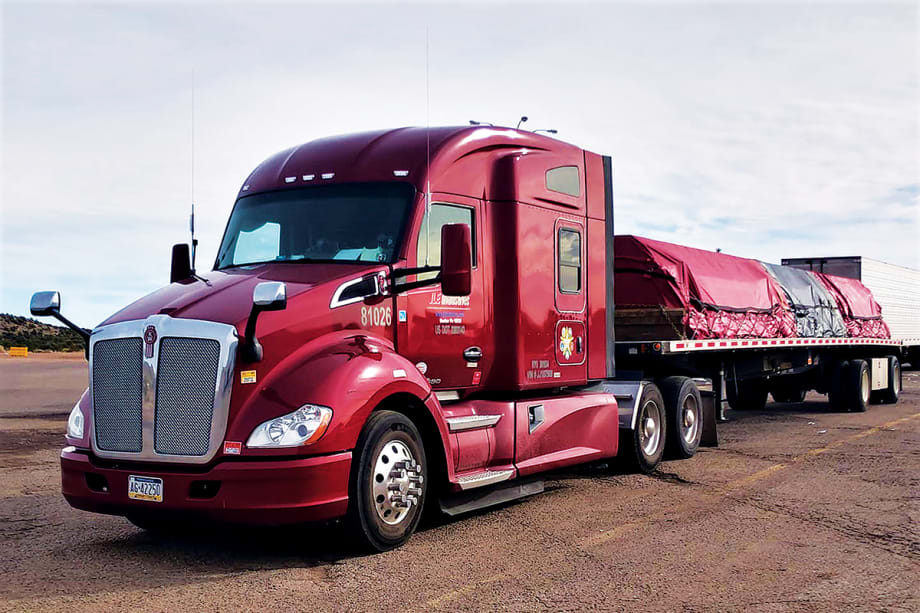
JLE Industries is on its way to reaching its goal of becoming the nation’s premier flatbed carrier though the use of computer technology, which it has done by developing its own software.
Photo: JLE Industries
JLE Industries’ goal is “to be the nation’s premier flatbed carrier.” The Pennsylvania-based company has grown from 15 trucks to 350 in just four years and has big plans for more growth this year and into next.
A key to this growth has been the use of computer technology. Tim Tran, VP of technology, leads an internal IT team that has built its own software to help alleviate a lot of pains for employees, customers, and drivers.
Centralizing the company’s data and automating redundant and mundane processes, he explains, allows the company “to focus on the two most important things: our drivers and our customers.” Employees are able to make better decisions. “People can only make a certain amount of decisions before their mind gets tired; I’m trying to alleviate a lot of those small decisions.”
One example is live ETA (estimated time of arrival.) Traditionally, it’s a hassle for driver managers to really understand a driver’s ETA, as they jump between mobile communications platforms, electronic logging devices, their TMW transportation management system, and so forth.
“All that time gathering that data and calculating that takes a lot of time, decisions, and analytics in the person’s mind,” Tran says. “Our system pulls all that data …. and it tells them what the driver should be doing and if he’ll be late or on time. The system will tell them why he will be on time or late, and [they] can adjust accordingly.”
Technology also allows JLE to understand its drivers “to a tee,” Tran says. It has a customer relationship system for drivers, much like salespeople have for customers and prospects. Safety scores, on-time scores, paycheck information, where they like to stop, and so on, is all at the fingertips of driver managers, the safety department, and others. It can recommend which loads might be the best match for a particular driver, which helps with retention.
“Not just from an operations standpoint, but every department, to understand our drivers to such an analytical detail, so we can give him or her advice on what they can do better to improve themselves,” Tran says.
Technology is also allowing JLE to streamline its interactions with customers. “The biggest thorn I see at trucking companies is everybody has to build orders,” he says. Many of JLE’s customers are small and not high tech. “They don’t have the structure or systems to be able to use EDI [electronic data interchange], unlike the big companies like Home Depot or Lowe’s,” he says.
Orders were being handled with emails and PDFs. So JLE worked with Vector Software, which digitizes paperwork to make fleets more efficient.
“Our customers that did not have the ability for EDI, which takes software and employees to integrate, we basically built that for them on our end without them even knowing it,” Tran says. “It allows them to process the loads a lot faster. The customer will forward us a rate con[tract], we send it to Vector, their [optical character recognition] process converts that information to an EDI tender, sends the EDI tender to our system, and we accept the load and it automatically builds into our system.”
The next phase, which JLE is in the first stages of, will allow the comparison of the information from when the order was built to what the driver is picking up to make sure it’s correct. “If the load isn’t the same as what was contracted and the driver scans it in and it doesn’t match, that triggers the load planner that something is incorrect.”
Leveraging technology like this is allowing the company to grow, Tran says. “Employees are able to do more work with less error, that’s really a key thing… now they have more time to be more efficient and productive somewhere else.”
More Fleet Management

Color Match Smarter: Tools That Restore & Perform
For fleet managers and collision repair professionals keeping heavy-duty trucks on the road, getting the color right the first time isn't just about appearance — it's about efficiency, turnaround time, and bottom-line results. Discover how today's digital color tools are transforming the repair process from guesswork to precision.
Read More →
FMCSA Pauses Biennial-Update Enforcement Amid Motus Transition
Carriers whose updates were due on or after June 1 have more time, while FMCSA works to stabilize its new registration system and warns of phishing sites impersonating its new carrier registration system, Motus.
Read More →
2026 Blueprint for Countering Smarter Supply Chain Theft
Cargo theft is no longer just the cost of doing business. It's a multi-billion-dollar criminal enterprise exploiting vulnerabilities across your fleet, drivers, and supply chain.
Read More →


How Telematics Improves Visibility, Control, and Performance in Refrigerated Fleets
Explore how telematics help refrigerated fleets improve visibility, uptime, efficiency, compliance, and cargo protection across connected cold chain operations.
Read More →
What the U.S.-Canada Trade War Means for Trucking
Escalating U.S.-Canada tariffs could disrupt cross-border freight, reduce truck volumes, raise costs, and create new uncertainty for carriers on both sides of the border.
Read More →
What Are Trucking’s Top Concerns for 2026?
The American Transportation Research Institute wants to know what's worrying trucking fleet managers, drivers, and other stakeholders in its annual Industry Issues survey.
Read More →
American Trucking Associations Looks for a New Leader
ATA President and CEO Chris Spear abruptly left his job at the association on August 21, at a pivotal time for the trucking industry.
Read More →
Public Wi-Fi Cybersecurity Risks: How Truck Drivers and Fleets Can Protect Their Data
Public Wi-Fi can expose truck drivers and fleets to credential theft, malware, and other cyber threats. Here’s how to reduce the risk on the road.
Read More →
For Nicky Cupp, Fleet Innovation Starts With Frustration
HDT Truck Fleet Innovator Nicky Cupp turns everyday pain points at Fraley & Schilling into opportunities for better technology and smarter processes.
Read More →
Adam Buttgenbach’s Approach to Electric Trucks: Start With Where They Fit
HDT Truck Fleet Innovator Adam Buttgenbach helped PepsiCo build one of North America’s largest EV fleets by focusing on where electric trucks make operational sense.
Read More →