



Fleet Snapshot
Who:Indeca Crude Xpress
Where: Midland, Texas
Fleet: 70 trucks
Operations: Private crude hauling
Fun Fact: Won Shell’s Goal Zero safety award four times
Challenge: Operating in a region with high crash and fatalities rates
 MENU
MENU SEARCH
Truck traffic in the Permian Basin has exploded as crude oil transport and fracking activities expand. See how Indeca Crude Xpress is keeping its tanker fleet as safe as it can in the congested, harsh environment.
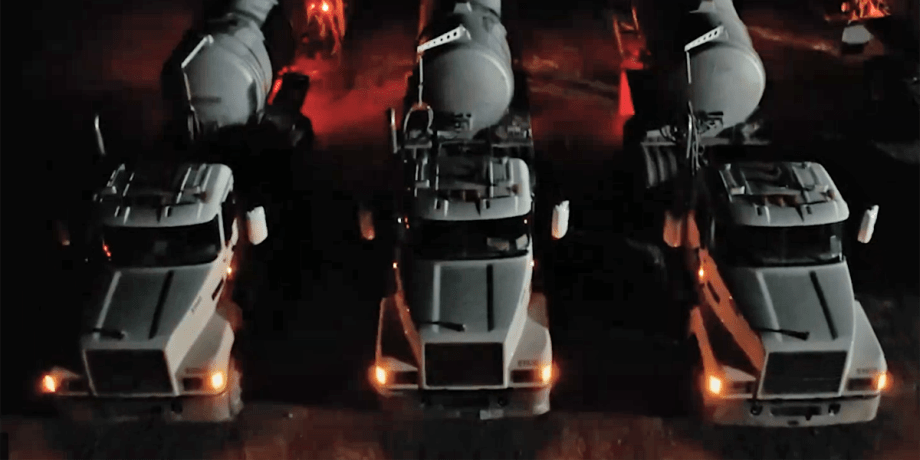
Indeca Crude Xpress is in the process of implementing enhanced hazard flash patterns on all 70 units to increase the visibility of disabled trucks.
Photo: Emergency Safety Solutions
Truck traffic in the Permian Basin has exploded in recent years as crude oil is transported to Gulf Coast refineries in Texas and fracking activities have expanded. Yet the road infrastructure has largely stayed the same.
Steve Williamson, CEO of privately owned and operated crude oil hauler Indeca Crude Xpress, which operates in the West Texas and Southeastern New Mexico areas of the basin, says the roads were simply not designed for the current level of use. That’s reflected in the increased congestion, and the subsequent high crash and fatality rates in the region.
With his trucks operating in traffic-heavy, active areas, and drivers inevitably finding themselves in vulnerable positions along the road, Indeca’s Williamson became an early adopter of safety technologies on his tankers to help maintain his safety record. The fleet is equipped with inward and outward dash cameras, backup cameras, and was the first commercial truck fleet to apply Emergency Safety Solutions’ hazard avoidance technology.
Like the lack of expansion of the road infrastructure in the Permian Basin, Williamson says for many years there has been virtually no meaningful changes or advancements around visual aid technology for disabled vehicles. When trucks need to pull over, they have cones, triangles and slow blinking lights as their only defense mechanism. In this area, Williamson says more needs to be done because vehicles often zip past disabled trucks at 70 miles an hour within 6 to 10 inches of the truck.
“One of the biggest challenges is that we’re hauling hazmat…we’re hauling a ‘bomb.’ We’ve got 175 barrels of bomb behind us. And I’m going to tell you, the last thing you need is a vehicle to hit that trailer from behind — it’s like a fuse. So, for us, [safety] is of utmost importance,” Williamson says.
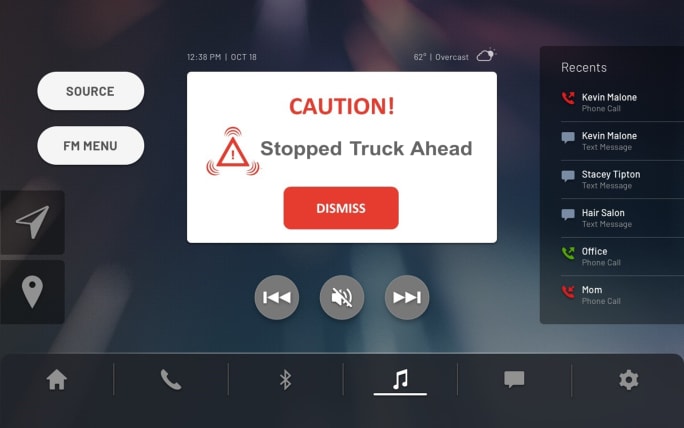
A screen capture of what would appear on the in-vehicle screen unit of an upcoming driver as they approach a truck with DeliverSAFE activated.
Graphic: Emergency Safety Solutions
In the dusty, low-visibility environment of an oil field, the standard defenses aren’t enough. At least not for Williamson, who prides himself on Indeca’s proactive safety efforts.
That’s why Indeca was the first commercial truck application to pilot ESS’ hazard avoidance technology, Hazard Enhanced Location Protocol DeliverSAFE, or H.E.L.P. for short. The technology notifies upcoming motorists of disabled or shouldered vehicles through digital alerts sent to incoming drivers through their in-vehicle dashboard displays and GPS mapping apps. H.E.L.P. DeliverSAFE also includes an enhanced hazard flash pattern to grab the attention of oncoming drivers and prompt them to slow down and move over a lane.

When H.E.L.P. DeliverSAFE is activated enhanced hazard flash patterns grab the attention of oncoming drivers.
Photo: Emergency Safety Solutions
Indeca is in the process of implementing it on all 70 trucks.
“[H.E.L.P.] goes a long way in mitigating these deadly rear end collisions, first by making the stranded vehicle visible at a long distance. Second, is the digital alert within the navigation of vehicles,” Williamson said.
Indeca pairs the ESS technology with its rear-side cameras to better understand incidents. The company began experimenting with cameras as early as 2010, when the technology wasn’t as prevalent in the trucking industry as it is today. Now, all the company’s tankers are equipped with Lytx Artificial Intelligence cameras on three positions of the truck. He says that technology has done more for the safety of the driver than anything they’ve implemented since the fleet’s inception.
However, having cameras faced on the back field view can often be a point of contention for some drivers in this application since their work area is the side of the truck.
“That’s an area of intense work that you have to do safely,” he says. Drivers are required to follow rules — such as staying near the hose, wearing hard hats, monitoring hydrogen sulfide levels, etc. And with Lytx AI, those standards can be closely monitored.
As with most monitoring technology, it can feel invasive to a driver at first, he says.
“Over time, what the driver learns is it’s for their benefit; it actually does help save their lives or keep their lives safe, and you eventually get a buy-in,” Williamson says.
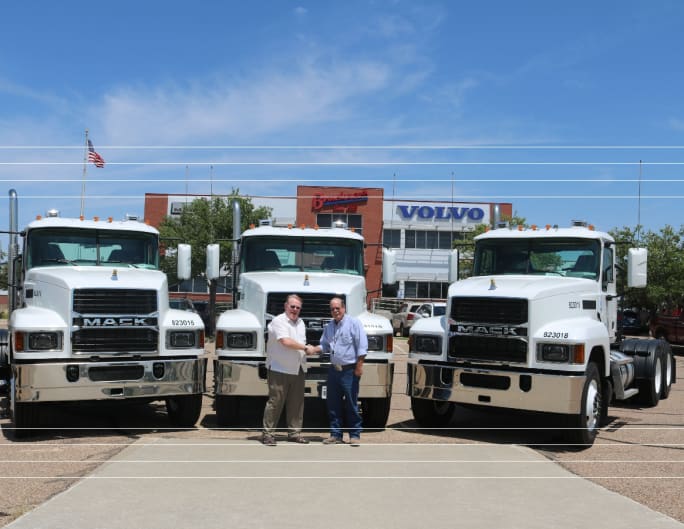
The fleet accepted delivery of seven 2023 Mack trucks from Bruckner Mack in Amarillo, Texas.
Photo: Indeca Crude Xpress
Williamson says cameras have led to a drastic improvement in driver behavior and safety. He feels so strongly about the benefit of cameras that he believes every commercial piece of equipment in the country should have one.
This article was published in the October 2022 issue of Heavy Duty Trucking.

Volvo’s updated D13 promises lower emissions without sacrificing performance or fuel economy. Take a closer look at what changed inside the engine in this HDT Spotlight video.
Read More →
The Michelin X Multi Energy D2 is a regional haul drive tire engineered to help fleets improve fuel efficiency, durability and traction in demanding stop-and-go operations.
Read More →
ZF is expanding its North American commercial-vehicle presence with new transmission applications, electrification, trailer technology and autonomous-driving systems.
Read More →
Could Tesla’s camera-only autonomous driving technology work on an 80,000-pound Semi? In this commentary, HDT's Deborah Lockridge takes a look at Tesla, Cybercab, and how autonomous trucks see the road.
Read More →
Kodiak AI says its driverless long-haul safety case is 93% complete and it remains on track to begin commercial operations by year-end 2026.
Read More →
The U.S. Department of Transportation issued a new automated-vehicle strategy that outlines plans for driverless-truck regulations, cross-state freight corridors, and federal safety standards.
Read More →
The Port Authority of New York and New Jersey announced millions in incentives for zero-emission drayage trucks, yard tractors, and new charging hubs near the port.
Read More →
A SPAC deal could provide PlusAI with up to $300 million as it works toward a 2027 commercial launch of factory-built autonomous trucks.
Read More →
The National Highway Traffic Safety Administration says it lacks authority to regulate medium- and heavy-duty truck engines separately from complete vehicles, but the existing standards have not yet been eliminated.
Read More →
Detroit isn’t starting from scratch to meet EPA 2027 diesel emissions standards. Its Gen 6 DD13 and DD15 engines keep much of today’s platform while updating the fuel and aftertreatment systems.
Read More →