




Taking a Look at the Natural Gas Boom
When you've got everyone from oil tycoon T. Boone Pickens to the head of America's largest truckload fleet to President Obama himself stumping for natural-gas-powered trucks, it's easy to see why there's so much interest in this less-expensive, home-grown alternative to $4-a-gallon diesel

When you've got everyone from oil tycoon T. Boone Pickens to the head of America's largest truckload fleet to President Obama himself stumping for natural-gas-powered trucks, it's easy to see why there's so much interest in this less-expensive, home-grown alternative to $4-a-gallon diesel.
It was quite evident at the Mid-America Trucking Show in Louisville, Ky., in late March. Nearly every press conference and presentation, it seemed, at least mentioned natural gas, as you'll see reflected in this issue's Equipment Report. Navistar even had Pickens himself on hand.
At the MATS Fleet Forum, Sandeep Kar, of research firm Frost & Sullivan, noted that in a survey of 100 fleet managers, 56% of respondents were interested in natural gas. Two years ago, only 22% were.
However, 31% said natural gas was "not at all important" to them. Nearly a third said they would not consider it at all.
Is natural gas being a bit too hyped? It's still a niche market, especially for Class 6-8 (unless you're looking at trash trucks, where natural gas fueled 40% of the trucks purchased in 2011).
One barrier is price. Frost & Sullivan says the per-unit premium for spark-ignited natural gas trucks is close to $30,000. For compression-ignition systems that run on 95% liquefied natural gas and 4% diesel to power over-the-road Class 8 models, you're looking at an extra $70,000-plus.
Frost & Sullivan predicts natural-gas-powered trucks in the Class 6-8 segment will grow to 29,000 by 2017, yet that will still make up just 8% of the total Class 6-8 production. President Obama recently called for a tax credit for half the additional cost of an electric or natural gas vehicle to help overcome that sticker shock.
Proponents say the lower cost of natural gas - about $2.50 per diesel-equivalent gallon - means the payback is there, with fuel savings of $20,000 to $40,000 per year. Others wonder, however, if higher demand will eventually push natural gas prices higher.
Navistar is not sitting back and waiting for tax credits. It teamed up with Clean Energy Fuels (of which Pickens is part owner) for a program allowing customers who commit to buying at least 1,000 gallons of natural gas from Clean Energy for five years to avoid extra upfront costs for natural-gas-powered trucks - or for building filling stations, which helps address another stumbling block, fueling infrastructure. Those customers will pay more than the going rate for gas, but there'll still be a 50- to 60-cent per gallon savings compared to diesel.
Jerry Moyes, president of Swift Transportation, said he'd like his company to have the first trucks in the program. The huge Phoenix-based carrier already has three different natural gas test projects, and Moyes is a big believer in the future of the fuel.
"We really think that this industry over the next five years could be close to 50% natural gas," he says.
He may be a bit too optimistic, but you have to admire his enthusiasm.
Here's another potential benefit of natural gas: It could be a selling tool to customers who are pursuing a "green" image and are tired of the volatility of fuel price surcharges.
Dillon Transport of Burr Ridge, Ill., is running LNG trucks in Ohio and Texas in a dedicated deal for Owens Corning. Earlier this year, Clean Energy opened a new LNG fueling station in Seville, Ohio, to support the deal. Dillon is now evaluating LNG trucks for its operations in Florida and Georgia.
Phil Crofts, director of marketing at Dillon, told DC Velocity the company was prepared to offer other shippers a fixed price to move goods on an LNG truck, and it would "feel comfortable offering a customer a guarantee that the fuel surcharge would not go up for a year."
Natural gas is an option fleets should investigate, but it's not right for every company. Does it offer cost-savings, environmental, image or selling-point options for your operation? What's the cost-benefit analysis? Do your homework to decide whether natural gas is right for you.
From the May 2012 issue of HDT
More Fuel Smarts

Record Diesel Prices Squeeze Trucking Fleets
Average U.S. diesel prices have climbed to nearly $6 a gallon, surpassing the 2022 record as tight refinery capacity and Middle East disruptions keep fuel costs elevated.
Read More →
How Fuel Delivery Shapes Engine Performance
Fuel delivery depends on more than what happens at the injector. For fleet, maintenance and technical professionals, looking at the full path from pump to injector can provide useful context for understanding engine performance.
Read More →
East Coast Port Launches $45M Electric Truck Push
The Port Authority of New York and New Jersey announced millions in incentives for zero-emission drayage trucks, yard tractors, and new charging hubs near the port.
Read More →

California Bill Could Shed Light on Electric Truck Prices
Why do battery-electric Class 8 trucks remain so expensive? A California bill headed to Gov. Gavin Newsom would give fleets and state agencies more visibility into what manufacturers charge.
Read More →
Detroit Opens Orders for EPA 2027 Engines
Detroit isn’t starting from scratch to meet EPA 2027 diesel emissions standards. Its Gen 6 DD13 and DD15 engines keep much of today’s platform while updating the fuel and aftertreatment systems.
Read More →
Zero-Emission Truck Corridor Planned for West Coast
California, Oregon, Washington, British Columbia and Baja California are coordinating plans for truck charging and hydrogen fueling from Canada to Mexico.
Read More →
A Closer Look at Kenworth’s Electric T880E Vocational Truck [Video]
Learn more about Kenworth's T880E battery-electric vocational truck at the Paccar Technical Center, including its range, applications, upfitting considerations, and PTO options, in this HDT Spotlight video.
Read More →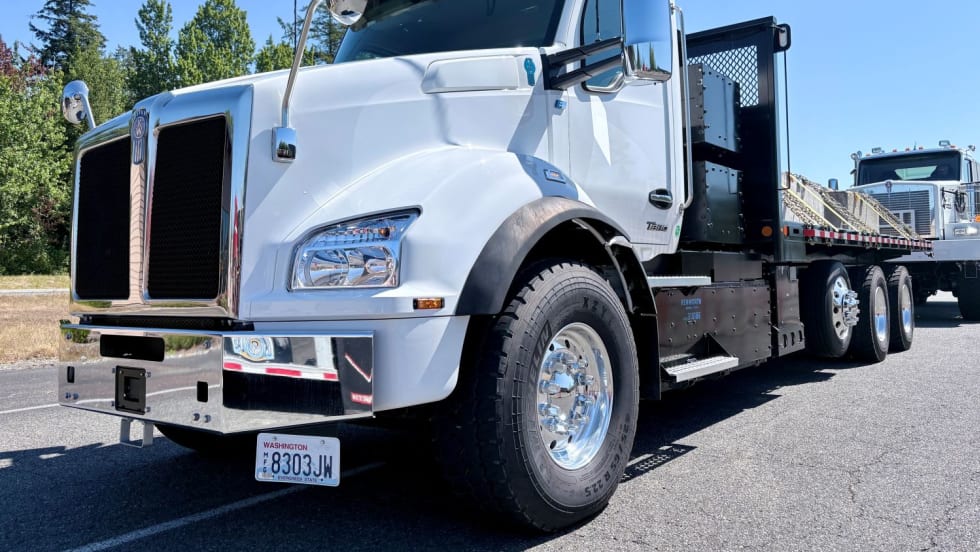
Kenworth T880E Brings EV Power to Vocational Trucks
A closer look at the Kenworth T880E’s range, charging, powertrain and upfit options — and where fleets are showing the most interest.
Read More →
Jennie Abarca Is Proving Electric Trucks Can Do the Job
HDT Truck Fleet Innovator Jennie Abarca is building confidence in fleet electrification one load at a time while openly sharing the challenges she encounters along the way as a small-fleet owner.
Read More →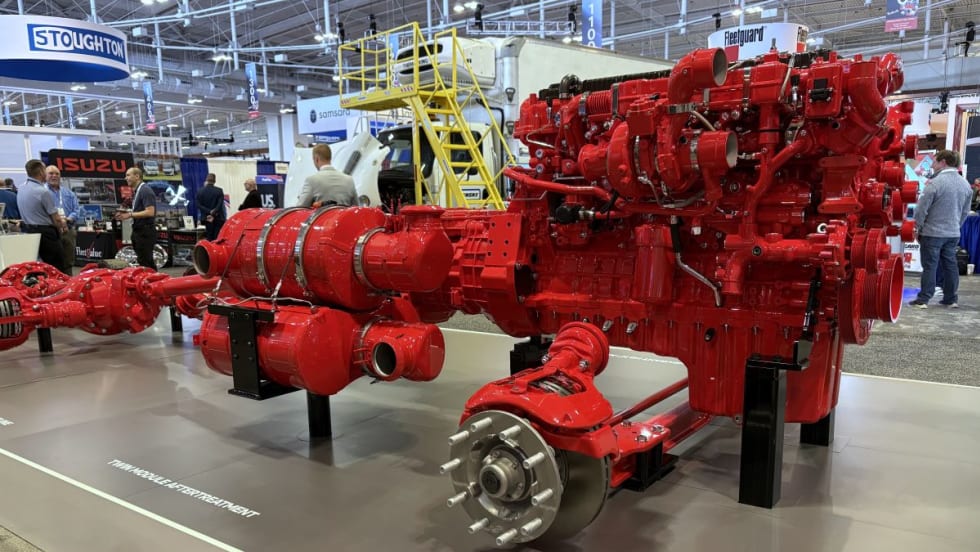
Cummins Adjusts 2027 Engine Rollout After EPA Proposal
The engine maker will gradually introduce its new Model Year 2027 diesel engines while continuing to offer current models during the transition, citing the EPA's proposed emissions rule changes.
Read More →