




Suppliers Outline Natural Gas Product Plans
The engine products of the joint venture between Cummins Inc. and Westport Innovations now dominate the existing, albeit small, market for natural gas trucks, but more are on the way from other sources, indicated manufacturer representatives during the American Trucking Associations' recent Natural Gas Summit

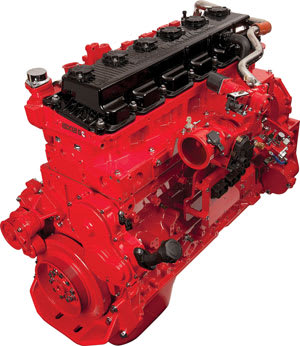
Cummins Westport's ISX12 G is a game changer, some say.
The engine products of the joint venture between Cummins Inc. and Westport Innovations now dominate the existing, albeit small, market for natural gas trucks, but more are on the way from other sources, indicated manufacturer representatives during the American Trucking Associations' recent Natural Gas Summit.
Jim Arthurs, president of Cummins Westport, noted that the operation's 8.9-liter ISL-G is offered by many truck builders for highway use and by most builders of trash trucks, and more than 17,000 of the engines have been sold.
But the ISL-G, with a maximum output of 320 horsepower and 1,150 pound-feet, is a little less power than you want for full Class 8 use, Arthurs acknowledged. Cummins Westport's upcoming 11.9-liter ISX12 G will be more appealing for heavy truck operators because of its greater output -- up to 400 horsepower and 1,450 pounds-feet.
Cummins meanwhile is preparing a 15-liter natural gas ISX with spark ignition, as used in the joint venture's 8.9- and 11.9-liter products. The ISX15-G is planned for 2015, said Roe East, general manager for Cummins on-highway NG engines.
Westport Innovations' current 15-liter dual-fuel HD engine, called GX by Paccar's Kenworth and Peterbilt units, is offered by those and other builders, said Jonathon Burke, vice president for global market development. It uses small amounts of diesel fuel as the pilot ignitor of natural gas, which combusts at a higher temperature and needs such a kick to burn. Thus diesel fuel does the job of spark plugs in the joint venture engines, and in the upcoming Cummins ISX15-G.
The 11.9-liter ISX12 G is a game changer because of its greater power and more usefulness for Class 8 trucks, said T.J. Reed, director of product strategy for Freightliner Trucks. It will offer the larger gas engine starting this spring, and will continue to sell the smaller ISL-G in Class 7 and 8 trucks.
Detroit Diesel, a sister company to Freightliner under Daimler ownership, has no plans to develop gas engines because current and foreseeable market volume is too small, Reed said. So it will continue partnering with Cummins Westport and those individual companies to offer such engines.
This is also Paccar's approach, said Andy Douglas, national sales manager for Kenworth Truck. Paccar makes its own 12.9-liter diesel, but it wouldn't pay to develop a gas version. The Cummins Westport engines work well and install easily because their blocks are the same as corresponding diesels and are 80 to 90% diesel in parts makeup.
Navistar International now offers the ISL-G in one tractor model and is considering the ISX12-G, said Steve Gilligan, vice president, product and vocational marketing. It has put a hold on plans for its own 12.4-liter dual-fuel engine because of financial pressures. As you may have heard, we have a lot of other things on our plate right now, he said.
Volvo Group is continuing with its work on a 13-liter dual-fuel engine, scheduled for 2014 or 15, said Bill Dawson, senior advisor, truck sales and marketing. Further out is a diesel fueled by dimethyl ether, or DME, which Volvo believes has great promise. DME can be produced from natural gas or biomass, handles easily like propane, and burns like diesel fuel in engines that need little or no modification. Meanwhile, Volvo and Mack offer the Cummins Westport ISL-G in certain models and plan to offer the larger ISX12-G in others when it becomes available next year.
More Fuel Smarts
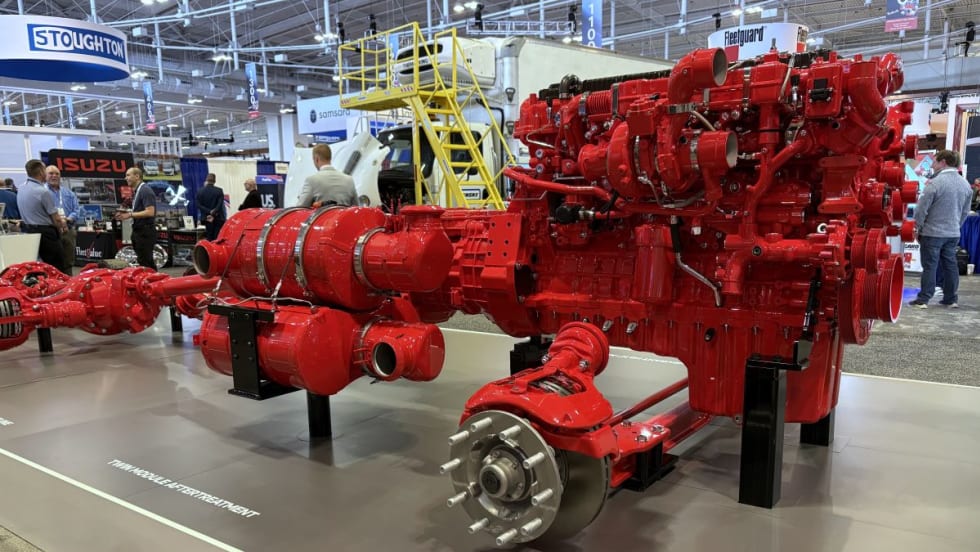
Cummins Adjusts 2027 Engine Rollout After EPA Proposal
The engine maker will gradually introduce its new Model Year 2027 diesel engines while continuing to offer current models during the transition, citing the EPA's proposed emissions rule changes.
Read More →
EPA Proposal Could Ease 2027 Truck Costs and Buying Uncertainty
The proposal doesn't change the tougher NOx standard, but it would revise key implementation requirements that manufacturers say have driven up costs and complicated fleet purchasing decisions.
Read More →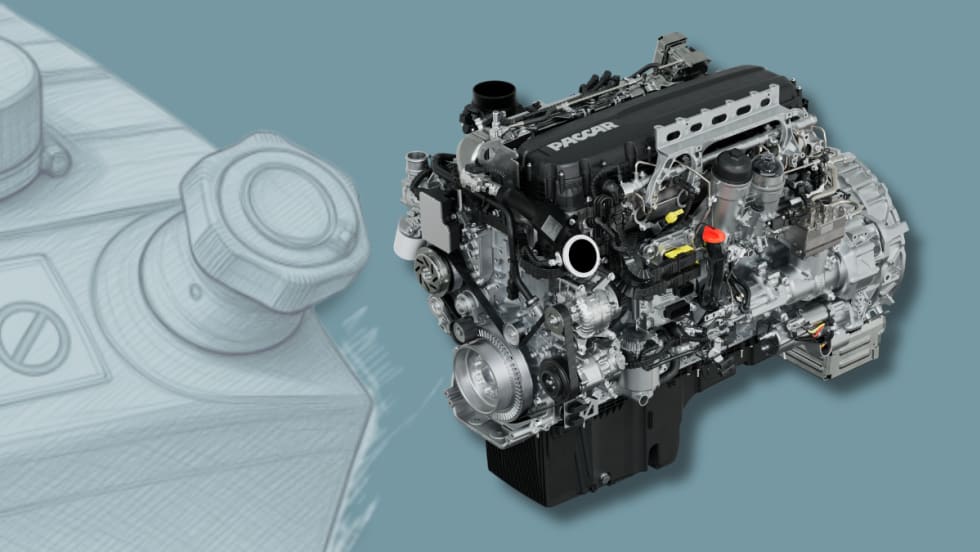
Cummins, Paccar Ease DEF Derates After EPA Guidance
Updated diesel engine software gives truck operators more time to address emissions-system issues while staying compliant with EPA emissions standards.
Read More →
Maintenance in the Messy Middle Part 3: Biodiesel
Biodiesel can reduce emissions, improve fuel-system lubricity and use existing diesel infrastructure. But NACFE’s Messy Middle maintenance report says fleets must actively manage storage, cold-weather operation, filters and oil drain intervals to avoid problems.
Read More →
Enhance Fleet Performance with High-Efficiency Auxiliary Power Units
Drive sustainable cost savings while increasing driver comfort during short- and long-haul logistics operations.
Read More →
Maintenance in the ‘Messy Middle’ Part 2: Renewable Diesel Fuel
NACFE's latest Messy Middle Powertrain Service & Maintenance report says renewable diesel gives fleets an opportunity to reduce carbon emissions without changing trucks, fueling infrastructure or maintenance practices. But technicians still need to understand several important operational differences.
Read More →
The Diesel Engine Enters NACFE’s ‘Messy Middle’
NACFE’s new Messy Middle Powertrain Service & Maintenance report says keeping modern diesel engines running now depends as much on software, diagnostics and data as traditional mechanical service.
Read More →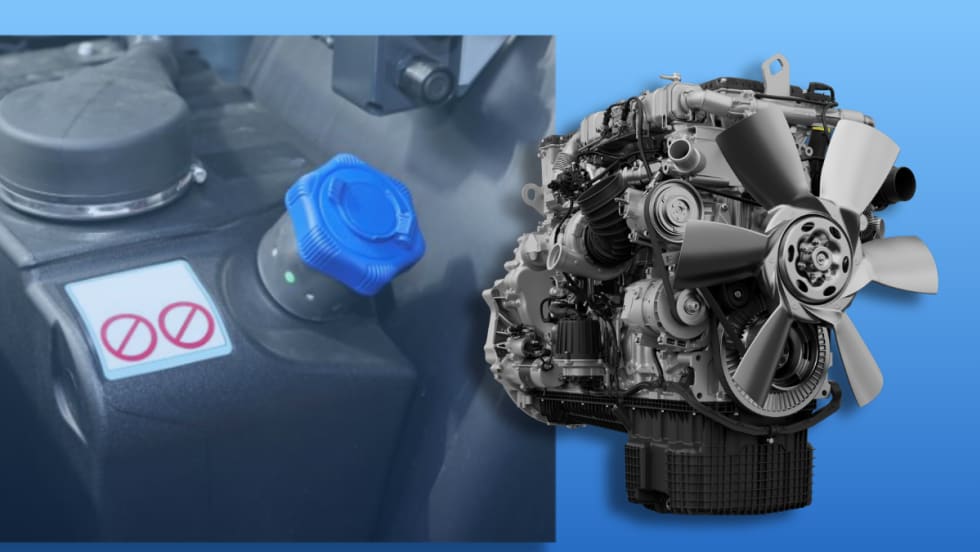
DTNA Software Update Gives Truckers More Time Before DEF Derates Take Effect
The changes reflect EPA guidance aimed at reducing downtime caused by emissions-system faults while maintaining compliance requirements.
Read More →
New Agentic Predictive Maintenance Report Demonstrates How Degraded Aftertreatment Systems Waste Fuel
Questar analyzed a large mixed-class fleet and discovered it was wasting as much as $30 in fuel per vehicle, per day, because of mechanically degraded aftertreatment systems.
Read More →
New York City's Microhub Project is Delivering Results
Trucking, last-mile delivery companies, and environmental advocates like what they are seeing so far with New York's microhub program.
Read More →