




Specs for Fuel Economy
Sooner or later the economy will heat up again and so will demand for fuel - and prices for it. So it's still wise to buy the most fuel-efficient vehicles and operate them wisely

Sooner or later the economy will heat up again and so will demand for fuel - and prices for it. So it's still wise to buy the most fuel-efficient vehicles and operate them wisely.
Many formal tests done by fleets and organizations here and in Canada have shown what works, but most track and road testing is done at steady speeds. Some trucks spend major portions of their lives cruising on the open road, but even they run into heavy traffic, foul weather and other negative influences. Thus formal test results are theoretical, but they are still good indicators of the worth of various components because in-service testing often confirms a benefit, even if it's not as high.
Before getting into component specifications, let's note that drivers' habits are the biggest single influence on fuel economy. A conscientious driver takes advantage of technological advances, but a lousy driver can blow them away. Truck owners can save fuel and maintenance money by teaching drivers how to drive most economically, then monitoring their performance by examining data taken from each truck's electronic control unit.
The numbers can be surprising. For instance, many drivers rev engines to red line - 1,800 or 2,100 rpm, depending on engine model. For many years most engines have been designed and built to lug at low revs, and that's how they should be driven.
Each engine has a "sweet spot," generally between 1,400 and 1,600 rpm, where engine efficiency is optimized. Going higher is not advised except when climbing steep grades where upshifting might bog down the rig. Show drivers the horsepower and torque curves for the engine they operate and explain why it's best to stay within a "green" range (which might or might not be marked on the tachometer). Properly modulating engine revs requires some expertise with the transmission, and the typical 10-speed manual gearbox takes a while to learn. That brings us to the first equipment suggestion:
• Automated manual transmission. The learning curve for a novice is drastically shortened, and even experienced drivers perform better with an AMT. It shifts itself based on load, engine and road speed, and how hard the driver is pressing on the accelerator. The fuel economy benefit will depend on the application, but we've seen economy improvement figures of 5 to 15 percent.
A fully automatic transmission can also increase fuel economy over a manual transmission, but a bigger benefit is ease of operation and a cushioning effect on the driveline. This is why more than three-quarters of all medium-duty trucks and nearly all light commercial trucks have automatics.
• Aerodynamic truck models. Tests and experience show that at highway speeds, an "aero" model will get 0.5 to 1 mpg more than a traditionally styled model because it moves more smoothly through the air. True, a "large car," with its long, flat nose and all sorts of chromed appliances hanging off the hood and roof, has a mystique that has made it easier to sell and worth more to second and third owners. But this appeal is fading as fuel costs have risen.
• Air deflectors. Aero-style trucks usually come with all the air deflectors included for the application. These include cab-roof fairings, which move air up and over the roof of the trailer instead of blasting into the trailers' nose. According to tests by the Technology and Maintenance Council of ATA, a full cab roof fairing -- one that matches the height of the trailer -- will save up to 15 percent compared to running with nothing at all. If the tractor has a raised-roof sleeper, chances are it's a little shorter than the trailer's roof, so a small fairing can be added to kick the air completely up. Without it, 4 percent to 10 percent of the benefits of a full roof fairing can be lost. Shorter trailers require shorter deflectors and sleepers, or none at all.
Other deflectors usually come as a package on an aero tractor. These include cab extenders, which plug some of the gap between tractor and trailer; side skirts, which cover the fuel tanks and battery box and smooth out the profile of the steps; and an air-dam front bumper. If any of these are installed on a non-aero tractor, the economy improvement might be 1 percent to 3 percent.
Aero devices on trailers are becoming more popular because they save as much or more as they do on tractors. Various types of nose and tail appendages and low-slung side skirts can save as much as 7 percent in fuel at highway speeds, tests show.
If trailers are "married" to tractors, aero equipment can save big bucks. In a hook-and-drop operation where trailers spend a lot of time sitting, spending money on aero improvers might not be worth it.
Medium-duty trucks often run in cities where stop-and-go traffic pulls down average road speed and reduces the benefits of aerodynamics. That's why few "city trucks" have full fairing packages, or any fairings at all. But most have smooth styling to ease air flow. And the van boxes mounted on many midrange trucks have rounded roof edges to reduce wind resistance. Any truck that spends a lot of time on freeways where cruising speeds are high would save considerable fuel if fitted with a supplemental fairing on the body's nose or on the cab's roof.
• Smaller engine. Smaller-displacement diesels can save several percent in fuel but can still produce serious power and torque. The latest 11-, 12- and 13-liter diesels can do the work formerly done by 14- and 15-liter engines; they also weigh less by hundreds of pounds each, and cost less to buy. The larger engines last longer, which is why many major fleets still buy them. Also, an engine should be appropriate to a truck model, so a small engine in a long-nose large car makes little sense in the marketplace.
• Proper gearing. Gear ratios in the transmission and rear axle(s), along with the tire/wheel size, determine how fast the engine will spin at a given road speed. Each ratio must be chosen with the other in mind. Tire size can be changed fairly easily, but swapping gears is in most cases not feasible. For 2007, many engine builders altered recommended cruising speeds for various models, and these can vary from about 1,300 to 1,700 rpm at 65 mph. So get the ratios right the first time (or look at a used truck's overall gearing carefully to be sure it suits the operation).
If a road tractor will actually cruise at 75 mph, which is legal in many western states, it can be set up to do so. But it'll use considerably less fuel if it cruises at 65 mph. Will that compensate for lost time? If the tractor will run at varying speeds to satisfy delivery demands, then a multi-ratio transmission (a 13- or 18-speed) will give it some flexibility.
A direct-drive top gear can save a bit of fuel because it involves fewer gears and less "churning" of lubricant. Controlled tests show a direct-drive transmission saves up to 2 percent in fuel at cruising speed. Some fleet managers have measured some savings in tank mileage, but it might not be noticeable in many operations. The more varied your cruising speed and operating conditions, the less actual savings an operator would get from this component or any other that's at its best at relatively high speeds.
• Tire size and type. A rig's overall gearing changes with the diameter and circumference of its tires (expressed as "revs per mile"). And size actually changes constantly because tread wear reduces diameter and circumference. A truck might lose 2 to 3 mph in cruising speed at a given engine rpm as tire tread on the drive axles reach their wear limit. The upside is the engine might feel gutsier, especially while accelerating or climbing hills, because the overall gearing is "slower."
Tread type greatly affects fuel economy because it helps determine rolling resistance. The least resistance is offered by rib-style tires, and most fleets try to put these at all wheel positions, at least when weather
More Fuel Smarts
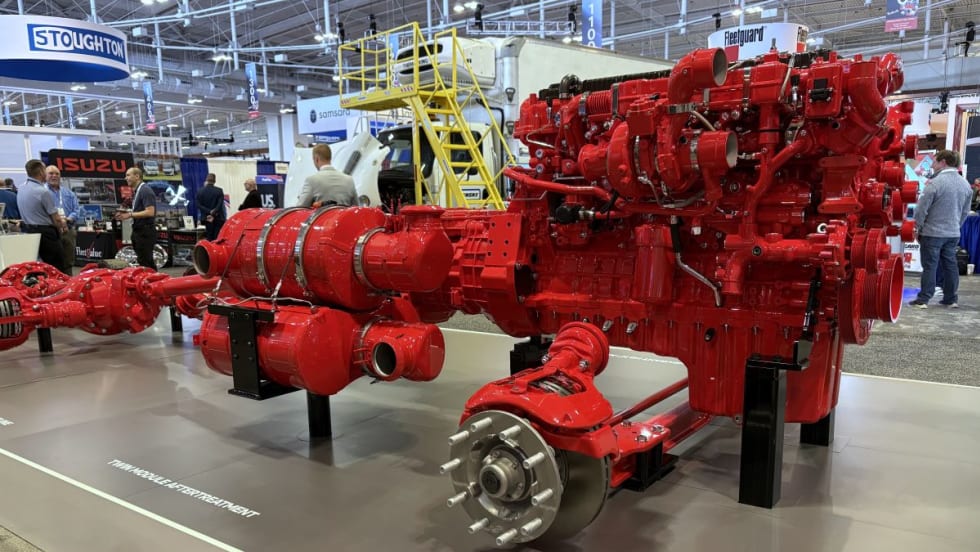
Cummins Adjusts 2027 Engine Rollout After EPA Proposal
The engine maker will gradually introduce its new Model Year 2027 diesel engines while continuing to offer current models during the transition, citing the EPA's proposed emissions rule changes.
Read More →
EPA Proposal Could Ease 2027 Truck Costs and Buying Uncertainty
The proposal doesn't change the tougher NOx standard, but it would revise key implementation requirements that manufacturers say have driven up costs and complicated fleet purchasing decisions.
Read More →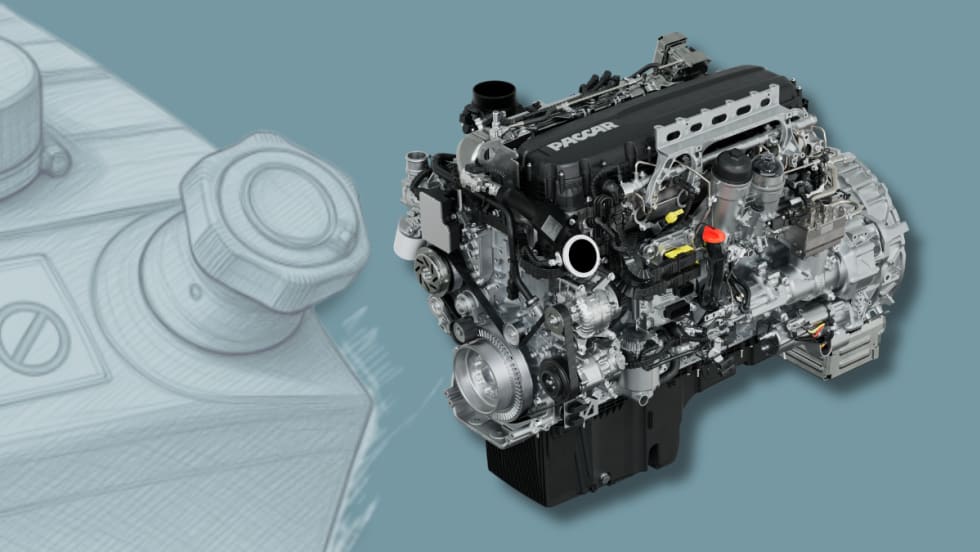
Cummins, Paccar Ease DEF Derates After EPA Guidance
Updated diesel engine software gives truck operators more time to address emissions-system issues while staying compliant with EPA emissions standards.
Read More →
Maintenance in the Messy Middle Part 3: Biodiesel
Biodiesel can reduce emissions, improve fuel-system lubricity and use existing diesel infrastructure. But NACFE’s Messy Middle maintenance report says fleets must actively manage storage, cold-weather operation, filters and oil drain intervals to avoid problems.
Read More →
Enhance Fleet Performance with High-Efficiency Auxiliary Power Units
Drive sustainable cost savings while increasing driver comfort during short- and long-haul logistics operations.
Read More →
Maintenance in the ‘Messy Middle’ Part 2: Renewable Diesel Fuel
NACFE's latest Messy Middle Powertrain Service & Maintenance report says renewable diesel gives fleets an opportunity to reduce carbon emissions without changing trucks, fueling infrastructure or maintenance practices. But technicians still need to understand several important operational differences.
Read More →
The Diesel Engine Enters NACFE’s ‘Messy Middle’
NACFE’s new Messy Middle Powertrain Service & Maintenance report says keeping modern diesel engines running now depends as much on software, diagnostics and data as traditional mechanical service.
Read More →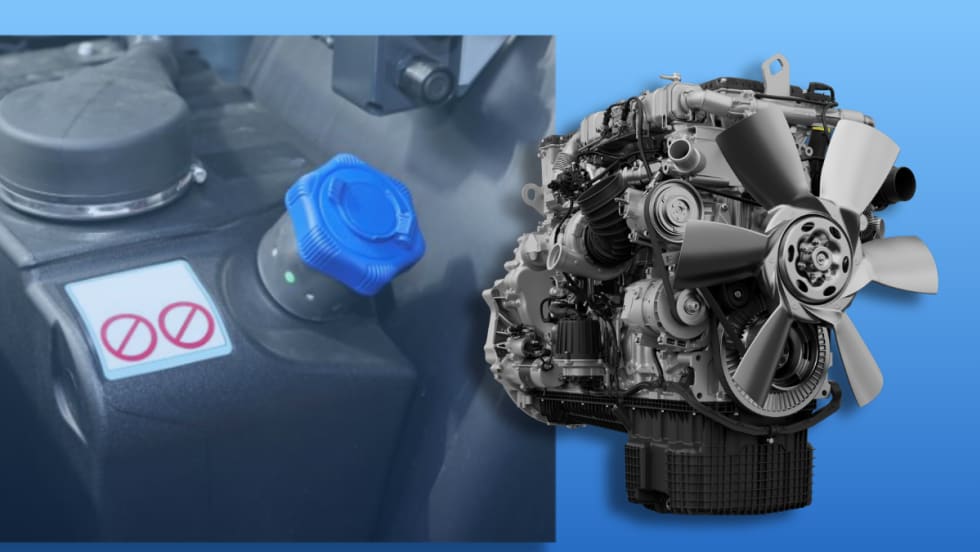
DTNA Software Update Gives Truckers More Time Before DEF Derates Take Effect
The changes reflect EPA guidance aimed at reducing downtime caused by emissions-system faults while maintaining compliance requirements.
Read More →
New Agentic Predictive Maintenance Report Demonstrates How Degraded Aftertreatment Systems Waste Fuel
Questar analyzed a large mixed-class fleet and discovered it was wasting as much as $30 in fuel per vehicle, per day, because of mechanically degraded aftertreatment systems.
Read More →
New York City's Microhub Project is Delivering Results
Trucking, last-mile delivery companies, and environmental advocates like what they are seeing so far with New York's microhub program.
Read More →