




Running an Alternative-fueled Fleet
Want to get a handle on alternative fuels? Talk with someone who uses them. One person is Melvin Rose, fleet manager for Monroe County in western New York, which surrounds Rochester. The county has 700 vehicles, from compact cars to Class 8 trucks. All run on ethanol-gasoline blends, biodiesel, compressed natural gas or propane, and Rose loves to talk about them.

Want to get a handle on alternative fuels? Talk with someone who uses them.
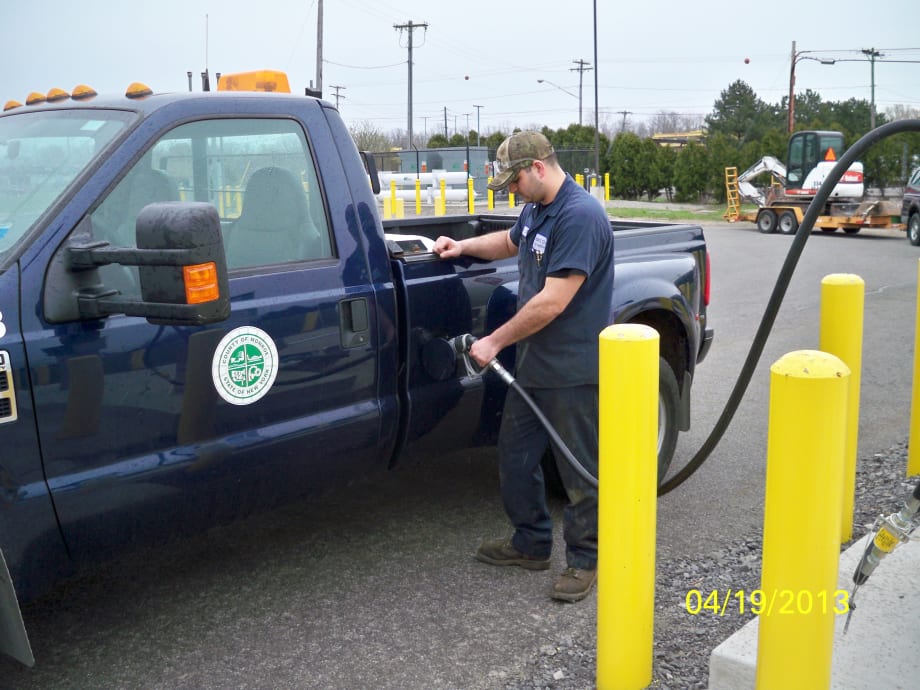
One person is Melvin Rose, fleet manager for Monroe County in western New York, which surrounds Rochester. The county has 700 vehicles, from compact cars to Class 8 trucks. All run on ethanol-gasoline blends, biodiesel, compressed natural gas or propane, and Rose loves to talk about them.
“We're the real deal,” he says of the county's alternative fuels program, which has won several “green fleet” awards from national organizations. “We're not just talking about it, we're really doing it. Our executive, Maggie Brooks, is all for alternative fuels, to get off foreign oil.”
There are also financial benefits. Most of the fuels cost less than straight petroleum products, and Monroe County has taken advantage of grant money, obtained through the CMAQ (congested mitigated air quality) division of the regional Clean Cities program, to pay for expensive fueling stations.
Rose is on the local Clean Cities board of directors.
“You have to be in touch with your Clean Cities organization,” he says. “Keep in touch with those people and they'll navigate you through your resources and how to upfit your vehicles.”
The fleet's work in alternative fuels goes back more than 25 years. In the 1980s, the county converted vehicles to burn methanol, a fuel that fell out of favor for environmental reasons. In the ‘90s it tried out compressed natural gas, a move that proved premature.
It also tried, and abandoned, electric-powered compact pickups.
But CNG is back, and since 2008 the county has also used biodiesel and gasoline-ethanol blends along with propane. None of the county's 700 vehicles, ranging from compact cars to Class 7 and 8 trucks, use straight gasoline or diesel anymore.
Monroe County operates a Green Fuel Station that it shares with the city of Rochester, where it stocks E20 and E85 ethanol-gasoline blends, plus B20 (a 20-80 mix of biofuel and diesel) for use in warmer weather to feed diesel engines, and B5 when temperatures turn cold. One challenge is to make sure that engine builders approve the higher biodiesel blend, Brooks says.
CNG is dispensed with a two-hose fast-fill pump, but Rose has mixed feelings about natural gas.
It's clean, plentiful and cheap, he says, but a CNG tank and dispenser are very expensive, and are doable only because grant money pays for most of their cost.
Those grant funds made it possible to buy another CNG installation, which is planned to be a second city-county fueling station.
However, in Brooks’ opinion, “liquid propane is the real ticket.”
“Know what makes it inexpensive? It's the infrastucture. A CNG fueling station costs more than $ 1 million. For pennies on those dollars you can get a complete propane fueling station. It's a simple steel tank with a little pump on it.”
Propane storage tanks and those on the trucks operate at less than 200 pounds per square inch, compared to 3,600 psi for a full CNG tank. Thus a propane tank, while still a pressure vessel, is far cheaper, he points out.
In mid-April, propane “autogas” in western New York was priced at about $ 1.20 per gasoline-gallon-equivalent, or GGE, minus a 50-cent federal tax credit. The county also pays 36 cents per GGE to Ferrillgas, which supplies and maintains a 1,000-gallon propane tank at the fueling station in Rochester. Bottom-line price, then, was $1.06 per GGE.
The tank serves several Ford trucks now running on propane — an E-350 van and three F-250 pickups — and the county is looking to upfit 16 more. Roush CleanTech, a propane specialist that's among suppliers approved by Ford Motor Co., converted the four trucks for about $11,000 each.
“It's hard to sell an upfit of $11,000 to the county board,” Rose says, but propane's very low cost and the inexpensive fueling facility made it entirely reasonable. “You get those F-250 trucks just driving around like they're running on gasoline, and you get your payback in two years.” Rose notes that this is no fair weather fleet, as it gets cold and very snowy in Monroe County, N.Y., and the trucks are subject to corrosion from road salts.
Yet propane and the other alternative fuels, and the systems on the trucks continue to work.
Scratch a frigid climate as an excuse not to try ‘em.
More Fuel Smarts

How Volvo Updated Its D13 for EPA 2027 [Watch]
Volvo’s updated D13 promises lower emissions without sacrificing performance or fuel economy. Take a closer look at what changed inside the engine in this HDT Spotlight video.
Read More →
Diesel Price Spike Shortens Payback for Natural Gas Trucks, Report Says
Energy Vision estimates fleets could recover the higher purchase price of an RNG-fueled Class 8 tractor in 1.3 to 2.8 years under current fuel-price scenarios.
Read More →
Calstart Becomes Catalyst Mobility, Reflecting Broader Focus
Calstart is now Catalyst Mobility, reflecting the nonprofit’s growing national role in clean transportation, including zero-emission trucks, infrastructure and incentive programs.
Read More →

Record Diesel Prices Squeeze Trucking Fleets
Average U.S. diesel prices have climbed to nearly $6 a gallon, surpassing the 2022 record as tight refinery capacity and Middle East disruptions keep fuel costs elevated.
Read More →
How Fuel Delivery Shapes Engine Performance
Fuel delivery depends on more than what happens at the injector. For fleet, maintenance and technical professionals, looking at the full path from pump to injector can provide useful context for understanding engine performance.
Read More →
East Coast Port Launches $45M Electric Truck Push
The Port Authority of New York and New Jersey announced millions in incentives for zero-emission drayage trucks, yard tractors, and new charging hubs near the port.
Read More →
California Bill Could Shed Light on Electric Truck Prices
Why do battery-electric Class 8 trucks remain so expensive? A California bill headed to Gov. Gavin Newsom would give fleets and state agencies more visibility into what manufacturers charge.
Read More →
Detroit Opens Orders for EPA 2027 Engines
Detroit isn’t starting from scratch to meet EPA 2027 diesel emissions standards. Its Gen 6 DD13 and DD15 engines keep much of today’s platform while updating the fuel and aftertreatment systems.
Read More →
Zero-Emission Truck Corridor Planned for West Coast
California, Oregon, Washington, British Columbia and Baja California are coordinating plans for truck charging and hydrogen fueling from Canada to Mexico.
Read More →
A Closer Look at Kenworth’s Electric T880E Vocational Truck [Video]
Learn more about Kenworth's T880E battery-electric vocational truck at the Paccar Technical Center, including its range, applications, upfitting considerations, and PTO options, in this HDT Spotlight video.
Read More →