



Part 1: Regular Tire Inspections Save Time in the Long Run
Part 2: Keep up the Pressure
Part 3: Align the Truck Before the Need Arises
Part 4: What You Should Know About Tire and Wheel Balancing
 MENU
MENU SEARCH
Retreading extends the life of the most expensive part of the tire, which lowers cost per mile significantly. This is part five in a five-part series for National Tire Safety Week.
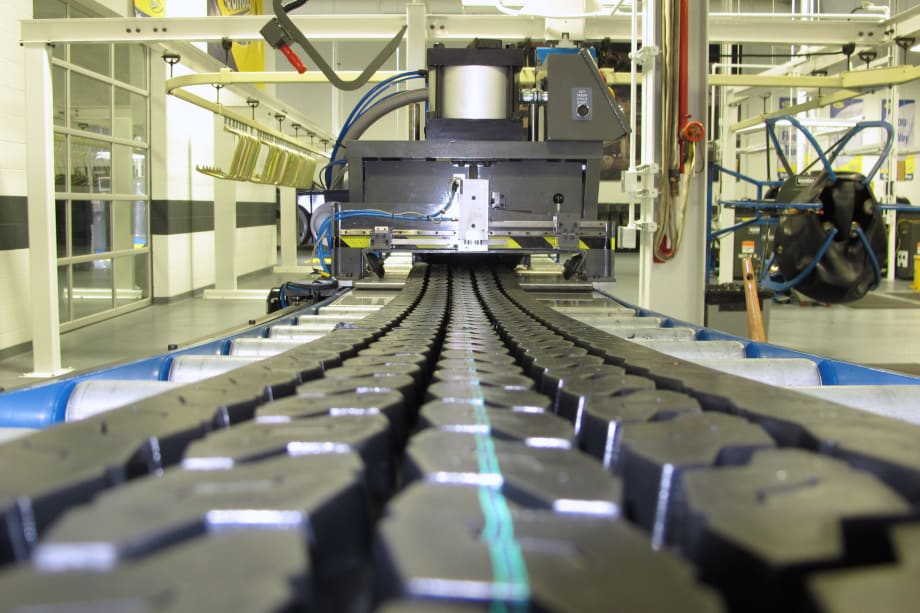
Tread patterns are available for any type of operation from low rolling resistance drive tires to vocational tires. Photo by Jim Park
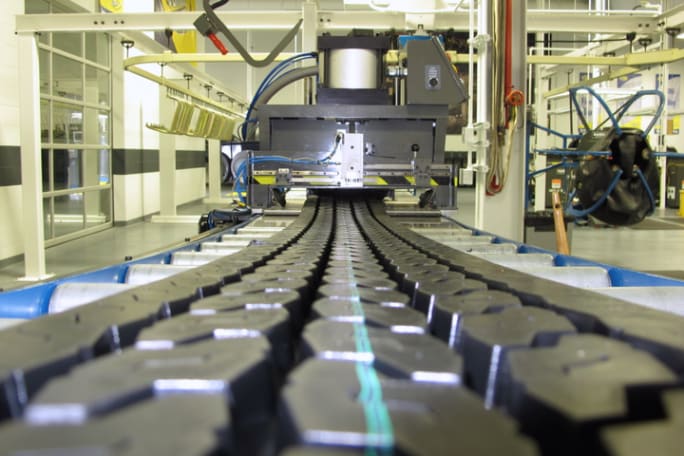
Tread patterns are available for any type of operation from low rolling resistance drive tires to vocational tires.Photo by Jim Park
Retreading can extend casing life two, three or even four times, thus significantly lowering the lifecycle cost of the tire. While retread costs vary with the type of tread, the quality of the casing and the contract arrangement you have with the retreader, prices are roughly 1/3 to 1/2 that of a new tire.
If you keep an eye on casing value, you'll know that casings sold seem to fetch a fraction of what they are truly worth. You might get $90 to $125 for a good casing in a tight market, but retreading the casing gives you a virtually new tire with a couple of hundred thousand miles of life left in it -- and you can often retread several times. Where does the real value lay?
"A casing is a terrible thing to waste since at least 75% of the cost of a tire is in the casing, notes Ron Elliott, marketing and communications manager, Marangoni Tread North America.
Elliot says the key to a successful retreading program is to start with a quality casing, and then work to protect your casing investment with good maintenance, particularly pressure management.
"Most casings are designed and manufactured to be highly repairable and retreadable to last more than one life," Elliott says. "A proper tire management program will help ensure the very lowest total running cost."
If retreads get a bum rap, it's probably because the tire has been neglected.
It hardly needs to be said, but proper inflation and regular inflation checks will keep all tires in service longer. And of course retreads suffer from the stigma of being assumed to explode more often than new tires. Several tire debris studies have all but disproven that, but the doubts linger.
"Proper tire pressure is one of the simplest aspects of daily truck upkeep, but it can have major short- and long-term effects on tire life and performance, fuel economy, and maintenance costs," notes Jon Intagliata, product manager, Tire Pressure Monitoring Systems at Bendix Commercial Vehicle Systems. "Underinflation by 20% results in a 30% reduction in tire life. We see this across the industry. Nearly half of all emergency service road calls are tire related, and underinflation -- along with excessive heat, which is an additional consequence of low tire pressure -- is responsible for 90% of tire failures -- both virgin and retreaded tires."
There are three key factors in a successful retreading program: start with new tires that have a good history of retreadability, protect the value of the casing through good tire management and maximize the casing usage through strategic deployment in less demanding applications.
According to Matt Loos, director of TBR marketing at Bridgestone, it's no coincidence that fleets that use retreaded tires successfully are good at tire management.
"Besides achieving the lowest cost per mile, retreading encourages fleets to better manage their tire assets overall," he says. "In general, fleets that use retreaded tires often do a better job of protecting and caring for tire casings to ensure they can be retreaded. Greater attention to good tire care practices helps to improve wear-out performance and fuel economy for the fleet, and it can help reduce costly road calls."
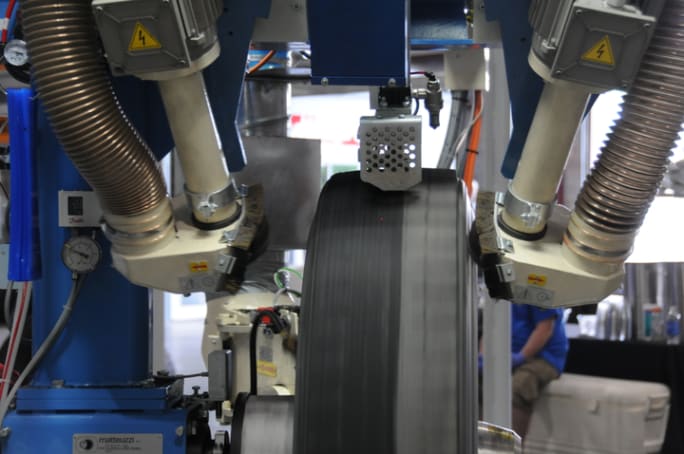
It's better to grind off a few 32nds of tread rubber than to risk a casing penetration because of thin tread. Photo by Jim Park
In today’s tire market, fleet managers can be tempted by the lure of low priced tires over retreading higher quality tires. According to Patrick Gunn, director of sales and marketing for commercial tires at Giti Tire (USA), "These budget tires are designed for single-use with poor retreadability resulting in a shortened product lifecycle."
Gunn suggests fleet managers do a head-to-head comparison of the tires they are considering, focusing on certain characteristics as well as the tire's construction and materials used to build the tire.
~ Footprint and ground contact pressure area: Rectangles are good, ovals bad. The closer to a rectangular shape the contact area is, the more durable the tire. If the contact area resembles an oval shape, the wear life is compromised due to different rolling circumferences across the tread width. A rectangular shaped contact patch has pressure distributed evenly for longer even wear and better casing life.
~ Under-tread rubber depth: Seek an under-tread rubber depth that is deeper than most budget or inexpensive tires. Thick under-tread rubber promotes long tire life when the tread is worn out and protects the casing from damage -- which enhances retreadability.
~ Bead construction: As a force and contact bearing point, the bead acts as support to pass force from tire to rim. Bead contact area with the rim edge has 10 times the pressure on the interface compared to other parts of the tire.
"Ask tire dealers and manufacturers for specifics on these tire attributes," Gunn suggests. "Spending some additional time to separate tires with quality materials, construction and design from the inexpensive, lesser quality tires on the market will reduce your overall tire operating costs and will contribute to a more successful retreading program."
There's also a significant environmental benefit to retreading.
"Retreading a truck tire requires significantly less oil and 70% less energy to produce, contains 75% post-consumer material and keeps tires out of landfills," Loos says.
You could easily reduce your upfront tire costs by buying cheap tires, but that decision may come back to bite you. Retreading extends the life of the most expensive component of the tire, enabling multiple uses, which lowers the overall cost per mile significantly. Compare that to a one-lifecycle cheapo tire and you'll soon recognize the value proposition in retreading.

For fleet managers and collision repair professionals keeping heavy-duty trucks on the road, getting the color right the first time isn't just about appearance — it's about efficiency, turnaround time, and bottom-line results. Discover how today's digital color tools are transforming the repair process from guesswork to precision.
Read More →
DTNA is recalling more than 2,400 trucks that received an incompatible software fix instead of the hardware repair required to address brake valve corrosion.
Read More →
Fleets have more visibility into truck health, safety events, and driver activity than ever. The next challenge is turning all that information into useful guidance for the person who has to decide what to do next.
Read More →
Making it through August isn’t the same as being ready for the next several months of operation. Find out what systems may have suffered from summer heat and need to be checked out before fall.
Read More →
With freight improving but costs still climbing, fleet maintenance executives explain how they're balancing price, quality, and supplier relationships.
Read More →
The nearly 6,000 Kenworth and Peterbilt trucks in the recall could potentially lose engine power, among other things.
Read More →
The new API PC-12 heavy-duty engine oil category reflects the changing demands of modern diesel engines. But fleets like Foodliner are looking to getting their own data before making decisions on adopting the new oils and questions such as extending oil drain intervals.
Read More →
Commercial vehicle inspectors are focusing on truck brakes during CVSA's Brake Safety Week, August 23-29.
Read More →
On the recalled vehicles, manufacturing variations can cause the battery interconnect cable to contact the auxiliary stud and hold down the bracket.
Read More →
The joint venture will operate MCT's network of Carrier Transicold dealerships and mobile service locations, with the companies promising greater service capacity and uptime for refrigerated fleets.
Read More →