




Q&A: Ryder's Chris Nordh on Electric Trucks, Future Tech
Ryder System's senior director of advanced vehicle technology and global fuel products, Chris Nordh, spoke with HDT about the prospect of commercial electric vehicles and future technologies for transportation.

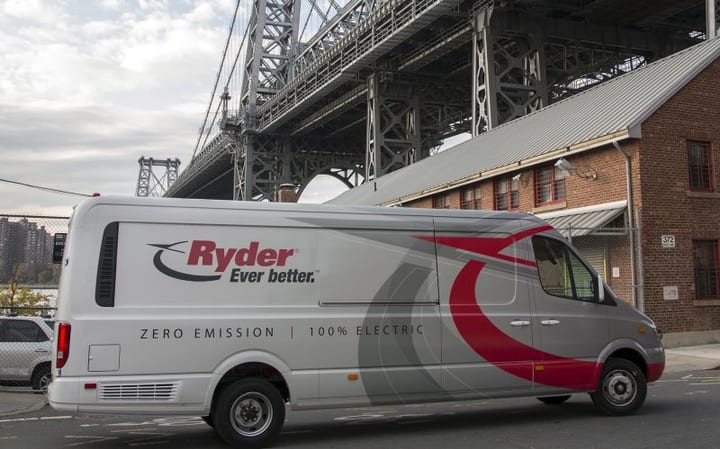
In 2018, Ryder System ordered 500 Chanje Energy battery-electric panel vans for its ChoiceLease truck leasing program, Ryder System's senior director of advanced vehicle technology and global fuel products, Chris Nordh, spoke with HDT about this and more.
Photo via Ryder System
Ryder System's senior director of advanced vehicle technology and global fuel products, Chris Nordh, spoke with Heavy Duty Trucking magazine about the prospect of commercial electric vehicles and future technologies for transportation.
HDT: Back in November, Ryder announced making the largest commercial electric vehicle purchase in the U.S. to date. How does a fleet of any size address EV charging?
Chris Nordh: Charging infrastructure is a significant part of the process of implementing electric vehicles, especially as it relates to fleets with large numbers of vehicles at the same location. There are many players that are specializing in creating [charging] solutions and Ryder is in the process of continually evaluating the best options for our customers to break down the barriers to adoption.
HDT: When would “smart charging” solutions need to come into play for an EV fleet operator?
Nordh: The first vehicles that a business converts to electric are simple, as buildings usually have spare capacity for a small number of units. For example, 5-10 EVs but it can vary greatly. Once that company exceeds the spare capacity of the building, it would need to either create smart charging solutions, which involve more complex and expensive infrastructure. Or, gain greater amounts of electricity from the utility company, which can become both costly and extend lead times.
HDT: What is the role of a rental and leasing company like Ryder in fueling the growth of EV trucks, especially when it comes to maintaining vehicles driven by this new technology?
Nordh: We believe that our most experienced technicians are best suited to repair electric vehicles today for a number of reasons. These include understanding how incredibly important safety policies are in dealing with high voltage systems and the complexity in diagnosing these vehicles given less exhaustive documentation than we are used to with traditional products. Additionally, we are playing a much more active role in providing feedback to the OEMs of how to improve their products and it serves them well to have our best and brightest manage the repairs of these vehicles.
HDT: I hear you attended the big CES Show in Las Vegas. Did anything there strike you as particularly worth keeping an eye on for use in trucking?
Nordh: CES was incredibly interesting and it's very obvious how much change and technology is coming to transportation businesses in the near future. At CES, I saw amazing examples of wearable technology that measures the brainwaves of the wearer, which enables real time metrics like a distraction score and error propensity. Something like this can further reduce accidents and behaviors associated with accidents by creating a real time active feedback loop to the user. A lot of times we don't necessarily know what we are doing wrong and something like this creates that awareness very quickly.
HDT: There were more than a few robots roaming the halls of CES. Did any get ahold of you?
Nordh: I interacted with a robot that was measuring my body language and facial features in order to interpret my mood and experience with an individual. This has applicability for front line employees to create greatly improved customer experiences throughout organizations of all types, including our own. I'm intrigued by so much that I saw and, like many others, wonder how quickly these things will get incorporated into real world applications as well as the willingness of employees to use them.
More Fuel Smarts

How Volvo Updated Its D13 for EPA 2027 [Watch]
Volvo’s updated D13 promises lower emissions without sacrificing performance or fuel economy. Take a closer look at what changed inside the engine in this HDT Spotlight video.
Read More →
Diesel Price Spike Shortens Payback for Natural Gas Trucks, Report Says
Energy Vision estimates fleets could recover the higher purchase price of an RNG-fueled Class 8 tractor in 1.3 to 2.8 years under current fuel-price scenarios.
Read More →
Calstart Becomes Catalyst Mobility, Reflecting Broader Focus
Calstart is now Catalyst Mobility, reflecting the nonprofit’s growing national role in clean transportation, including zero-emission trucks, infrastructure and incentive programs.
Read More →

Record Diesel Prices Squeeze Trucking Fleets
Average U.S. diesel prices have climbed to nearly $6 a gallon, surpassing the 2022 record as tight refinery capacity and Middle East disruptions keep fuel costs elevated.
Read More →
How Fuel Delivery Shapes Engine Performance
Fuel delivery depends on more than what happens at the injector. For fleet, maintenance and technical professionals, looking at the full path from pump to injector can provide useful context for understanding engine performance.
Read More →
East Coast Port Launches $45M Electric Truck Push
The Port Authority of New York and New Jersey announced millions in incentives for zero-emission drayage trucks, yard tractors, and new charging hubs near the port.
Read More →
California Bill Could Shed Light on Electric Truck Prices
Why do battery-electric Class 8 trucks remain so expensive? A California bill headed to Gov. Gavin Newsom would give fleets and state agencies more visibility into what manufacturers charge.
Read More →
Detroit Opens Orders for EPA 2027 Engines
Detroit isn’t starting from scratch to meet EPA 2027 diesel emissions standards. Its Gen 6 DD13 and DD15 engines keep much of today’s platform while updating the fuel and aftertreatment systems.
Read More →
Zero-Emission Truck Corridor Planned for West Coast
California, Oregon, Washington, British Columbia and Baja California are coordinating plans for truck charging and hydrogen fueling from Canada to Mexico.
Read More →
A Closer Look at Kenworth’s Electric T880E Vocational Truck [Video]
Learn more about Kenworth's T880E battery-electric vocational truck at the Paccar Technical Center, including its range, applications, upfitting considerations, and PTO options, in this HDT Spotlight video.
Read More →