




Public-Private Partnership Helps Put Natural Gas Trucks into Southern California Fleets
What do an office supply store, a dairy processor, a flooring supplier, a beer distributor and a grocery retailer have in common

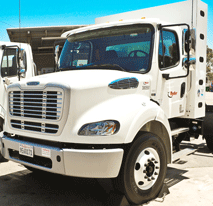
Ryder System will have 202 natural gas vehicles available for lease or rent under a public-private partnership in southern California.
What do an office supply store, a dairy processor, a flooring supplier, a beer distributor and a grocery retailer have in common?
Of course they all use trucks, but the latest, leased from Ryder System, are powered by natural gas.
Staples is the most recent customer to take advantage of a joint Ryder-government program in Southern California that makes it easier for fleets to gain fuel cost savings and environmental benefits with natural-gas trucks.
The office supply chain is adding 10 compressed natural gas tractors to its dedicated fleet operated by Ryder. These CNG tractors - the first of their kind used in Staples' third-party dedicated operations - will replace 10 diesel tractors.
The CNG tractors will transport inventory to Staples stores in Los Angeles, Orange, San Diego, Riverside and San Bernardino Counties, and will be serviced out of Ryder's natural-gas-compliant maintenance facilities in Southern California.
"Leveraging the environmental and cost-saving benefits of natural gas vehicles is one example of the kind of sustainable choices that we are making," said Mark Day, senior manager of carrier management at Staples. "We believe that by partnering with Ryder in this type of initiative, we can do our part to help protect the environment and save money at the same time."
According to Ryder, CNG vehicles produce 20% to 30% fewer emissions than comparable diesel vehicles, and natural gas costs as much as 42% less per diesel-equivalent gallon, based on current prices.
The Ryder-San Bernardino Associated Governments (SANBAG) Natural Gas Vehicle project has allowed the company to so far secure lease agreements for 90 natural-gas trucks in its Southern California fleet. It's expanding outside the state, as well.
The project is part of a partnership between Ryder and the U.S. Department of Energy, the California Energy Commission, San Bernardino Associated Governments, and Southern California Association of Governments.
The $38.7 million project includes:
- 202 natural gas vehicles available for lease or rent;
- three strategically located natural gas compliance maintenance shops in Rancho Dominguez, Orange and Fontana; and
- two fueling stations.
Ryder is expected to have all 202 SANBAG natural gas vehicles in its fleet by the end of the year. The order includes 182 Freightliner Business Class M2-112 tractors with the Cummins Westport ISL-G engine, in both single- and tandem-axle day cab configurations. It's the largest single heavy-duty natural gas truck order for Freightliner in North America. The balance of the order includes a mix of other configurations from a variety of manufacturers. The trucks will be equipped with either liquefied or compressed natural gas (LNG or CNG) on-board fuel storage systems.
The natural-gas-compliant shops are getting enhanced air handling and ventilation systems, upgrades of shop electrical and lighting systems, and natural gas refueling facilities. Ryder's technicians are getting extensive, specialized training on the maintenance and repair of these vehicles.
"Our lease and maintenance offering makes it easy for customers to incorporate new vehicle technologies, like natural gas, into their fleets," said Robert Sanchez, president of global fleet management solutions for Ryder.
In addition to Staples, several more fleets have signed agreements to lease natural gas trucks from Ryder:
Dean Foods, the eighth largest private carrier in the country, was Ryder's first customer for natural gas trucks through the SANBAG project. It has leased five natural-gas delivery vehicles for its Alta Dena Dairy division.
The single-axle tractors, pulling 28-foot refrigerated delivery trailers, support Dean Foods' Smart Fleet initiative, an effort to "green the fleet" by reducing greenhouse gas emissions and other pollutants through delivery route optimization, new technology, equipment, and training for drivers. The company plans to cut its carbon footprint by 20% by 2013 and anticipates adding more natural gas trucks to its fleet.
Mohawk Industries, a flooring supplier, has leased five LNG tractors to support its delivery operations in Southern California. The Calhoun, Ga.-based company prides itself on being an industry leader in sustainability - it claims to be the largest recycler in the flooring industry and a leader in selling recycled and renewable flooring - so alternative fuels fit well with the overall corporate emphasis.
Fresh & Easy Neighborhood Market is leasing 25 CNG vehicles, making up more than a third of its fleet. It's one piece of a larger sustainability strategy. On average, Fresh & Easy stores use 30% less energy than typical supermarkets, and the company has of the largest solar installations in North America on its Riverside distribution center.
Golden Eagle Distributors in Tucson, Ariz., has agreed to lease 22 CNG vehicles, the first step in converting the entire fleet to natural gas. The Anheuser-Busch distributor is not part of the SANBAG project, so Ryder will convert two outdoor bays in its Tucson maintenance facility to be able to service natural gas vehicles.
"After evaluating a number of different alternative fuels, we determined that compressed natural gas made the most sense for our operation," says Bill Osteen, senior vice president of business operations for Golden Eagle. "Not only is it a cleaner fuel, but we also expect to see real fuel cost savings over time."
From the October 2011 issue of HDT.
More Fuel Smarts

Record Diesel Prices Squeeze Trucking Fleets
Average U.S. diesel prices have climbed to nearly $6 a gallon, surpassing the 2022 record as tight refinery capacity and Middle East disruptions keep fuel costs elevated.
Read More →
How Fuel Delivery Shapes Engine Performance
Fuel delivery depends on more than what happens at the injector. For fleet, maintenance and technical professionals, looking at the full path from pump to injector can provide useful context for understanding engine performance.
Read More →
East Coast Port Launches $45M Electric Truck Push
The Port Authority of New York and New Jersey announced millions in incentives for zero-emission drayage trucks, yard tractors, and new charging hubs near the port.
Read More →

California Bill Could Shed Light on Electric Truck Prices
Why do battery-electric Class 8 trucks remain so expensive? A California bill headed to Gov. Gavin Newsom would give fleets and state agencies more visibility into what manufacturers charge.
Read More →
Detroit Opens Orders for EPA 2027 Engines
Detroit isn’t starting from scratch to meet EPA 2027 diesel emissions standards. Its Gen 6 DD13 and DD15 engines keep much of today’s platform while updating the fuel and aftertreatment systems.
Read More →
Zero-Emission Truck Corridor Planned for West Coast
California, Oregon, Washington, British Columbia and Baja California are coordinating plans for truck charging and hydrogen fueling from Canada to Mexico.
Read More →
A Closer Look at Kenworth’s Electric T880E Vocational Truck [Video]
Learn more about Kenworth's T880E battery-electric vocational truck at the Paccar Technical Center, including its range, applications, upfitting considerations, and PTO options, in this HDT Spotlight video.
Read More →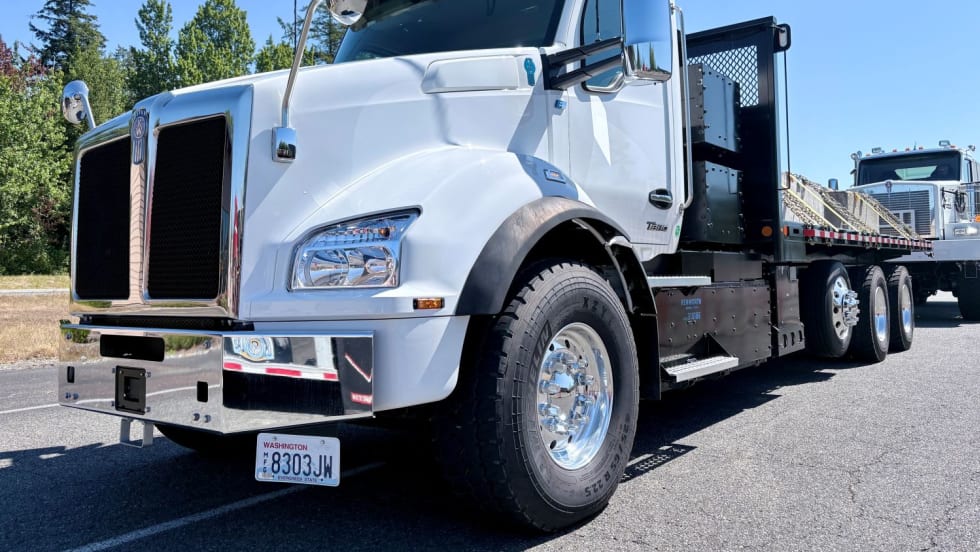
Kenworth T880E Brings EV Power to Vocational Trucks
A closer look at the Kenworth T880E’s range, charging, powertrain and upfit options — and where fleets are showing the most interest.
Read More →
Jennie Abarca Is Proving Electric Trucks Can Do the Job
HDT Truck Fleet Innovator Jennie Abarca is building confidence in fleet electrification one load at a time while openly sharing the challenges she encounters along the way as a small-fleet owner.
Read More →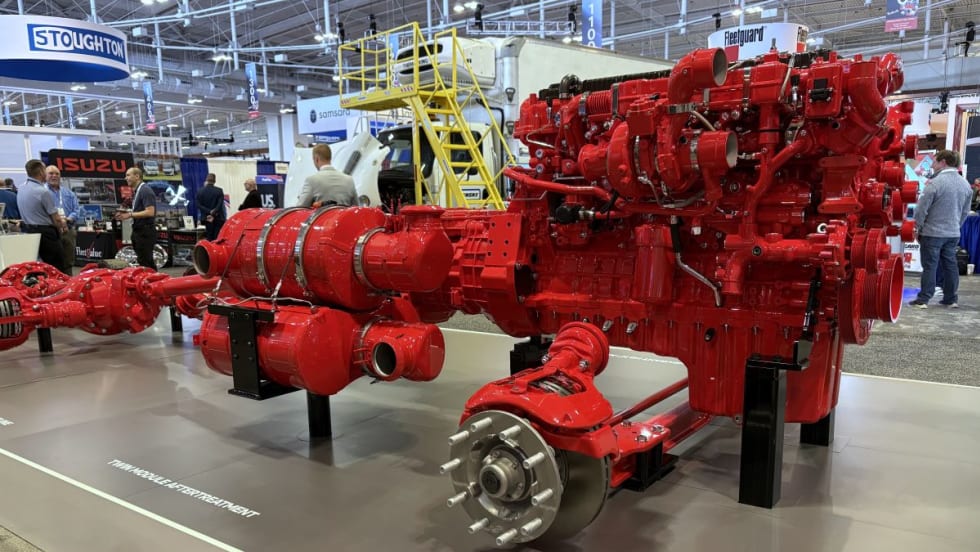
Cummins Adjusts 2027 Engine Rollout After EPA Proposal
The engine maker will gradually introduce its new Model Year 2027 diesel engines while continuing to offer current models during the transition, citing the EPA's proposed emissions rule changes.
Read More →