




No crystal ball for natural gas
Natural gas prices neared the lowest they've been in about a decade last winter, as utilities scrambled to take advantage of the fuel's low price tag and producers began to turn away from the low-profit fuel
Natural gas prices neared the lowest they've been in about a decade last winter, as utilities scrambled to take advantage of the fuel's low price tag and producers began to turn away from the low-profit fuel.
According to the U.S. Energy Information Administration, the proportion of natural gas used to generate electricity soared to almost 35% in February the highest ever for that month while production saw its biggest decline in a year.
These factors have led some to believe prices will rise again, and soon. Not so fast, say researchers at MIT.
Their study, featured earlier this year in The Energy Journal, compares oil and natural gas prices from the early 1990s to today, showing a relationship between the pricing of the two fuels. But the nature of that relationship is constantly changing and is subject to external pressures, making it extremely difficult if not impossible to predict the price of natural gas in the short or long term.
"The tie between gas and oil has been exaggerated," says John Parsons, the lead author of the study and executive director of MIT's Joint Program on the Science and Policy of Global Change and Center for Energy and Environmental Policy Research. "Parity will get re-established, but it might take a long time and it might be at a different level than you thought."
The research shows that, besides the price of oil, two forces heavily influence the gas market: long-term forces, like technological change, and short-term volatility due mostly to weather or seasonal changes. Both of these forces are currently at work, as prices per million British thermal units have fallen from $10 back in 2008 to $4 last fall to $2.40 today.
Parsons attributes a majority of the drop since last fall to weather, but points to new technology known as hydraulic fracturing along with other factors such as the global recession as the cause of the much larger drop in price over time. He says the price may recover from the short-term drop quickly perhaps back to $4 in just a couple years but price recovery from the effects of hydrofracking technology could take much longer.
"And so the danger is [that] we say that there's parity" between oil and gas prices, Parsons says, "and it gives people the impression that the parity establishes itself quickly and they discount the price signal and try to keep going with producing gas."
This is what happened when prices fell in the past: Producers were slow to take the price fall seriously because of the usual short-term volatility attributed to weather and seasonal changes.
How the gas market will shape up in the long term is anyone's guess, Parsons says, largely because untapped resources are a wild card. Right now, the U.S. has a very cheap resource that provides a short-term cushion of low-priced gas. If hydraulic fracturing turns out to have limited applications, gas prices probably won't stay low for very long. But if other parts of the world rich in natural gas choose to use hydraulic fracturing, natural gas could turn into a revolutionary fuel, he says.
That will "affect the price of gas and the price of oil and the pattern of electricity production globally," Parsons says. "But none of us know."
The researchers conclude that as much as oil and gas prices have been somewhat intertwined in the past, it is likely they will continue to affect each other. Future changes in gas-to-liquid technology, for example, would further strengthen the gas-oil relationship likely driving oil prices down, gas prices up, and re-establishing some parity between the two.
Reprinted with permission of MIT News (http://web.mit.edu/newsoffice/)
More Fuel Smarts

How Fuel Delivery Shapes Engine Performance
Fuel delivery depends on more than what happens at the injector. For fleet, maintenance and technical professionals, looking at the full path from pump to injector can provide useful context for understanding engine performance.
Read More →
East Coast Port Launches $45M Electric Truck Push
The Port Authority of New York and New Jersey announced millions in incentives for zero-emission drayage trucks, yard tractors, and new charging hubs near the port.
Read More →
California Bill Could Shed Light on Electric Truck Prices
Why do battery-electric Class 8 trucks remain so expensive? A California bill headed to Gov. Gavin Newsom would give fleets and state agencies more visibility into what manufacturers charge.
Read More →

Detroit Opens Orders for EPA 2027 Engines
Detroit isn’t starting from scratch to meet EPA 2027 diesel emissions standards. Its Gen 6 DD13 and DD15 engines keep much of today’s platform while updating the fuel and aftertreatment systems.
Read More →
Zero-Emission Truck Corridor Planned for West Coast
California, Oregon, Washington, British Columbia and Baja California are coordinating plans for truck charging and hydrogen fueling from Canada to Mexico.
Read More →
A Closer Look at Kenworth’s Electric T880E Vocational Truck [Video]
Learn more about Kenworth's T880E battery-electric vocational truck at the Paccar Technical Center, including its range, applications, upfitting considerations, and PTO options, in this HDT Spotlight video.
Read More →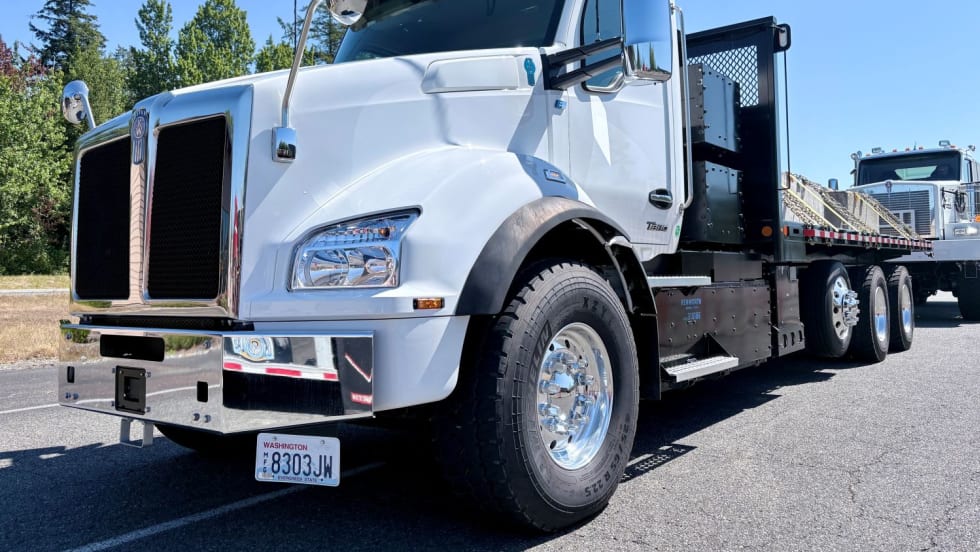
Kenworth T880E Brings EV Power to Vocational Trucks
A closer look at the Kenworth T880E’s range, charging, powertrain and upfit options — and where fleets are showing the most interest.
Read More →
Jennie Abarca Is Proving Electric Trucks Can Do the Job
HDT Truck Fleet Innovator Jennie Abarca is building confidence in fleet electrification one load at a time while openly sharing the challenges she encounters along the way as a small-fleet owner.
Read More →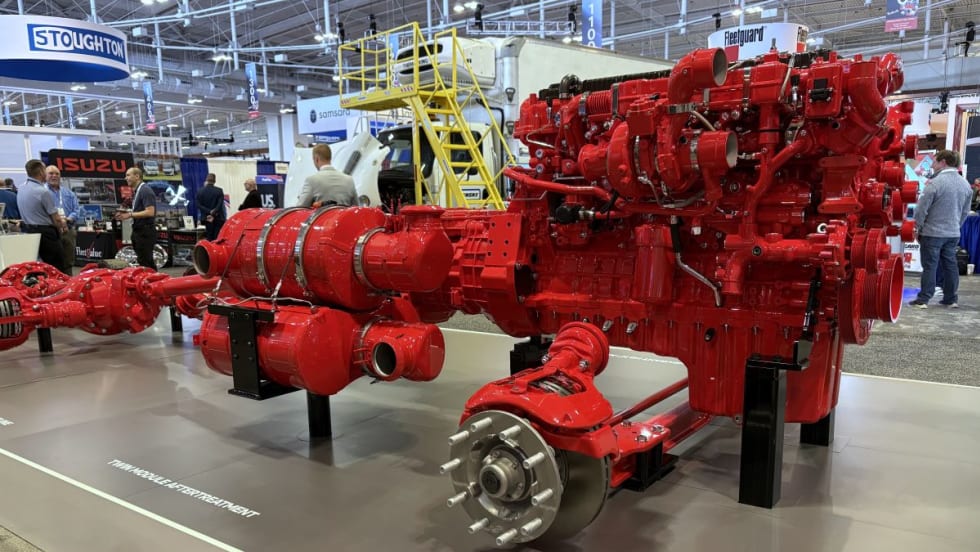
Cummins Adjusts 2027 Engine Rollout After EPA Proposal
The engine maker will gradually introduce its new Model Year 2027 diesel engines while continuing to offer current models during the transition, citing the EPA's proposed emissions rule changes.
Read More →
EPA Proposal Could Ease 2027 Truck Costs and Buying Uncertainty
The proposal doesn't change the tougher NOx standard, but it would revise key implementation requirements that manufacturers say have driven up costs and complicated fleet purchasing decisions.
Read More →