




Natural Resources Canada Releases LNG Deployment Roadmap
A report recently released by Canada's federal department of Natural Resources, entitled Natural Gas Use in Transportation Deployment Roadmap assesses of the potential benefits and the obstacles to liquefied natural gas as a fuel for trucking
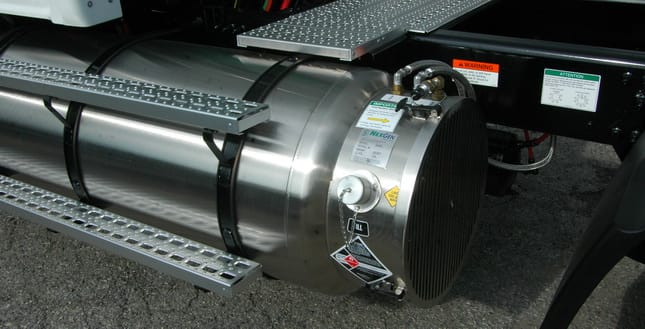
LNG has the potential to serve as an important niche in the trucking marketplace, but it won't be suitable for every type of operation given the limitations on its distribution and the costs of purchasing LNG tractors.
A report recently released by Canada's federal department of Natural Resources, entitled Natural Gas Use in Transportation Deployment Roadmap assesses of the potential benefits and the obstacles to liquefied natural gas as a fuel for trucking.
Among the more significant recommendations contained in the report is the use of government fiscal measures to reduce the upfront and ongoing capital risk for carriers investing in LNG technology -- a key point that leaders in Canada's trucking industry have been making for the past several months.
"Without significant incentives it will be difficult for carriers to justify the increased costs for LNG equipment," says David Bradley, CEO of the Canadian Trucking Alliance. "The GHG reduction benefits of LNG are real and at current prices it is an attractive alternative to diesel fuel. However, it will require investment on the part of the producers in the distribution infrastructure and it will require significant tax incentives as well as price guarantees to allow and encourage those carriers who are interested to make the shift,"
In March 2010, NRCan convened the Natural Gas Use in Transportation Roundtable to identify the optimal use of natural gas in Canada's transportation sector. Led by the Deputy Minister of Natural Resources Canada, Serge P. Dupont, The Roundtable consisted of federal and provincial officials, industry representatives, such as natural gas producers, transporters, distributors, vehicle makers, equipment manufacturers, and end-users. It also include representatives from environmental non-governmental organizations and academia.
The Deployment Roadmap is the result of discussions held since March, and it contains the results of consultations undertaken with various end-users that might adopt natural gas fueling technology. It also includes detailed business modeling that was performed to assess, analyze, and rank potential end-use applications in the medium- and heavy-duty portion of the transportation sector.
Long-haul trucking operators were identified as an attractive potential market for LNG use, but the report identifies some of the more substantial barriers to widespread uptake of natural gas as a commercial vehicle fuel, which include supply chain, technological, and market issues.
According to Bradley, LNG has the potential to serve as an important niche in the trucking marketplace, but it won't be suitable for every type of operation given the limitations on its distribution and the costs of purchasing LNG tractors.
"It will be of most interest to carriers with dedicated return to destination routes," he says, "but as part of a broad, comprehensive strategy for reducing GHG emissions from trucking, it definitely has a role to play. It is certainly of more potential benefit than biodiesel, for example."
CTA says that greater use of LNG fits well with its proposed program of voluntary measures designed to complement the proposed heavy truck fuel efficiency regulations currently under development by Environment Canada. The CTA program would also include incentives for voluntary investment in tractors certified to reduce GHG, and aftermarket technology for new and existing trailers.
"We'd much rather that the federal government focused on these real solutions than trying to push things like biodiesel down the industry's throat," says Bradley.
A PDF copy of The Roadmap report is available here.
More info: www.cantruck.ca
More Fuel Smarts

Record Diesel Prices Squeeze Trucking Fleets
Average U.S. diesel prices have climbed to nearly $6 a gallon, surpassing the 2022 record as tight refinery capacity and Middle East disruptions keep fuel costs elevated.
Read More →
How Fuel Delivery Shapes Engine Performance
Fuel delivery depends on more than what happens at the injector. For fleet, maintenance and technical professionals, looking at the full path from pump to injector can provide useful context for understanding engine performance.
Read More →
East Coast Port Launches $45M Electric Truck Push
The Port Authority of New York and New Jersey announced millions in incentives for zero-emission drayage trucks, yard tractors, and new charging hubs near the port.
Read More →

California Bill Could Shed Light on Electric Truck Prices
Why do battery-electric Class 8 trucks remain so expensive? A California bill headed to Gov. Gavin Newsom would give fleets and state agencies more visibility into what manufacturers charge.
Read More →
Detroit Opens Orders for EPA 2027 Engines
Detroit isn’t starting from scratch to meet EPA 2027 diesel emissions standards. Its Gen 6 DD13 and DD15 engines keep much of today’s platform while updating the fuel and aftertreatment systems.
Read More →
Zero-Emission Truck Corridor Planned for West Coast
California, Oregon, Washington, British Columbia and Baja California are coordinating plans for truck charging and hydrogen fueling from Canada to Mexico.
Read More →
A Closer Look at Kenworth’s Electric T880E Vocational Truck [Video]
Learn more about Kenworth's T880E battery-electric vocational truck at the Paccar Technical Center, including its range, applications, upfitting considerations, and PTO options, in this HDT Spotlight video.
Read More →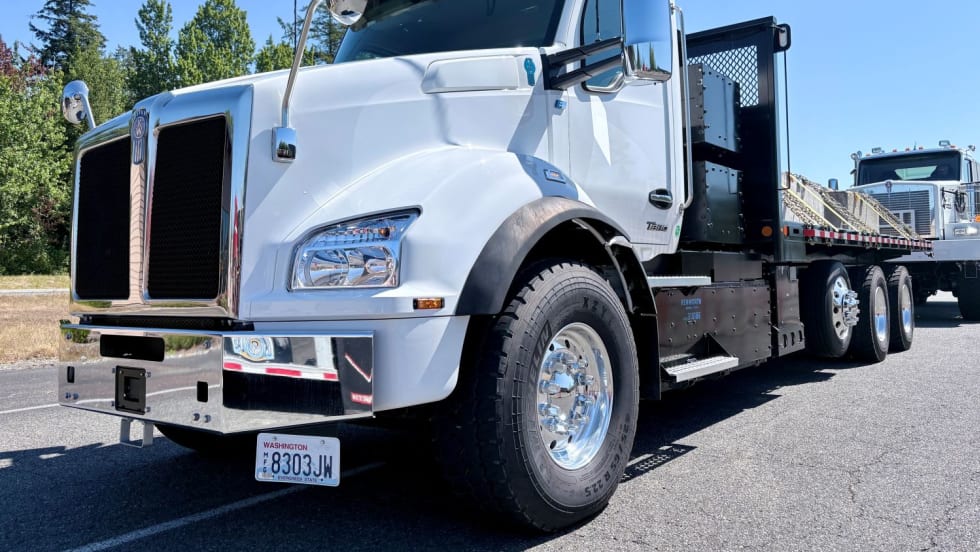
Kenworth T880E Brings EV Power to Vocational Trucks
A closer look at the Kenworth T880E’s range, charging, powertrain and upfit options — and where fleets are showing the most interest.
Read More →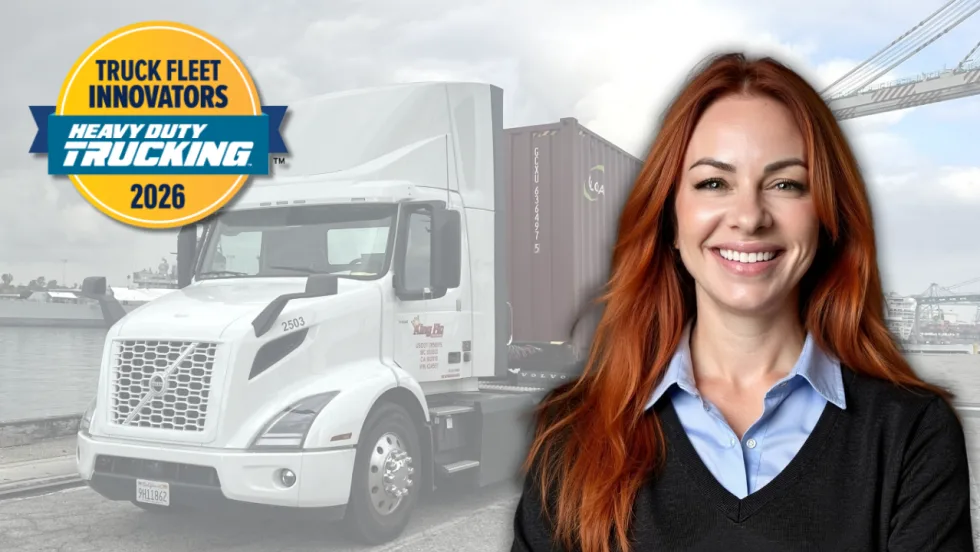
Jennie Abarca Is Proving Electric Trucks Can Do the Job
HDT Truck Fleet Innovator Jennie Abarca is building confidence in fleet electrification one load at a time while openly sharing the challenges she encounters along the way as a small-fleet owner.
Read More →
Cummins Adjusts 2027 Engine Rollout After EPA Proposal
The engine maker will gradually introduce its new Model Year 2027 diesel engines while continuing to offer current models during the transition, citing the EPA's proposed emissions rule changes.
Read More →