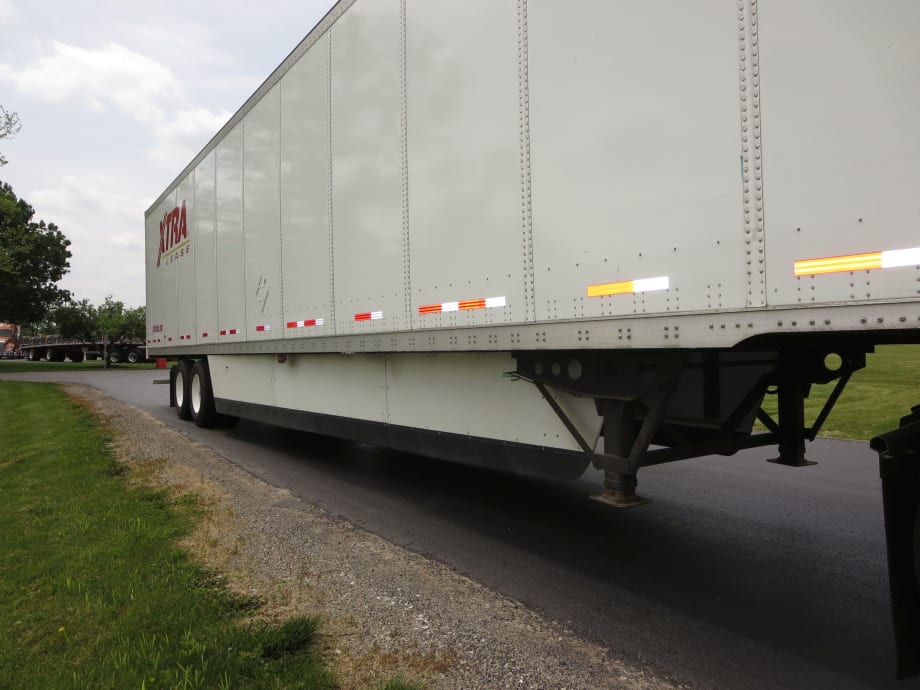
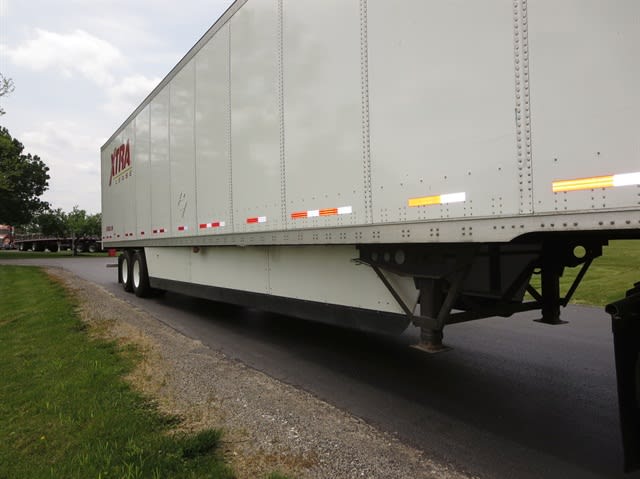
Skirts have become common on van and refrigerated trailers, with more than half of all such trailers leaving factories with skirts installed. But how durable are they? Testing and experience show that material flexibility is a requirement for resisting damage.
Fleets buy various brands of skirts based on performance, durability and price. To last a long time, skirts must be physically flexible, which means they’re made of thermoplastic or a thermoplastic-fiberglass composite. Some trailer manufacturers make their own skirts.
4 min to read
Fleets buy various brands of skirts based on performance, durability and price. To last a long time, skirts must be physically flexible, which means they’re made of thermoplastic or a thermoplastic-fiberglass composite. Some trailer manufacturers make their own skirts.
You’ve got to roll with the punches. So do trailer skirts if they are to last a long time, say people who make, test and use them. One such man is Kirk Altrichter, vice president, maintenance, at Crete Carrier Corp. in Lincoln, Neb., who began testing and buying skirts more than a decade ago, when he held a similar job at Gordon Trucking in Washington State. “There are several things” to look for in skirts, he says, not the least of which is ability to save fuel – the main purpose of skirts and other aerodynamic improvers.
Ad Loading...
Skirts have become common on van and refrigerated trailers, with more than half of all such trailers leaving factories with skirts installed. One estimate says it’s closer to two-thirds. California requires skirts on most semitrailers to reduce fuel use and greenhouse-gas emissions, and current and future federal standards have the same effect. So fleets buy the vehicles with skirts or install them afterwards.
Durability is another thing. “Is it gonna hold up?” Altrichter says. “How robust is it if it comes against docks, curbs, yellow poles” that limit truck movement in yards? “They have to be flexible. I stayed away from metal because they get bent and that’s the end of it. Some have springs in their mountings, but hit one at an angle and they get bent and don’t straighten out. Skirts need flexibility.”
Ad Loading...
In a test of aluminum skirts 11 years ago, Altrichter found that rivets popped through the skirts’ panels, which rigidly resisted flexing against wind force. In one case, this happened on the first trip.
“Heat expansion” is another potential problem with metal skirts, says Fritz Marinko, vice president, business development, at Stemco, which recently acquired ATDynamics, maker of the TrailerTail and EcoSkirts, which are non-metal. Metal expands with heat and contracts with cold, so mounts need to allow for this, but early models didn’t.
Skirt makers tried other materials and found that thermoplastic and a combination of thermoplastic and fiberglass worked best because they more or less ignore heat and cold, and bend upon impact but spring back into shape afterwards. So they hold up the best, Altrichter has found in his testing and in-service experience with thousands of trailers. Mounting brackets likewise have to flex, so some brands use the same skirt materials for brackets, while others use different but also resilient materials.
Some products have a tall strip of rubber-like material along their bottom edges to absorb most impacts with ground obstructions. Wabash National’s DuraPlate Skirts use a PVC strip that’s very flexible, but the thermoplastic skirt material also flexes inward and outward, then regains its shape. Utility Trailer’s USS, for Utility Side Skirt, uses no lower strip, but its thermoplastic skirting material is highly resilient and its galvanized spring steel brackets bend against inward or outward forces. Videos by Wabash, Utility, ATDynamics, Ridge, Transtex and others show how their skirts bend inward or outward but spring back when the obstacle has passed.
Skirt makers have pitted their products against obstacles to prove their resilience, and have made videos to demonstrate their performance and posted them on their websites. Mounts as well as the skirts themselves must bend inward and outward, then spring back into shape to keep working and their trailers running.
Mounting hardware must resist corrosion from salt spray, too, so nuts and bolts should be stainless steel or hot-dipped galvanized steel, says Marc Bolduc, vice president, business development, at Transtex Composite, maker of Edge products. They should also be SAE-rated, like Grade 5, so they resist shock and wind forces that try to stretch and bend the fasteners. He believes skirts should also look good, so their materials should resist marring by obstacles and waving or rippling in the wind. Thus Transtex’s skirts are stiff yet resilient.
Ad Loading...
Customers might or might not care much about appearances, and select products accordingly. “It comes down to a personal fleet opinion,” says Marinko. “One fleet buys one brand, another fleet buys a different brand,” based on performance and price. Sometimes a skirt will pick up a long black mark from rubbing against something, but the skirt still works and so does its trailer, hauling freight and making money.”
“Skirts have become a commodity,” Bolduc says, and strong competition among manufacturers has put pressure on pricing. “But the question is, do they hold up? Are parts available, and how good is the warranty – not just the words on paper, but the company behind it?” Prices based on fleet volume have dipped below $1,000 for some products, but better products will cost more. Repairs and associated downtime also cost money, so better products will probably be worth their higher prices.
“Durability far outshadows how we thought they would hold up,” says Marinko. “They’re holding up a lot better than we ever thought they would. Eight years ago, I was one who thought, ‘Oh my God, they’re gonna be nothing but trouble. But they’ve turned out to be very good.”
Do They Save Money?
With all the ins and outs of durability and longevity, effectiveness at saving fuel might become secondary. But fuel savings are what pay off the investment in skirts, so must be high on any list of considerations.
While at Gordon Trucking, Kirk Altrichter tested skirts over eight years. “I don’t think there’s a brand out there that I didn’t try,” he says. He ran one type for two months, on several trailers always pulled by the same tractors, from Spokane to suburban Seattle, with non-skirted sister trailers running the same route for comparison.
“We got a lot of data to validate the results. We found a 0.3 mpg improvement. Payback was fairly quick, even with three trailers for every tractor — about 18 months. Now with lower fuel prices, it would be closer to 20 or 21 months,” he says. “To anyone who doesn’t believe they work, I’d say, ‘Have you done valid testing?’”
Weight is a concern, but that has dropped from close to 300 pounds for a pair of skirts to between 150 and 180 pounds now. That can be offset by lightening the trailer itself. “You can take 60 pounds out with aluminum landing legs, and 80 with aluminum floor parts,” he says. “But truck weight (from heavier diesel exhaust-aftertreatment equipment) is the big concern” in modern rigs.
Based on his testing, Altrichter went with FreightWing skirts, but that product was purchased by Ridge Corp., which now markets them as Green Wing skirts. He tends to use those at Crete, but remains open minded and still tests products to stay abreast of developments.
Fritz Marinko, who has a background in aerodynamic research and now is a VP at Stemco-ATDynamics, is heading two task forces in the Technology & Maintenance Council of ATA that have analyzed the costs of aerodynamic devices. Members have written two recommended practices that will go out for balloting by TMC members this summer.
The Michelin X Multi Energy D2 is a regional haul drive tire engineered to help fleets improve fuel efficiency, durability and traction in demanding stop-and-go operations.
Fleets can now ask their usual AI assistants questions about maintenance, safety, fuel use, and vehicle performance, using their live Geotab data, and take action on the answers without leaving their preferred AI tool.
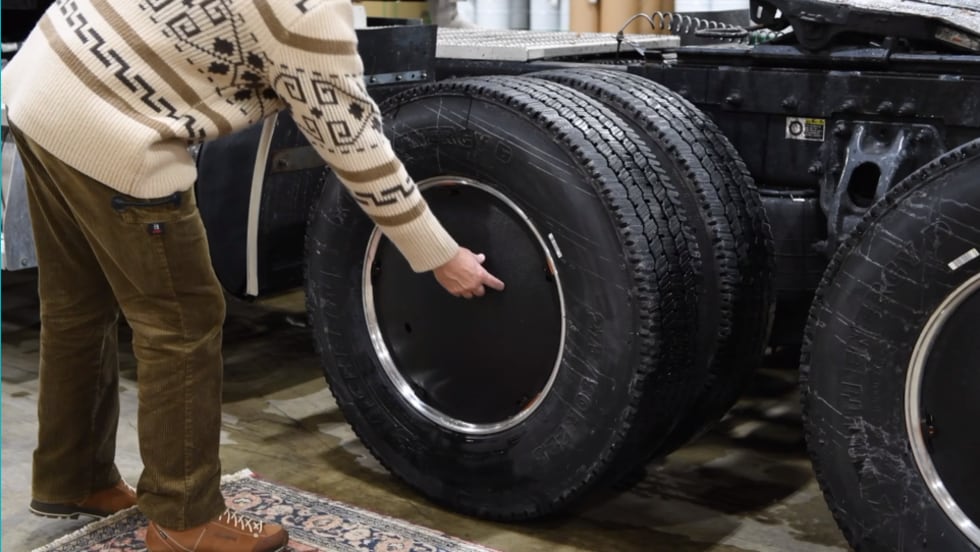
Aerodynamic wheel covers can deliver small but meaningful fuel-economy gains for fleets, and Deflecktor says its latest design aims to make the technology easier and more affordable to deploy.
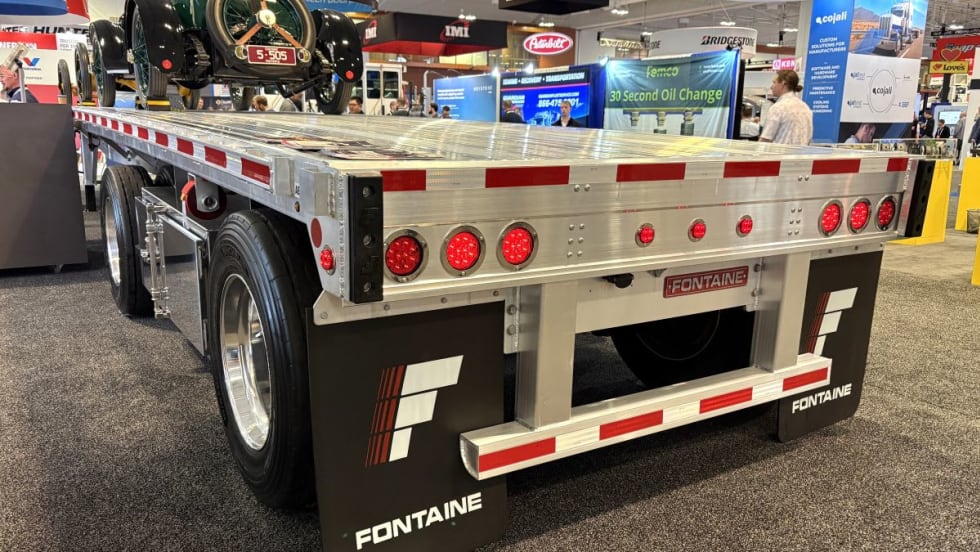
Fontaine is broadening its flatbed lineup with new models aimed at fleets, including a lightweight aluminum trailer expected in 2027 that emphasizes durability, repairability, and lower cost.
A new prototype from Fontaine Trailer focuses on what fleets say they need most: easier repairs, lower maintenance costs, and practical, service-friendly design.
Heavy Duty Trucking's Top 20 Products awards recognize the best new products and technologies. Check out the award presentations at the 2026 Technology & Maintenance Council annual meeting.
The Detroit® Gen 6 engine platform proves that real progress doesn’t require a complete redesign. Built on 20 years of trusted technology, these engines are designed for efficiency, stronger performance, and greater reliability than before. And they do it all while complying with 2027 EPA standards on every mile.
From pricing intelligence and compliance tools to charging infrastructure, diagnostics, tires, and AI, HDT’s 2026 Top 20 Products recognize the new tools, technologies, and ideas heavy-duty trucking fleets are using to run their businesses.
Geotab launches GO Focus Pro, an AI-powered 360-degree dash cam designed to reduce collisions, prevent fraud, and protect fleets from nuclear verdict risk.