




Kwik Trip Advocates Natural Gas Adoption
Kwik Trip, a convenience store and fuel chain with more than 400 locations in three states, is promoting liquefied and compressed natural gas as fuel sources to help increase nationwide adoption of LNG and CNG in Wisconsin, Minnesota, Iowa and other areas.
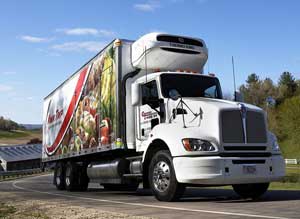
Among Kwik Trip's fleet are a Kenworth T440 LNG tractor and two Kenworth T440s powered by CNG.
Kwik Trip, a convenience store and fuel chain with more than 400 locations in three states, is promoting liquefied and compressed natural gas as fuel sources to help increase nationwide adoption of LNG and CNG in Wisconsin, Minnesota, Iowa and other areas.
"We're true believers and activists in making LNG and CNG go from an alternative fuel to a standard fuel," says Chad Hollett, Kwik Trip director of transportation and distribution. "We're moving forward with CNG at our stations (three are currently open) and have plans to have 15 to 20 sites completed by this time next year. Within those, up to six will also offer LNG at strategic interstate corridors."
To kick off the "local movement" toward LNG and CNG, La Crosse, Wis.-based Kwik Trip hosted a natural gas forum at its La Crosse campus in late May, and 1,500 people attended.
"Not a day goes by that we don't get 50 to 100 calls to learn about our plans with natural gas," Hollett says. "Customers want to know when it will be available in their area."
Adopting the equipment
Hollett says the calls often lead to questions about equipment, but for Kwik Trip, they're often questions easily answered. "We not only supply the fuel, we use the fuel," he says. "We have 400 vehicles ranging from cars to Class 8 trucks, and we're making the move toward natural gas in our own fleet. Today we have 20 natural gas vehicles in operation with more coming."
Among Kwik Trip's fleet are a Kenworth T440 LNG tractor and two Kenworth T440s powered by CNG.
"We purchased these vehicles without any government subsidies to see how they operate and how they can reduce costs for our company," Hollett says. "And they do - they all penciled out with a positive ROI. What's more, we knew fleets would ask questions about the vehicles so we wanted to have answers for them."
Working with Kenworth of Wisconsin, Kwik Trip spec'd the Kenworth T440s with the 8.9-liter Cummins Westport ISL G 320-horsepower engine, driven through automatic transmissions. Because much of the terrain is flat, Hollett says the power performance of the Kenworths is comparable to its other trucks with bigger engines.
"The drivers say they're operating just fine," he says. "And, they love the way they drive and how comfortable they are. What's more, we're not running light loads. The two Kenworth CNG tractors are hauling fully loaded 48- to 50-foot trailers, grossing out at 80,000 pounds. Our T440 LNG hauls a 9,600 gallon fuel tanker and it too runs fully loaded."
Lower cost, lower emissions
Running a slip-seat operation, the Kenworths and other Class 6-8 trucks in its fleet run virtually nonstop.
"We average between 200,000 to 250,000 miles on our trucks each year," Hollett says. "And we're getting close to 6 mpg in diesel and gas equivalencies with our LNG and CNG engines. With retail fuel prices that range between $1.59 and $1.79 for CNG, and $2.69 for LNG, the math pencils out well."
On the conservative side, running 200,000 miles per year, the company expects to save $80,000 a year in fuel costs with its CNG units; $43,000 a year with its LNG engines.
According to Hollett, while the fuel savings is something to smile about, so is lessening the country's dependence on foreign oil.
"We have a vast supply of natural gas and it's well documented," he says "Since oil is a global commodity and price and availability is influenced by world conditions, prices will always be in flux, but on the whole, will only go higher. Compare that to our own supply of domestically produced natural gas and we have control over our own destiny. To us, that makes sense, and it's why we think of LNG and CNG as the fuel of the future."
More Fuel Smarts

Record Diesel Prices Squeeze Trucking Fleets
Average U.S. diesel prices have climbed to nearly $6 a gallon, surpassing the 2022 record as tight refinery capacity and Middle East disruptions keep fuel costs elevated.
Read More →
How Fuel Delivery Shapes Engine Performance
Fuel delivery depends on more than what happens at the injector. For fleet, maintenance and technical professionals, looking at the full path from pump to injector can provide useful context for understanding engine performance.
Read More →
East Coast Port Launches $45M Electric Truck Push
The Port Authority of New York and New Jersey announced millions in incentives for zero-emission drayage trucks, yard tractors, and new charging hubs near the port.
Read More →

California Bill Could Shed Light on Electric Truck Prices
Why do battery-electric Class 8 trucks remain so expensive? A California bill headed to Gov. Gavin Newsom would give fleets and state agencies more visibility into what manufacturers charge.
Read More →
Detroit Opens Orders for EPA 2027 Engines
Detroit isn’t starting from scratch to meet EPA 2027 diesel emissions standards. Its Gen 6 DD13 and DD15 engines keep much of today’s platform while updating the fuel and aftertreatment systems.
Read More →
Zero-Emission Truck Corridor Planned for West Coast
California, Oregon, Washington, British Columbia and Baja California are coordinating plans for truck charging and hydrogen fueling from Canada to Mexico.
Read More →
A Closer Look at Kenworth’s Electric T880E Vocational Truck [Video]
Learn more about Kenworth's T880E battery-electric vocational truck at the Paccar Technical Center, including its range, applications, upfitting considerations, and PTO options, in this HDT Spotlight video.
Read More →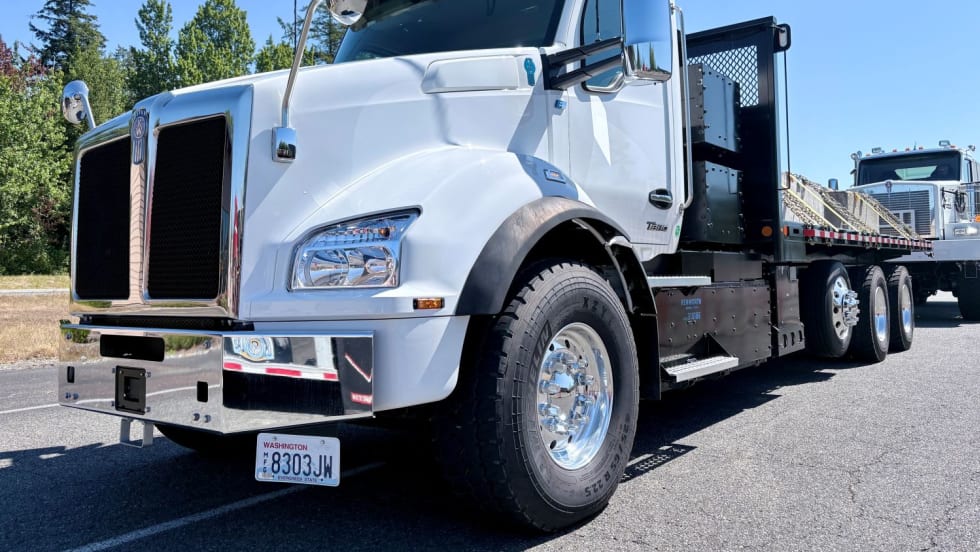
Kenworth T880E Brings EV Power to Vocational Trucks
A closer look at the Kenworth T880E’s range, charging, powertrain and upfit options — and where fleets are showing the most interest.
Read More →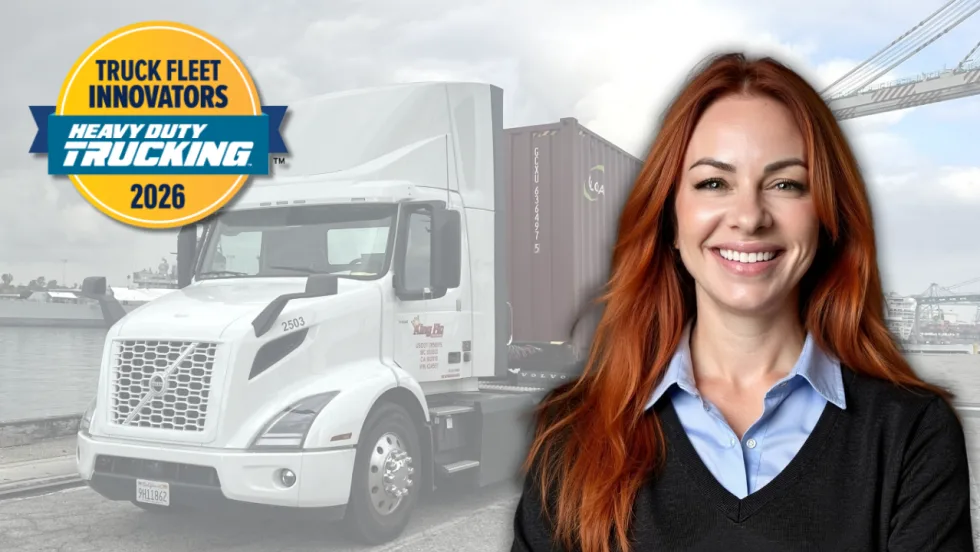
Jennie Abarca Is Proving Electric Trucks Can Do the Job
HDT Truck Fleet Innovator Jennie Abarca is building confidence in fleet electrification one load at a time while openly sharing the challenges she encounters along the way as a small-fleet owner.
Read More →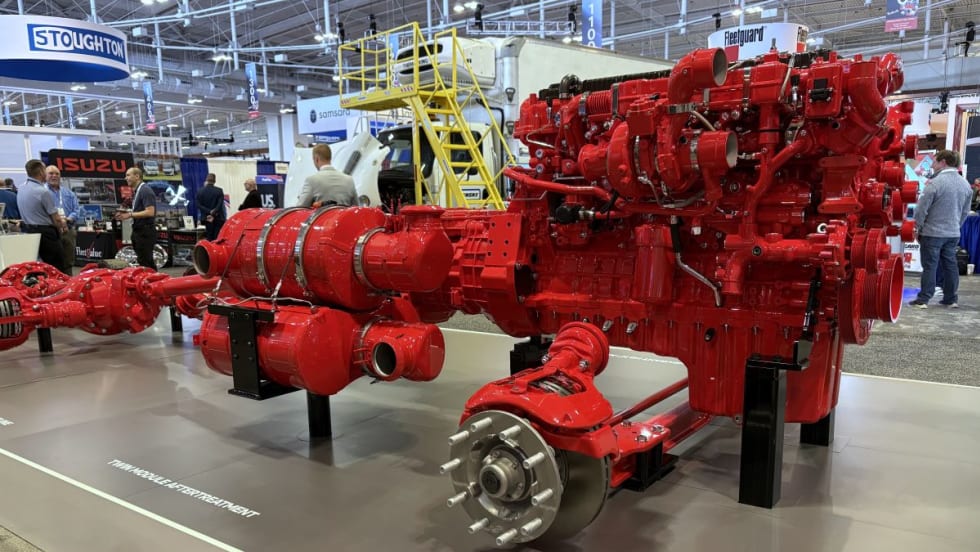
Cummins Adjusts 2027 Engine Rollout After EPA Proposal
The engine maker will gradually introduce its new Model Year 2027 diesel engines while continuing to offer current models during the transition, citing the EPA's proposed emissions rule changes.
Read More →