




If corrosion were a line item on a budget, the figure would shock you. It’s one thing to track replacement costs for brake parts and wheels that are prematurely removed from service, but many of your electronics-related problems are probably corrosion-related too. Emissions systems faults, ABS faults, lighting ... Many of those problems probably stem from corrosion. And that theoretical budget line item should probably include downtime as well as the cost of the failed part.
Keep Your Trailers From Being Eaten Alive
Corrosion solutions may require an investment, but that can still be cheaper than the problem.

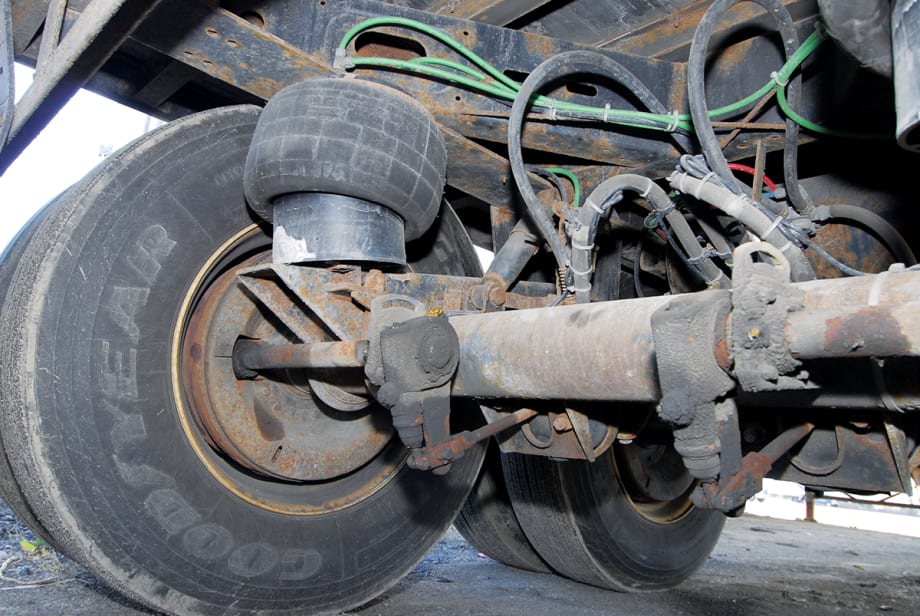
Corrosive road de-icing chemicals have lots of parts to stick to under a trailer.
Photo: Jim Park
Zane McCarthy is a mechanical engineer and corrosion expert who once had a brake business that solved a major corrosion problem for a school bus brake manufacturer. Now the business development manager at Link Manufacturing, he says corrosion is a $2.2 trillion industrial problem.
“Look at it this way. The U.S. government spent $440 billion in Afghanistan over the 10 years it was operating there,” he says, citing figures from 2011. “The approximate cost of corrosion to U.S. society that year was $460 billion.”
McCarthy says researchers estimate that the cost of corrosion from all sources — buildings, roads, industrial equipment, etc. — is between 1% and 3% of a nation’s GDP.

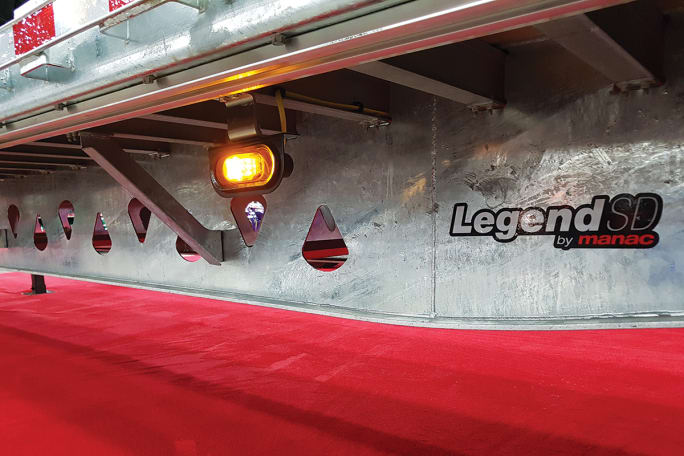
Galvanized trailer components won’t win a beauty contest, but they will keep your trailers in service longer.
Photo: Jim Park
Corrosion has always been a concern, but it has worsened over the past seven or eight years, with the introduction of more corrosive road de-icing chemicals, namely magnesium chloride brine solutions. These chemicals are often mixed with a binding agent such as corn syrup or beet juice to keep the material from flowing off the road. It also adheres better to vehicles, too.
“You can no longer just brush or wash the stuff off like you could with road salt residue,” says Tom Ramsden, vice president, sales and marketing at Manac Trailers. “That stuff is here to stay, and its corrosive properties make it very difficult for trailer manufacturers to build trailers that are completely resistant to corrosion.”
Ramsden says aluminum is a partial solution, but extensive use of that material can drive costs up and the road chemicals will eventually damage aluminum as well. He says fleets are now looking seriously at galvanized trailer components such as coupler-plates, crossmembers, bogey frames and landing gear for corrosion resistance.
“We have had galvanized door frames for 20 years now,” he says. “That’s probably where it all started, but we’re seeing customers now asking for things like galvanized bottom rails after using aluminum for the past 20 years.”
Circuit Protection
The other problem with magnesium chloride, aside from the fact that it’s a liquid that flows and then sticks to whatever it comes into contact with, is that it’s more conductive than sodium.
“The magnesium is attracted to the electricity and the copper, so it spreads faster,” says Gerry Mead, executive director of innovation at Phillips Industries and a former fleet maintenance exec. “Industry simply has to do a better job of keeping that material out of the wiring, and that means using better connectors properly, and never puncturing the wiring when doing a circuit test.”

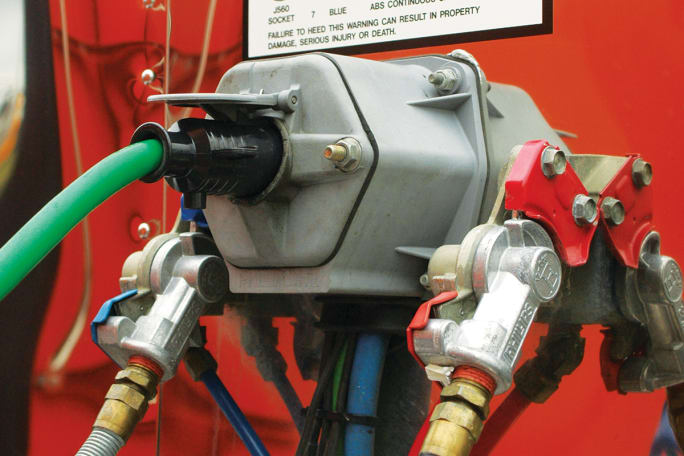
Trailer nose boxes get pretty badly abused by drivers. Any opening is an invitation to corrosion.
Photo: Jim Park
While the cost and frustration associated with corrosion of metal components is significant, it pales in comparison to the grief that accompanies electrical problems.
“OEMs have created very sophisticated circuits that also happen to be very sensitive to changes in voltage, current, or resistance … aka corrosion,” notes Trent Siemens, director of maintenance for Winnipeg, Manitoba-based fuel hauler Paul’s Hauling. “We as an industry have not done a good enough job understanding the intricacies of circuit maintenance, diagnosis, or repair. Corrosion in wiring can result in some very large diagnostic and repair costs, intermittent and frustrating circuit failures, frequent breakdowns, premature component failures, and everything else.”
Getting to the heart of corrosion issues takes some effort, but there may be more cost-effective solutions available than throwing money at parts replacements.
McCarthy suggests if fleets would study their own corrosion issues, they would be able to develop a plan to combat it, or at least understand what parts are failing and why, and then take steps to solve the problems.

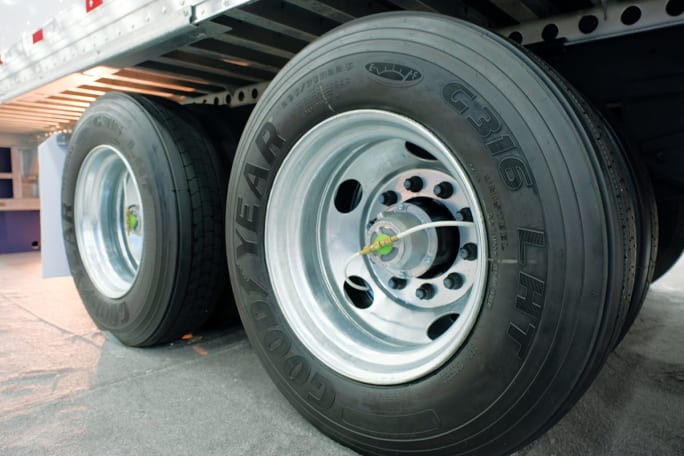
Galvanized wheels are now appearing as corrosion-resistant alternatives to painted steel wheels.
Photo: Jim Park
“Every fleet will have different issues, depending on their exposure,” he says. “Hiring an engineer to study a couple of brand-new trailers over their service life would give them a good picture of what’s going wrong. For some fleets the cost of corrosion might be just a rounding error and they won’t care. For others, it’s a real issue.”
The problem comes in proving the return on investment for that kind of fix. It’s not like buying an aero add-on, where you can almost instantly see the difference in fuel cost after installing the device. Corrosion happens over time. But for fleets that take the long view, it could be worth the effort.
More Equipment

SAF-Holland Redesigns Suspension Slider to Save Weight in On-Highway Trailers
SAF-Holland reengineered the UltraLite40 Slider for the ULX40 Mechanical Sliding Suspension and Axle System to reduce weight, improve durability, extend trailer life, and increase payload efficiency.
Read More →
Volvo Teases Next-Gen VNX as Platform Expansion Continues at TMC
Volvo Trucks North America highlighted new connectivity, safety tech and production investments at TMC. The OEM also signaled that a new heavy-haul flagship tractor is coming soon.
Read More →
SAF-Holland Introduces SmartSto System for Safer Tractor-Trailer Uncoupling
The system combines a fifth-wheel air release with stowage for air and electrical connections, helping prevent damage and reducing driver injury risk.
Read More →
SAF-Holland’s BrakeSight Aims to Take the Guesswork Out of Air Disc Brake Maintenance
New Haldex sensor technology from SAF-Holland integrates with telematics systems to give fleets continuous insight into air disc brake condition.
Read More →
Vanair Introduces Solar, Battery Power Ecosystem for Class 8 Trucks
The company’s expanded EPEQ ecosystem includes flexible solar panels, lithium batteries, hydraulic power systems, and a portable fast charger for electric trucks.
Read More →
Phillips Connect Expands Smart Trailer Platform with New Safety, Cargo and Equipment Intelligence
Phillips Connect Smart Trailer enhancements give fleets deeper operational insights from trailers -- even when another provider supplies basic GPS tracking.
Read More →
Accuride Unveils ProShield XGT Aluminum Wheel Coating at TMC
Accuride’s patent-pending surface-coating technology targets filiform corrosion and promises easier cleaning, longer-lasting gloss, and greater durability for aluminum truck wheels.
Read More →
Valvoline, Cummins Extend X15 Oil Drain Intervals to 100,000 Miles
New approval for Valvoline Premium Blue One Solution Gen2 allows fleets running Cummins X15 engines to extend oil drain intervals by up to 25,000 miles -- reaching intervals as high as 100,000 miles.
Read More →
A New Approach to Lighting Reliability
Peterson’s Genesis lighting system and repairable J560 connector target two persistent fleet problems: LED light failures and costly electrical connector downtime.
Read More →
The Hidden Cost of Delaying Truck Replacement
Many fleets extended truck replacement cycles during recent market disruptions. But holding equipment too long can lead to higher repair costs, longer downtime, and new operational risks.
Read More →









