




Is There A Set Time to Change Air Springs?
Type of service and wear, along with road damage, tend to establish any schedule, if that’s possible.

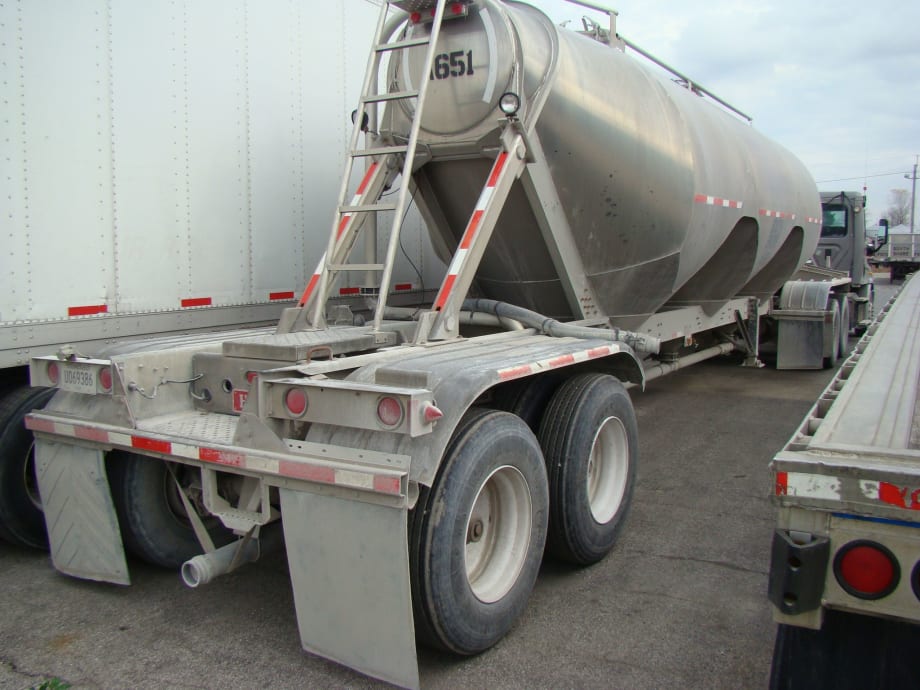
This 14-year-old Heil pneumatic tanker owned by South Shore Transportation in Ohio runs only about 150 miles a day, and its air springs finally needed replacement last month. All four bags were changed out.
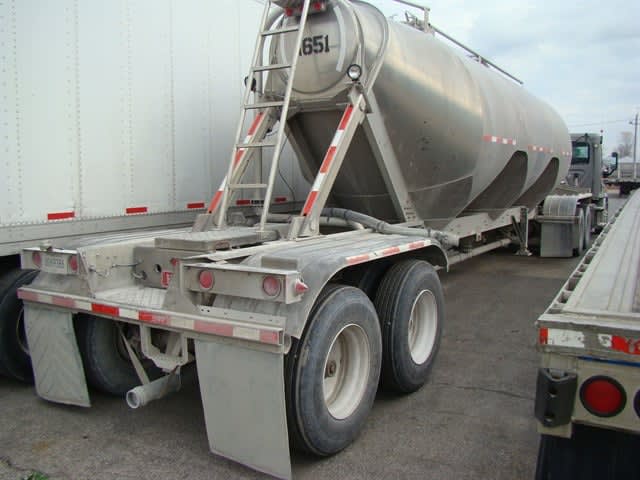
This 14-year-old Heil pneumatic tanker owned by South Shore Transportation in Ohio runs only about 150 miles a day, and its air springs finally needed replacement last month. All four bags were changed out.
Is there an established time or mileage for replacing air bags on air suspensions?” Kevin Tomlinson, maintenance manager at South Shore Transportation in Sandusky, Ohio, posed that question as a panelist during an industry meeting in September. The format of the session, which focused on decision-making, did not allow for an answer — but it’s a good question.
Because trucks, tractors and trailers operate in a wide range of load and operating conditions, there seems to be no predictable life for air springs, shock absorbers, height and pressure valves, bushings, fasteners and the many other parts of an air-ride suspension. Tomlinson, who’s also first vice chairman of the Technology & Maintenance Council of American Trucking Associations, understands that, and also that the session, during TMC’s Fall Meeting, was not designed to get him any answers. One day last month he reported that he had a dry-bulk tanker in the shop to change out its air bags, and discussed the subject.
“We’ve had vehicles that have run a million miles with the original bags, others that went 400,000,” he said. “You never know. This trailer hauls out of a limestone quarry just a few miles down the turnpike and back to a shingle plant right in town. A round trip is maybe 30 miles, and it’ll make five trips a day. It spends more time loading and unloading than running, so doesn’t get many miles. On something like that, miles don’t mean much.”
Exposure to ozone in the atmosphere and the sun’s ultraviolet rays can age air bags’ rubber, but that doesn’t show up as it does in old tires, Tomlinson said. Much more important are wear and tear from road conditions as the bags compress and stretch over high and low points in pavement, trail or uneven off-road terrain, and debris slung at the springs as they travel at high speeds.
Regular inspections combined with record-keeping will track wear and dictate when a bag, or a set of them, need to be replaced. Vehicles in the same kind of service in the same areas might establish a pattern that could suggest a change-out time for all of them, or might not. TMC’s Recommended Practice 643, Air-Ride Suspension Maintenance Guidelines, said air bags should be inspected every 50,000 miles, but that might be too long for the short-haul trailer that the South Shore crew dealt with here, even if it sometimes goes on longer runs.
This trailer is a 2000 Heil pneumatic aluminum tanker that’s been running “forever,” he said. “The bags are probably the originals,” and eventually wear showed up that brought the trailer into the shop. Mechanics changed out all four bags because there was enough time. Sometimes a trailer must get back into service ASAP, so only one damaged or worn-out bag will be changed.
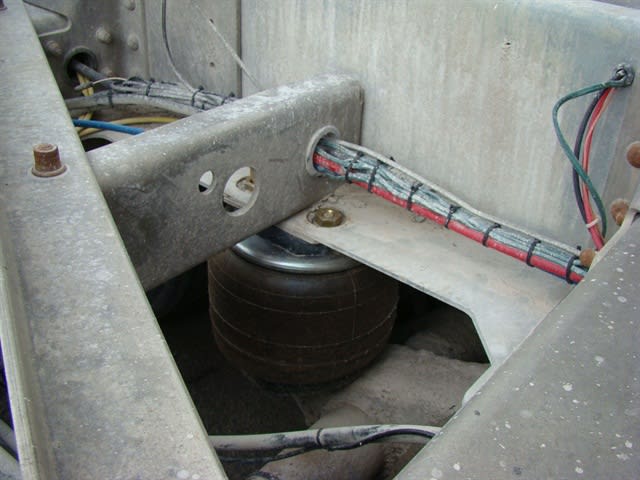
The new air bag, near the bottom of the air suspension, almost shines. Although only two manufacturers make most air bags, bolt patterns for mounts are designed by vehicle builders and vary greatly.
There are many ways that rubber air bags can be damaged, and RP 643 lists five:
Misalignment, where the upper and lower ends of the bag are out of line vertically.
A loose girdle loop.
Bottom-out abrasion, from the bag compressing too much.
Over extension, from wheels
dropping too low too many times.
Circumferential cuts, from improper pressure or height adjustment.
Cracks, holes, tears and chafing in the bags or at the top or bottom are among the types of damage that can occur. Cleaning the bags with a proper solution will give the mechanic a clear view of the rubber and other parts, the RP said.
Other components, including the height adjustment and pressure limiting valves, air filter, and bushings and fasteners, should also be regularly inspected during preventive maintenance or annual inspections.
There is virtually no standardization in air-spring mountings, even though only two manufacturers, Firestone and Goodyear, make most of them — a fact of life that irks Tomlinson. “It seems like every set is different,” he said. “The bolt patterns change with the vehicle manufacturers, and are just enough different that you can’t swap parts from one to another.”
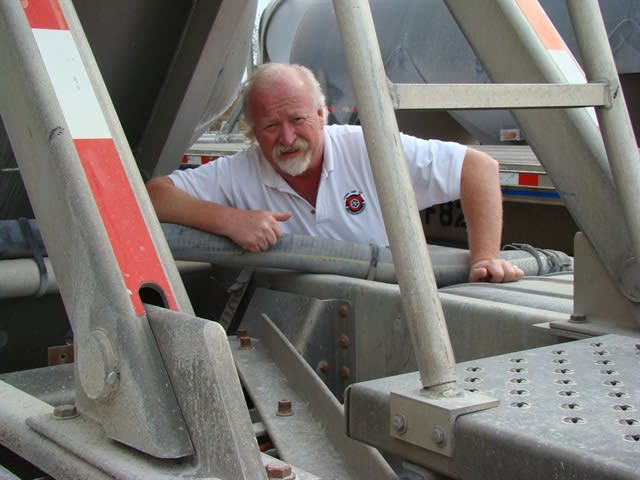
Kevin Tomlinson, South Shore’s maintenance director, wishes an air bag replacement time could be predicted.
He gets many of his parts from the TruckPro store in Greenwich, Ohio, where Jeremy Carruthers is the manager. “No, God no,” he said when asked if there is any standardization. “You can have two trailers built side by side and they can have two kinds of air bags. There are 80 different part numbers carried just in this store. In front of me is a Firestone book that’s got 150 pages of just air bags, with pictures, and there are four or five part numbers on each page. There are so many applications — drive axles on trucks, trailer axles, lift axles.”
Air springs cost from about $100 each for high-volume parts to $220 for more unusual types, he said. Of a predictable life cycle for them, Carruthers comments, “I wish there were an actual time line the guys could use before the bags blow up in their faces. But there are too many different uses. Normally, they replace ’em when they fail.”
More Maintenance

Truck Drivers Need More Than Another Alert
Fleets have more visibility into truck health, safety events, and driver activity than ever. The next challenge is turning all that information into useful guidance for the person who has to decide what to do next.
Read More →
The Maintenance Checks Trucking Fleets Should Prioritize Before Fall Freight Picks Up
Making it through August isn’t the same as being ready for the next several months of operation. Find out what systems may have suffered from summer heat and need to be checked out before fall.
Read More →
What Three Fleets Are Doing Differently When Buying Truck Parts in 2026
With freight improving but costs still climbing, fleet maintenance executives explain how they're balancing price, quality, and supplier relationships.
Read More →
Paccar Recalls 2027 Trucks Built This Summer for Possible Electrical Problem
The nearly 6,000 Kenworth and Peterbilt trucks in the recall could potentially lose engine power, among other things.
Read More →
Will API PC-12 Oil Change Trucking Fleet Maintenance?
The new API PC-12 heavy-duty engine oil category reflects the changing demands of modern diesel engines. But fleets like Foodliner are looking to getting their own data before making decisions on adopting the new oils and questions such as extending oil drain intervals.
Read More →
Brake Safety Week to Focus on Drums and Rotors
Commercial vehicle inspectors are focusing on truck brakes during CVSA's Brake Safety Week, August 23-29.
Read More →
Possible Battery-Cable Fires Prompt Recall of 15,000+ International MV and HV Trucks
On the recalled vehicles, manufacturing variations can cause the battery interconnect cable to contact the auxiliary stud and hold down the bracket.
Read More →
Rush, MCT Team Up to Grow Refrigeration Service Network
The joint venture will operate MCT's network of Carrier Transicold dealerships and mobile service locations, with the companies promising greater service capacity and uptime for refrigerated fleets.
Read More →
ConMet Expands Aftermarket Brake Drum Lineup With TruCast
A new heavy-duty truck brake drum option in the aftermarket gives customers more flexibility within the ConMet product family.
Read More →
Mack Expands Premium Service Contract Coverage to Medium-Duty MD
With a service contract, inspections, preventive maintenance and repairs can be handled in a single visit instead of multiple ones.
Read More →