




Incorporation Options: What's the Best Fit for Your Company?
When you started your business, chances are there weren't quite as many options for how to organize it as there are now

The IRS requires S-Corp owners to be paid
When you started your business, chances are there weren't quite as many options for how to organize it as there are now.
So whether you're looking at starting an offshoot business or want to reevaluate your current business organization, you'll need to know about the various types.
Each business structure, from simple sole proprietorships to C-corps, S-corps and LLCs, offers the owner a unique structure for building a company. It is important to weigh the needs of your company against the various advantages and disadvantages of different business types. How many owners are involved in your particular venture? Which options have tax structures advantageous to your amount of revenue? How can you best protect yourself from liability should the unfortunate occur? What is your long-term vision?
Lewis Affetto, CPA and managing partner at Bernard Affetto and Company, a Chicago-based accounting firm, advises small businesses setting up shop. For the smallest start-up businesses, a sole proprietorship is the easiest and least expensive business to set up, Affetto explains. "Basically, you only need a Social Security number to start up."
In a sole proprietorship, the owner is basically self-employed, and the structure doesn't afford many benefits. If you are doing mainly consulting and a little bit of sales, it may work out. However, the structure offers virtually no tax benefits, and more importantly, no liability protection. General partnerships are similar, except of course with more than one owner.
Unsurprisingly, neither option is seen too often. President and CEO of Castle Wealth Advisors Gary Pittsford, CFP, says you might find one of these in "a small hardware shop, in a small town of maybe 1,000 people in Montana." Pittsford has worked with small, family-owned businesses for 35 years, and with a number of HDA Truck Pride companies in the past several years.
C-corps and S-corps are a step up from sole proprietorships and partnerships in that they both offer liability protection. This is extremely important. If you sell someone a faulty brake that causes an accident, or a customer is injured on your property, they can sue your corporation. However, your personal assets, such as home and retirement, are protected.
C-corps and S-corps are pretty much the same with respect to liability. It is in tax structure where they begin to diverge.
"Normally, a smaller level of income flows through an S-corp better," Affetto says. "In a C-corp, [the owner] can't get money out without a bonus, excessive employment tax or dividends."
In an S-corp, profits flow directly to the owner and onto his personal income tax statement - in other words, it only gets taxed once. In a C-corp, the company's income is taxed first. Then the money you take out of the company to pay yourself also gets taxed. In a smaller operation, avoiding the double taxation means more money for you at the end of the day. For this reason, the S-corp structure is most often recommended to small business owners in the aftermarket world.
"Of 200 people in a convention, four or five people [usually] have C-corps," says Pittsford, who has asked owners to show hands at past business conventions.
He says many of those companies were started prior to 1958, when the S-corp came into being under President Eisenhower. Many companies that began as C-corps in that era choose to remain incorporated that way. (We'll talk about the possibility of switching later).
C-corps do have some advantages, especially for larger, publicly held companies. If an S-corp has many shareholders, company tax information must flow through to each individual person, which can become a burden. In a C-corp, the company deals with its own corporate taxes first, and passes the personal income tax responsibility onto shareholders, a simpler arrangement.
Another option for business owners is the limited liability company, or LLC, which was not widely available until the '90s. However, the option isn't often the best option for a company's main business. Like the C-corp and S-corp, the LLC offers liability protection in the event of lawsuit. There are, however, differences in tax structure that make the option unfavorable for many businesses.
"All of the [LLC's] income is taxable as self-employment income," Pittsford says. "Therefore if the company is going to be very profitable and has a taxable income each year of more than $300,000 to $400,000, they may want to set up an S-corporation."
The income of an LLC owner is very similar to the income of a sole proprietorship - all net profits are fully taxable under the Federal Income Contributions Act tax, or what employers and employees pay to Social Security and Medicare. In an S-corp, income can be divided between corporate earnings and wages. Wages are taxable under FICA; corporate earnings are not. So if an S-corp earns $100,000 and you pay yourself $50,000, you only pay FICA taxes on $50,000. In an LLC, FICA tax would be owed on the full amount.
However, as Affetto explains, the division between wages and earnings in an S-corp can be tricky.
"The IRS requires you to pay 'reasonable compensation,'" he says. Yet the definition of "reasonable compensation" is not codified in law. "We have had auditors say it should be at least 50% [wages], but there is no law."
The IRS will come after companies trying to cheat the system. According to Affetto, if the S-corp is earning that same $100,000 per year, but the owner consistently pays himself just $10,000, the feds will almost certainly come knocking.
However, there is a very real liability advantage to the LLC, in addition to standard liability protection, when used in combination with a different type of corporation.
Pittsford says if the company has a brick-and-motor store, the physical building should not be part of the same corporation as the business itself - it should be its own LLC. In practice, an owner effectively pays rent to himself to use the building. While that may be slightly complex, it protects the building asset in the event of a lawsuit.
Say your company sells brake shoes, and unbeknownst to you hawked a faulty batch that causes several truck accidents. If you are sued for selling faulty product, the main business is liable for damages. However, because the actual shop is a separate entity, it remains protected. It is a relatively simple move that can save a bundle in a worst-case scenario.
Mike Betts, owner and president of Betts Spring in the San Francisco area, uses LLCs in a similar way. Betts Spring is a sixth-generation company and a C-corp.
"The corporation is the mother ship," Betts says, explaining that all his various subsidiaries are incorporated as LLCs. This way, the main company is not liable in lawsuits that may arise from the actions of other people in the company. As the corporation grows, it is a great way to limit risk.
Another difference between the various types of incorporation is the way ownership functions, which can have major implications depending on who is involved in your business.
A C-corp can have many different types of stock, voting and non-voting for example. This is highly advantageous if your company is large enough to consider going public, where people with greatly differing interests may have an ownership stake, however small. S-corps are more limited in the types of stock they may have, and therefore it would be impossible to control voting, according to Affetto.
The ownership issue is a bit more pertinent between S-corps and LLCs. For starters, ownership of S-corps is limited to U.S. citizens. If your aftermarket business will be partially owned by s
More Aftermarket

What Three Fleets Are Doing Differently When Buying Truck Parts in 2026
With freight improving but costs still climbing, fleet maintenance executives explain how they're balancing price, quality, and supplier relationships.
Read More →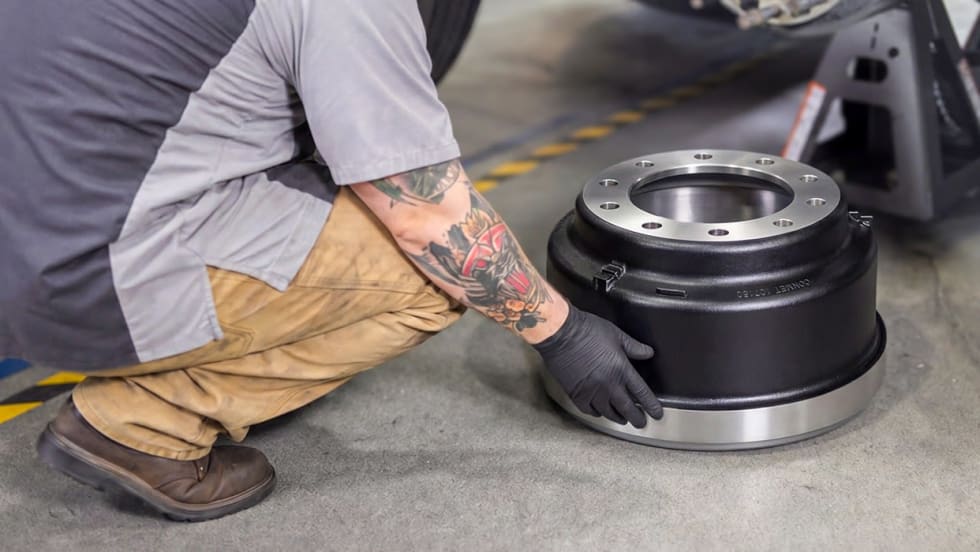
ConMet Expands Aftermarket Brake Drum Lineup With TruCast
A new heavy-duty truck brake drum option in the aftermarket gives customers more flexibility within the ConMet product family.
Read More →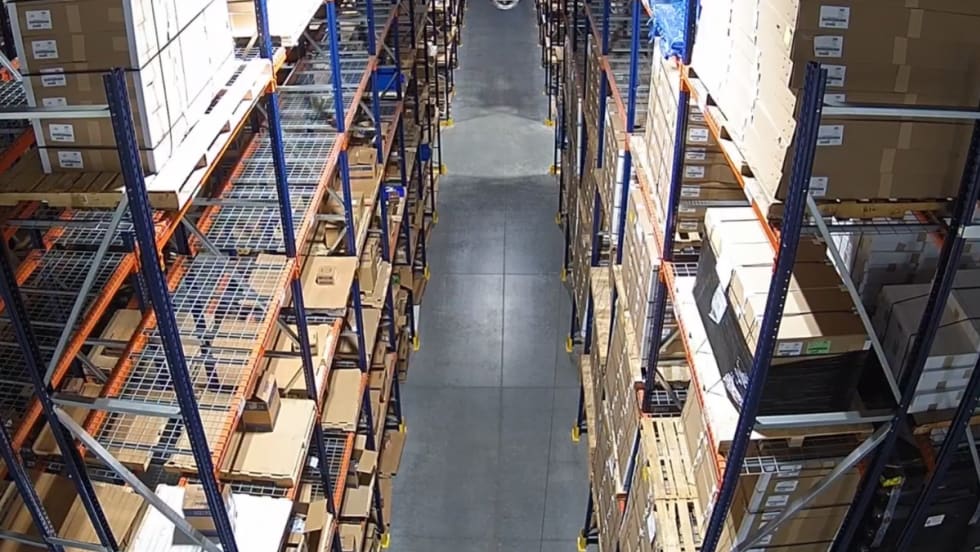
Phillips Opens High-Tech Distribution Center for Faster Parts Delivery
Phillips Industries’ new Cincinnati-area distribution center is now shipping aftermarket trucking parts nationwide, aiming to speed up delivery times for customers.
Read More →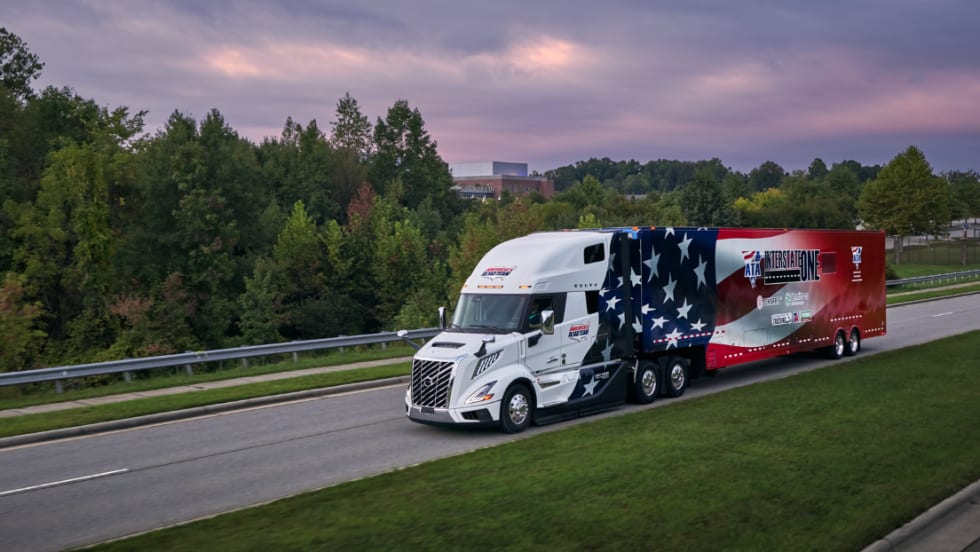
Volvo to Sponsor America’s Road Team for 2025
Volvo Trucks announced that it is extending its exclusive sponsorship of America’s Road Team for 2025.
Read More →
Webb to Start Taking Orders for UltraSet Pre-Adjusted Wheel Hubs
Webb, which recently acquired the Stemco Trifecta pre-adjusted hub program, will soon start taking orders for its replacement pre-assembled hub, the UltraSet.
Read More →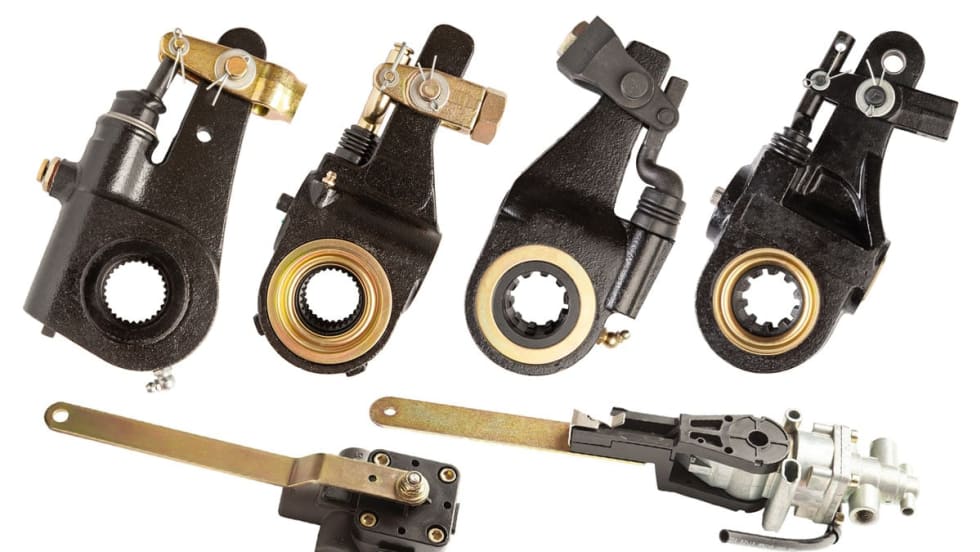
All-Makes Automatic Brake Adjusters, Ride Height Control Valves from Midland
SAF-Holland has added automatic brake adjusters and ride height control valves to its Midland All-Makes Program.
Read More →
ZF Aftermarket Expands [pro]Academy Training
ZF Aftermarket said it is expanding its ZF [pro]Academy training and will be adding 40 new modules this year.
Read More →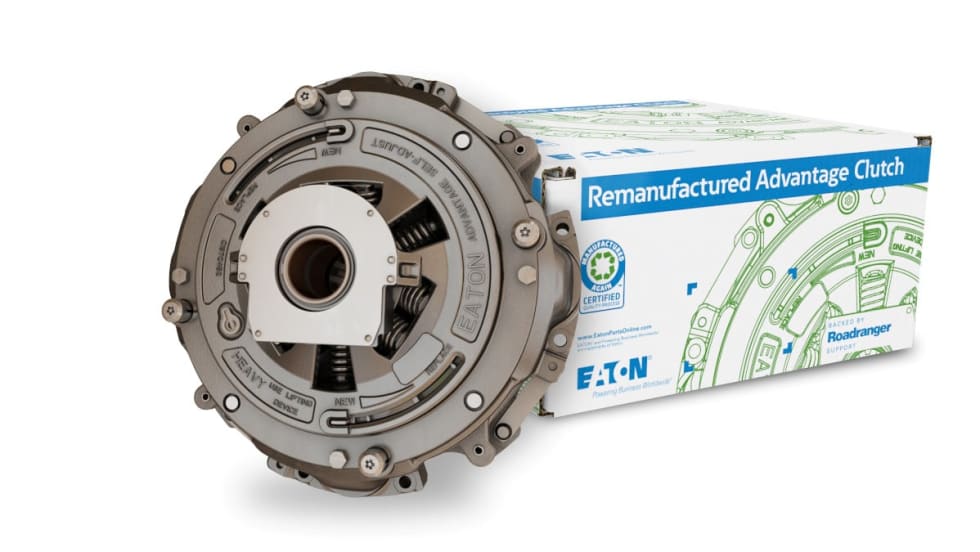
Eaton Adds Remanufactured Advantage Line of Clutches
Eaton has added its Advantage clutches to its remanufactured product line. The clutches feature a unique strap drive intermediate plate designed to allow customers to choose the latest OE specification
Read More →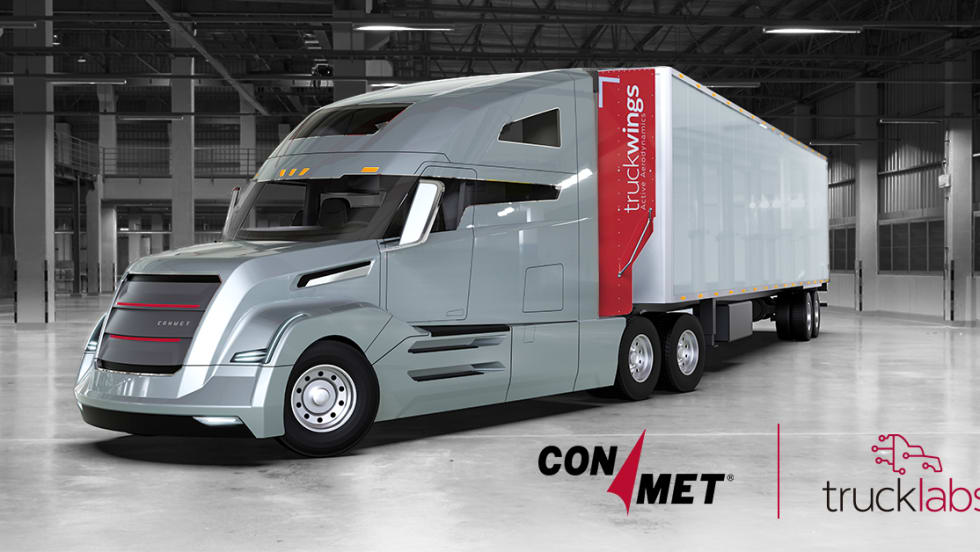
ConMet Acquires TruckLabs, the Creator of TruckWings
Commercial truck and trailer parts provider ConMet acquired TruckLabs, the company that created TruckWings, an aerodynamic device that attaches to truck cabs and deploys to close the gap between truck and trailer. TruckLabs now operates as a subsidiary of ConMet.
Read More →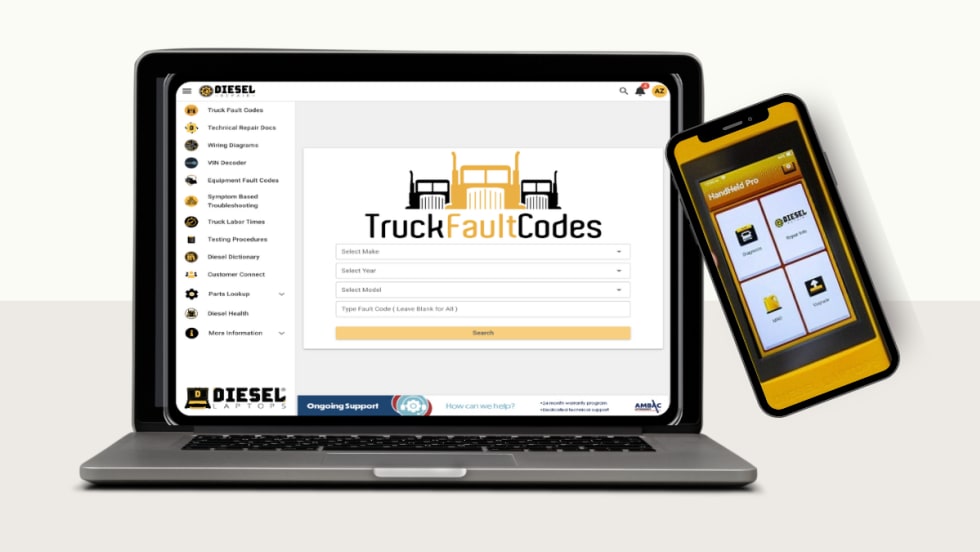
Diesel Laptops Releases Fault-Code-to-Part-Number Tool
Diesel Laptops said its Truck Fault Codes allows users to input a fault code and immediately identify and order the parts needed to complete repair work.
Read More →