




How Will the Next Highway Bill Get Funded?
More attention is being paid this week to legislating infrastructure funding as the expiration date on the current MAP-21 highway bill looms ever closer - not that deadlines mean much on Capitol Hill.

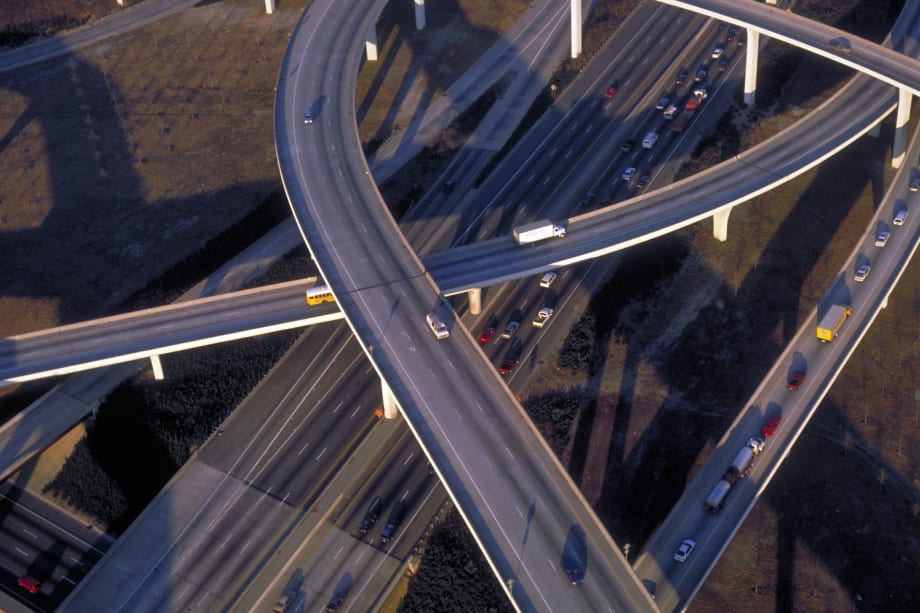
Not that deadlines mean much on Capitol Hill, more attention is being paid this week to legislating infrastructure funding as the expiration date on the current MAP-21 highway bill looms ever closer.
Little surprise, then, that while millions of Americans had their minds on filing their income taxes today, American Trucking Associations president and CEO Bill Graves took the time to stress that "we're only a month and a half from the expiration of the current highway bill."
In his statement, Graves then "implored leaders on Capitol Hill, at the Department of Transportation and in the White House to step up and deliver a plan — and funding — for the transportation system our country needs and deserves.
"We again call on our leaders in Washington to find the appropriate funding to pay for the improved and expanded roads and bridges we need to continue moving America forward into the 21st century as the economic leaders we believe ourselves to be," Graves added.
At this late date, even with few if any details ironed out between Congressional Republicans and Democrats as well as with the White House, it does look more and more like the next long-term highway bill — whenever it comes up for a vote — will be framed not by how much it will cost, but how it will be paid for.
Going into 2015, most of that debate on Capitol Hill has revolved around whether or not to hike the federal fuel tax on diesel and gasoline purchases as well as whether to embrace President Obama’s idea of paying for a multi-year surface transportation package in part via repatriation, that is, through revenue gained from a one-time tax on overseas corporate profits.
But there is yet another highway-funding proposal on the table, which the Congressman who authored it took pains to promote this week.
Rep. Alan Lowenthal (D-CA) announced yesterday that he will be joined by Rep. Brenda Lawrence (D- MI) and various public and private sector stakeholders at an April 21nd “call to action” news conference on Capitol Hill to discuss how his bipartisan bill “would implement a user fee on goods movement to create a national freight trust fund dedicated to infrastructure expansion, upgrade and repair.”
Dubbed the "Economy in Motion: The National Multimodal and Sustainable Freight Infrastructure Act" (H.R. 1308), the bill's original co-sponsors are Reps. Brenda Lawrence (D-MI), Dana Rohrabacher (R-CA), and Ann Kirkpatrick (D-AZ).
According to Lowenthal, his bill would raise "roughly $8 billion a year dedicated to freight-related infrastructure projects throughout the nation" that would set up a Freight Transportation Infrastructure Trust Fund funded through "a national 1 percent waybill fee on the transportation cost of goods."
To invest the funds, H.R. 1308 would create two freight-specific grant programs:
A formula system, in which each state would receive funds annually based on the amount of existing freight infrastructure within the state. To be eligible, states would have to develop comprehensive "State Freight Plans' and have or form "State Freight Advisory Committees," as encouraged under MAP-21, the federal highway authorization enacted in 2012. "The state freight plans will contain environmental goals and strategies developed by state freight advisory committee members; providing a path for freight projects to address and reduce the environmental and community impacts of goods movement."
A competitive grant program that would be open to all local, regional, and state governments.
Lowenthal noted that "to address the growing national backlog of infrastructure needs to support our economy, sustained investment at the $8 billion level is necessary."
"Because we have been neglecting our infrastructure, the stresses and strains causing our roadways and bridges to deteriorate threaten our quality of life," Rep. Rohrabacher stated. "We cannot allow the transport of consumer goods, agricultural products, and industrial equipment to be taken for granted."
"Congressman Lowenthal is right on the mark with this bill, which will help American industry grow and create jobs as it competes more effectively in domestic and international markets," remarked Leslie Blakey, executive director of the Coalition for America's Gateways and Trade Corridors.
According to Lowenthal's office, H.R. 1308 and the Obama Administration's GROW AMERICA Act 2.0 are "programmatically similar and send a clear message: the time to invest in our nation’s freight infrastructure is now," but the measures differ primarily on "how to fund these strategic freight investments."
Invited to Lowenthal's event next Tuesday "to amplify the message of long-term freight transportation funding through their own unique perspectives" are Secretary of Transportation as well as representatives of the Coalition for America's Gateways and Trade Corridors, the Southern California Association of Governments and the Port of Long Beach, among others.
More Drivers
Trucker Path Expands Reserved Parking Network
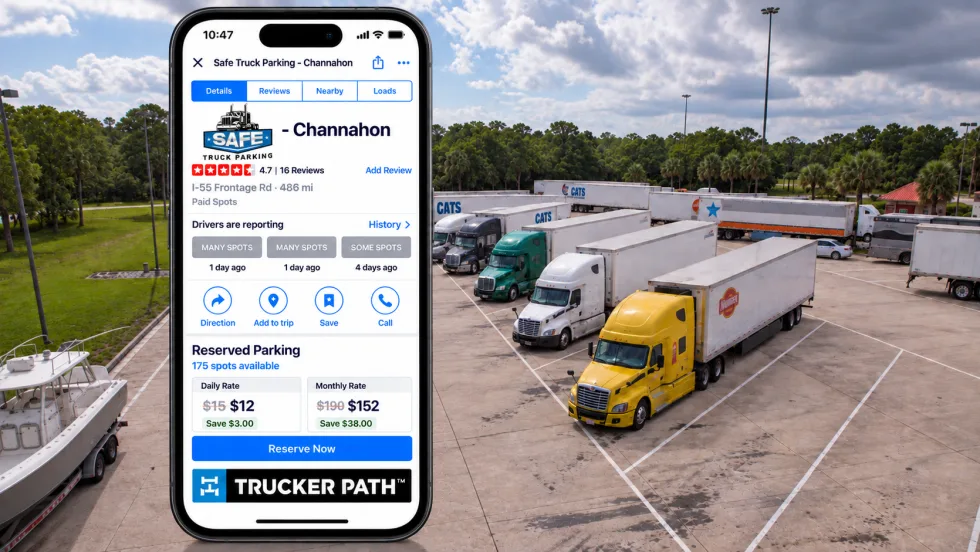
Trucker Path has added close to 6,000 more truck parking spaces to its Trucker Path Reserved Parking Network with the addition of Safe Truck Parking.
Read More →
EEOC Sues Texas Trucking Company Over Driver Age Limits
The agency says Trancasa USA rejected applicants over 65 and applied tougher driving-record standards to those over 60.
Read More →
Nussbaum, Roehl Announce Second Driver Pay Increase This Year
This year has seen a swath of major truck driver pay increases as freight capacity has tightened.
Read More →
From One Generation to the Next: How Mentorship Builds Safer Truck Drivers
After three decades in trucking, Harold Perry shares what he's learned about driver safety, mentorship, and helping the next generation build confidence behind the wheel.
Read More →
Truck Drivers Need More Than Another Alert
Fleets have more visibility into truck health, safety events, and driver activity than ever. The next challenge is turning all that information into useful guidance for the person who has to decide what to do next.
Read More →
FMCSA Removes 110 Truck Driver Training Schools from Certified ELDT List
Federal regulators also are targeting more than 160 additional training providers and launching a nationwide audit of third-party CDL skills testers as part of a broader crackdown on trucking fraud.
Read More →
Hours of Service Pilot Programs: FMCSA Readies for 2027 Rollout
Two pilot programs could eventually reshape hours-of-service rules, giving truck drivers options to pause their 14-hour clock or use longer split sleeper rest periods.
Read More →
Medical Cards, English Proficiency Reshape Roadcheck Violations
Medical-card violations jumped to the top of the driver out-of-service list during CVSA’s 2026 International Roadcheck, while English-language proficiency violations appeared among the leading violations for the first time.
Read More →
Driver Trust Can Make or Break the Success of Fleet Safety Technology
New Teletrac Navman research suggests that onboarding, transparency about driver data, and positive feedback can play a significant role in how commercial drivers respond to safety and coaching technology.
Read More →
EEOC Sues KLLM Over Alleged Sex Discrimination in Driver Training
KLLM is facing a federal sex-discrimination lawsuit over policies the EEOC alleges put female truck driver trainees at a disadvantage.
Read More →