




How Tires Affect Fuel Economy Testing
When setting out to evaluate a fuel-saving product, you don't want your numbers skewed by differences in rolling resistance from the tires. With some fuel-saving devices promising only marginal gains, the tires' contribution to the fuel consumption can adversely affect the apparent performance of the product. Here's what to watch for when setting up an evaluation or testing program.

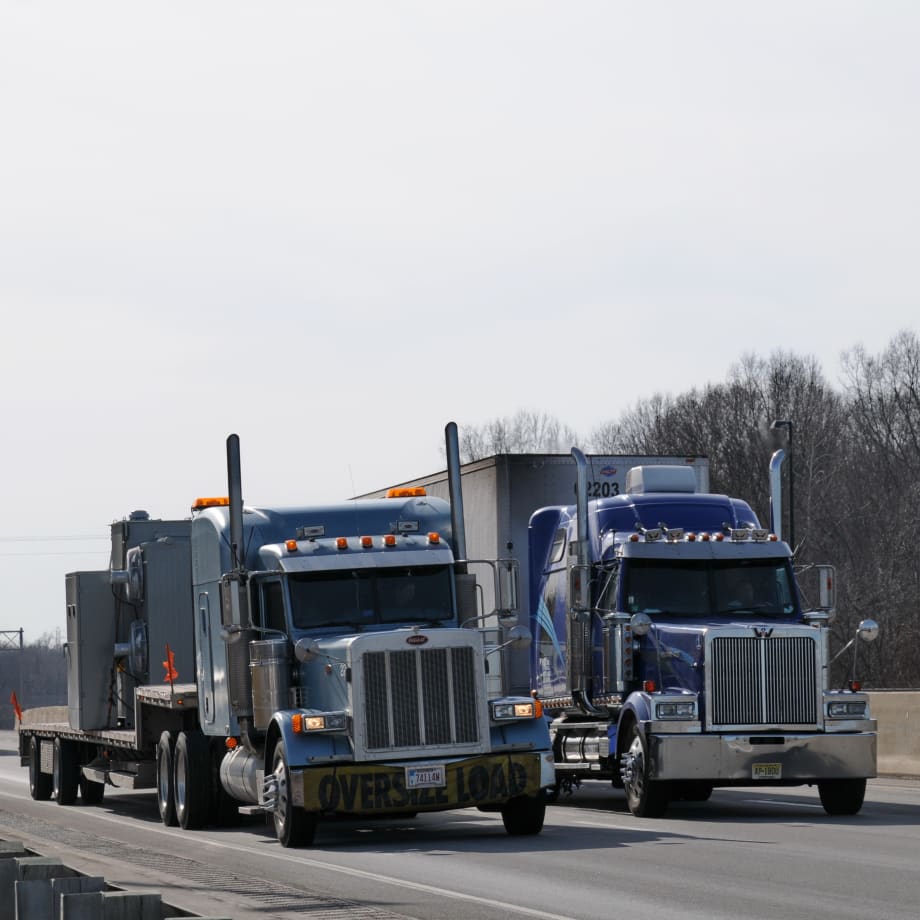
Apples to oranges. Accurate fuel economy test results can only be obtained using idendical trucks, including the tires.
Apples to oranges. Accurate fuel economy test results can only be obtained using idendical trucks, including the tires.
Fuel economy testing is a game of inches. Unless you're comparing a classic-style tractor and a bare-bones dry van to the latest aero tractor and slick, aero-festooned trailer, you're not going to see huge differences. In some cases, add-ons will provide gains only in the tenths-of-a-percent range.
If the ROI is there, then even tenths of a percent is an improvement, but statistically, a percentage that small is noise. The actual improvements could be difficult to separate from anomalies in the testing.
And your tires can skew your test results significantly.
I'm not talking about evaluating and comparing tires, but how tires impact the testing of other products, such as trailer skirts, fairings, tire pressure monitoring and inflation systems, etc.
Regardless of the anticipated gains, accurate test results are necessary. Savings accrued from the improvements are part of the return-on-investment calculation, as well as the long-term contribution of the add-on to your bottom line. If your test results are off by a few percentage points, an anticipated 18-month ROI could become a 24-month ROI in the real world -- or vice versa.
Testing methods vary with fleet resources. A big fleet may have the people and the equipment to run SAE or TMC Type II or Type III tests than involve weighing fuel tanks, switching out equipment from the truck or from one truck to another. Smaller fleets may not have that luxury, and might tend to test products on two or more comparison trucks over a period of time. One test gets quick results, the other takes time; both require discipline and diligence.
The problem is results can vary with the accuracy of the test. The short-term Type II and Type III tests are likely to produce better results if the tests are done properly. The longer term comparison tests are subject to myriad variables -- drivers, loads, equipment condition and tires.
According to Bob Wessels, a former customer support manager for Caterpillar, now a consultant, tires can be the biggest variable in testing. There can be a difference of up to 3% between a new tire and one that's ready to come off the truck. If you have the luxury of a large sample size, such as 25 trucks or more, Wessels suggests using a mix of new and in-service tires, rather than switching to all new tires.
"The differences will disappear in the aggregated data over time," he says.
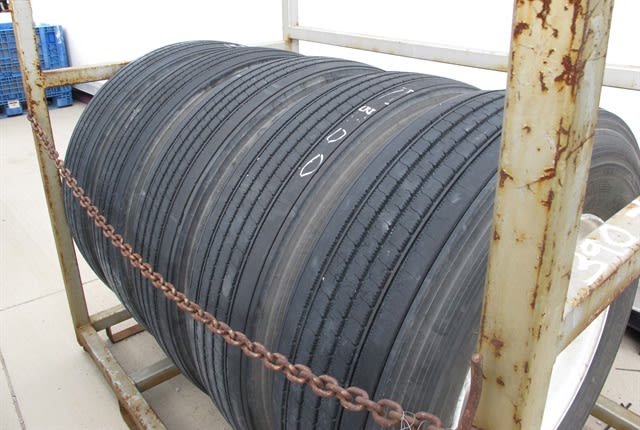
Prepare your fuel economy test tires, looking for the same model, brand and tread depth.
The biggest contributor to inaccuracy as far as tires are concerned are tread depth and inflation pressure -- and an unaccounted-for mix of fuel efficient and non-fuel efficient tires.
For obvious reasons, you won't get reliable data if you're comparing one truck with trailer skirts and one without, if one has fuel-efficient, low rolling resistance tires and the other does not. While that may seem like a no-brainer, it's easy to foul up your results.
"In operational testing, trailers get switched, tires get changed, any number of things can go wrong," Wessels cautions. "You have to control those variables and remove the bad data from the results. That involves almost daily monitoring of the test program."
The control group has to be diligently maintained, including tire pressure checks to ensure consistency across the group, and ideally they would be the same type of vehicle with identical specs. If not, create control groups to match the truck specs.
Tread Depth, Mileage, Fuel Consumption
Because fuel economy testing is all about two variables, fuel burned over a given mileage, both measurements need to be accurate. And since tire size and circumference relate directly to how the truck records mileage, you must provide accurate mileage to get accurate fuel consumption comparisons.
A tire worn to the take-off point will have a smaller circumference than a new tire, and a low-rolling-resistance tire will be somewhere in between.
"On a comparison using just two trucks in revenue service, ideally you'd equip both trucks and trailers with the same brand and model of tire, in the same condition," advises Curtis Decker, manager of product development at Continental Tire North America. "If there's any change to the test, like a failed tire or a trailer gets switched out, drop that data from the comparison."
One alternative to tracking mileage from the hub or the vehicle odometer is GPS. That's accurate, no matter the tire size. Electronically generated mileages from fuel tax programs can be useful too, provided they have been vetted beforehand and compared to GPS or actual truck miles. You just need a number, but you have to have a trustworthy number.
"Using mileage based on fuel tax programs, combined with truck miles and expressed as a ratio will give you an accurate measurement," Wessels says. "But then you have to get into some tricky math to come up with a usable number. Remember, if we're testing devices with small economy gains, a percentage point or two inaccuracy in your data can wipe out any gains the device provides, or inflate them by a similar amount."
If you think short-term testing might be better for your operation, you can find out how to conduct such a test read Recommended Practice 1102 and 1103 from the American Trucking Associations' Technology and Maintenance Council, or you can visit the SAE website and search for Type II and Type III Fuel Test Procedures.
More Fuel Smarts

How Volvo Updated Its D13 for EPA 2027 [Watch]
Volvo’s updated D13 promises lower emissions without sacrificing performance or fuel economy. Take a closer look at what changed inside the engine in this HDT Spotlight video.
Read More →
Diesel Price Spike Shortens Payback for Natural Gas Trucks, Report Says
Energy Vision estimates fleets could recover the higher purchase price of an RNG-fueled Class 8 tractor in 1.3 to 2.8 years under current fuel-price scenarios.
Read More →
Calstart Becomes Catalyst Mobility, Reflecting Broader Focus
Calstart is now Catalyst Mobility, reflecting the nonprofit’s growing national role in clean transportation, including zero-emission trucks, infrastructure and incentive programs.
Read More →

Record Diesel Prices Squeeze Trucking Fleets
Average U.S. diesel prices have climbed to nearly $6 a gallon, surpassing the 2022 record as tight refinery capacity and Middle East disruptions keep fuel costs elevated.
Read More →
How Fuel Delivery Shapes Engine Performance
Fuel delivery depends on more than what happens at the injector. For fleet, maintenance and technical professionals, looking at the full path from pump to injector can provide useful context for understanding engine performance.
Read More →
East Coast Port Launches $45M Electric Truck Push
The Port Authority of New York and New Jersey announced millions in incentives for zero-emission drayage trucks, yard tractors, and new charging hubs near the port.
Read More →
California Bill Could Shed Light on Electric Truck Prices
Why do battery-electric Class 8 trucks remain so expensive? A California bill headed to Gov. Gavin Newsom would give fleets and state agencies more visibility into what manufacturers charge.
Read More →
Detroit Opens Orders for EPA 2027 Engines
Detroit isn’t starting from scratch to meet EPA 2027 diesel emissions standards. Its Gen 6 DD13 and DD15 engines keep much of today’s platform while updating the fuel and aftertreatment systems.
Read More →
Zero-Emission Truck Corridor Planned for West Coast
California, Oregon, Washington, British Columbia and Baja California are coordinating plans for truck charging and hydrogen fueling from Canada to Mexico.
Read More →
A Closer Look at Kenworth’s Electric T880E Vocational Truck [Video]
Learn more about Kenworth's T880E battery-electric vocational truck at the Paccar Technical Center, including its range, applications, upfitting considerations, and PTO options, in this HDT Spotlight video.
Read More →