




How Communication Leads to Service Success
Relationships and communication between fleets and service providers are paramount to creating success.

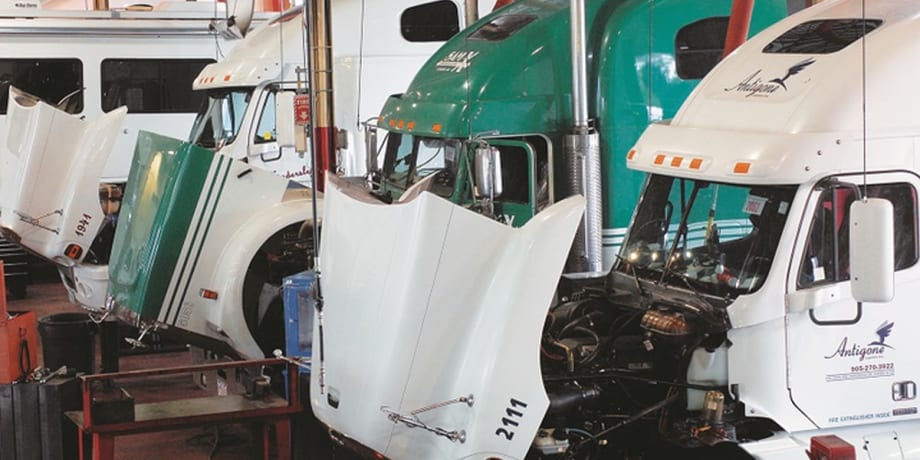
Fleets should share their business goals and even operating, maintenance and repair expenses with their service providers.
Photo: Jim Park
Relationships and communication are two big elements needed for fleets to have success with outside service providers, according to Jill Gingrich, vice president and marketing director of WheelTime Network.
I spoke with her after reading about the launch of WheelTime’s new mobile app. She said strong relationships and communication between fleets and service providers were of paramount importance to getting trucks back on the road during the COVID-19 pandemic when every repair was a high priority.
Gingrich shared her tips for success, starting with the need for open communications. “Include your service provider in your communication forums,” she advised fleets. “Connect with them regularly to collaborate on expediting the overall repair process.” When a fleet treats its service provider as an extension of its own operation, it saves time, she said.
To that end, fleets need to share performance metrics with their service providers “to drive greater focus on accountability,” Gingrich said. She used the example of fleets sharing daily low score reports on roadside callouts, explaining that having that data allows the service provider to evaluate performance at specific locations and take corrective action.
Communication needs to go beyond the day-to-day metrics. “Don’t be afraid to share your business goals and even operating, maintenance and repair expenses with your service provider. It is proven that for every $10 spent on preventive maintenance, it saves $100 down the road.” If your service provider understands your pain points, they can be in a better position to help you manage those expenses and even reduce costs.
Another element of communication that can speed the maintenance/repair process is sharing vehicle information, communication protocols, pre-authorization limits, parts preferences, and fleet-specific inspection and repair procedures.
Gingrich said it’s important to personalize relationships. Ask for a shop tour so you can meet the branch manager and the parts and service staff. “This puts faces with names, instantly strengthens relationships, and improves buy-in to the greater cause.” Employees are more engaged in excellent customer service if they personally know the customer.
You also should review the partnership with your outside service providers once a year. Key fleet personnel should sit down with key people at the service provider “to share the good, the bad and the ugly from the previous year,” she said. Talk about how problems were addressed and what can be done — by both sides — to improve the relationship and the maintenance and repair process going forward. The review is a good time for the fleet to share any new goals or strategies, as well.
Gingrich also said fleets can help themselves reduce repair costs by establishing incentives for drivers and holding them accountable for inspecting, maintaining and repairing their vehicles.
“With extended maintenance intervals of today, there is a great gap of time where a mechanic has his/her eyes and hands on the equipment to identify faults. When a driver is incented and/or rewarded for inspecting and finding and repairing problems, it greatly reduces downtime.”
Gingrich believes that “relationships and communication can overcome almost any obstacle.” She added, “If you set your service partner up to truly be an extension of your business, you will save time in the end. It is a lot of up front work and takes a lot of trust to share information, but in the end, it saves time and money.”
This article appeared in the March 2021 issue of HDT in our Aftermarket Insight department.
More Equipment

How Volvo Updated Its D13 for EPA 2027 [Watch]
Volvo’s updated D13 promises lower emissions without sacrificing performance or fuel economy. Take a closer look at what changed inside the engine in this HDT Spotlight video.
Read More →
Michelin Tire Improves Efficiency and Durability for Regional Fleets
The Michelin X Multi Energy D2 is a regional haul drive tire engineered to help fleets improve fuel efficiency, durability and traction in demanding stop-and-go operations.
Read More →
ZF Expands Commercial Vehicle Push in North America
ZF is expanding its North American commercial-vehicle presence with new transmission applications, electrification, trailer technology and autonomous-driving systems.
Read More →
Tesla Wants a Self-Driving Semi. Are Cameras Enough?
Could Tesla’s camera-only autonomous driving technology work on an 80,000-pound Semi? In this commentary, HDT's Deborah Lockridge takes a look at Tesla, Cybercab, and how autonomous trucks see the road.
Read More →
Kodiak: Driverless Long-Haul Truck Launch on Track for 2026
Kodiak AI says its driverless long-haul safety case is 93% complete and it remains on track to begin commercial operations by year-end 2026.
Read More →
What DOT’s Automated Vehicle Strategy Means for Trucking
The U.S. Department of Transportation issued a new automated-vehicle strategy that outlines plans for driverless-truck regulations, cross-state freight corridors, and federal safety standards.
Read More →
East Coast Port Launches $45M Electric Truck Push
The Port Authority of New York and New Jersey announced millions in incentives for zero-emission drayage trucks, yard tractors, and new charging hubs near the port.
Read More →
PlusAI Going Public to Fund Autonomous Truck Launch
A SPAC deal could provide PlusAI with up to $300 million as it works toward a 2027 commercial launch of factory-built autonomous trucks.
Read More →
NHTSA Moves to Rewrite Truck Fuel-Economy Rules
The National Highway Traffic Safety Administration says it lacks authority to regulate medium- and heavy-duty truck engines separately from complete vehicles, but the existing standards have not yet been eliminated.
Read More →
Detroit Opens Orders for EPA 2027 Engines
Detroit isn’t starting from scratch to meet EPA 2027 diesel emissions standards. Its Gen 6 DD13 and DD15 engines keep much of today’s platform while updating the fuel and aftertreatment systems.
Read More →