




Going Paperless
We all have received those emails with the little tagline at the bottom urging us to think about the environment before printing that message

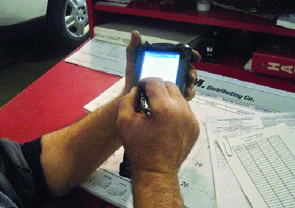
The benefits of reducing paper in your operation go way beyond being green.
We all have received those emails with the little tagline at the bottom urging us to think about the environment before printing that message.
But why worry about paper? While "going green" and reducing paper can be good for the environment, it can also help improve the bottom line.
"Our customers want to cut down on how much paper they generate, but they also want to cut down on how much they store," says John Lebel, chief technology officer with Karmak, Carlinville, Ill. "If you think about the paper they have to store in filing cabinets, it's not just the thousands of invoices they may generate each month, but utility bills, phone bills and other documents." All can be lost if a building burns down or there is a natural disaster such as a flood, hurricane or tornado.
A warehouse/distributor operation or repair shop can generate a "mound of paper," agrees Michael Mallory, president of AutoPower, Lake Mary, Fla. "A sheet of paper by itself is very cheap, but there are a lot of costs associated with printing something on that paper - there's the cost of toner, the cost of the labor, the cost of printers - there are a multitude of costs surrounding that sheet of paper.
"If we can eliminate that sheet of paper from the get-go, we are reducing costs when we consider all the other aspects of handling it, filing it, finding it and hopefully putting it back in the right place and storing it. When you have to start pulling documents out and shoving them in bankers boxes because you have no more room, then you have another problem."
But beyond storage issues, "the two biggest reasons for reducing the amount of paper you use in your business are number one, accuracy and number two, productivity," says Bruce Stubbs, director of marketing for Intermec, an automatic information data capture and mobile computing provider based in Everett, Wash. Any time there is paper introduced into a process there is more chance for error, he explains, from data entry error to a copying error to lost paperwork. All those things can cost a business money.
Fortunately, there are tools to help control the paper flow. Most warehouse/distributor operations already use an automated management system of some sort to run their businesses and control inventory. These systems also include applications that can reduce paper use. Most include archiving applications for all the reports, invoices and other documents a business generates on a daily basis. Some systems allow users to scan other documents, such as incoming bills, and store those electronically as well.
Lebel says the easiest way to reduce paper usage is to not print out all the reports your business system generates, but instead send them electronically where it can be stored and retrieved later.
"If operators have not looked at the archiving options available with their management systems, that is where they should probably look first," he says, "because that is going to be the biggest bang."
Lebel also recommends looking at the kind of invoices, purchase orders and customer statements being used. Often, companies will use a multi-part form. The customer gets a copy, the accounting department gets a copy and the boss may get a copy. "Try to eliminate as much of that as possible by going electronic," he says. "Email your invoices and customer statements."
The same holds for internal distribution of reports and documents. Most management systems generate end-of-day and end-of-month reports, but they can be configured so that only the most critical reports are printed. The other reports are stored electronically in the document management module of the management system, where they can be accessed and viewed as needed.
"Only print what's critical and store the rest in a report archive," Mallory says. "A business owner or manager can browse what's there, and if you are good to go, no paper wasted. But if a report comes up and you say, 'I need my sales manager to take a look at this,' you don't need to print it. You can send a PDF to the sales manager and he can view it on his computer."
If the owner or general manager needs to see certain reports on a regular basis, many management systems have the capability to email reports on a schedule. "The reports, as either a PDF or spreadsheet, are in his inbox every morning," Lebel says. "He doesn't have to look for it, it is sent to his inbox automatically." Lebel also recommends looking into some sort of e-commerce system with vendors, or an EDI system for placing orders electronically.
Another way some operations reduce paper is by using signature pads at the front counter, in the repair shop or at the customer's locations when making a delivery, Mallory says. This signature can be stored and is available for printing on invoices, work orders, job estimates, driver deliveries and other documents.
Warehouse/distributor and shop management systems automate many tasks, but they also generate a lot of data. The increasing use of mobile devices such as tablets and smartphones makes getting that data before the right people much easier.
"We collect and handle so much data, that much of it gets stored and never used," Mallory says. "We are finding that the ability to transport that data into the hands of the people who might have a use for it is a pretty exciting way to create dividends on using these mobile devices."
Mobile devices put outside salesmen, for instance, as close to the data as those working in the office. The salespeople can make a sales call and not worry about carrying around a bunch of paper reports or other supporting documents. Anything they may need they can access electronically.
"Having the ability to get the data out of the system in an easy-to-use format and then shooting it out to one or more email addresses is a huge plus," Mallory says. "We are looking at having these bits and pieces of data in an online library, so to speak, so different people in the business can see the data they need. These devices allow operators to take advantage of the data their systems can generate."
Many warehouse/distributor operations have cut down on paper in the warehouse by using barcode and other technologies. Larger operations have been using electronic picking systems for some time, but smaller operations have been somewhat resistant, according to Karmak's Lebel. "We've developed the tools. We don't have a lot of people using them, but we are certainly interested in that."
Barcode scanning is probably the most common way warehouse/ distributor operations reduce paperwork. The scanning can be done in a number of different ways, according to Intermec's Stubbs. "You can use simple scanners for capturing information as product comes in or goes out."
The newest scanners available are Bluetooth-capable, so they don't have to be tethered to a computer. Or you can use a scanner in a handheld mobile computer. The advantage of using mobile computers, Stubbs says, is that they are multi-function devices. They can be used to scan barcodes, look up information from the management system or even take pictures to document damage or quality issues. Plus, scanning technologies have improved to the point that the same device can be used to scan items as close as 4 inches or as far away as 50 feet. Previous generations of scanners were limited to either close-up or distant scanning.
RFID tags are also used in some warehouse/distributor operations when dealing with high-value items. The RFID tags allow those items to be tracked wherever they may be moved within the warehouse.
Mobile computing also has found a place in the warehouse, and when coupled with smart printing presents a "total solution that folks should be looking at," Stubbs says.
Mobile printers used in these types of operations
More Aftermarket

What Three Fleets Are Doing Differently When Buying Truck Parts in 2026
With freight improving but costs still climbing, fleet maintenance executives explain how they're balancing price, quality, and supplier relationships.
Read More →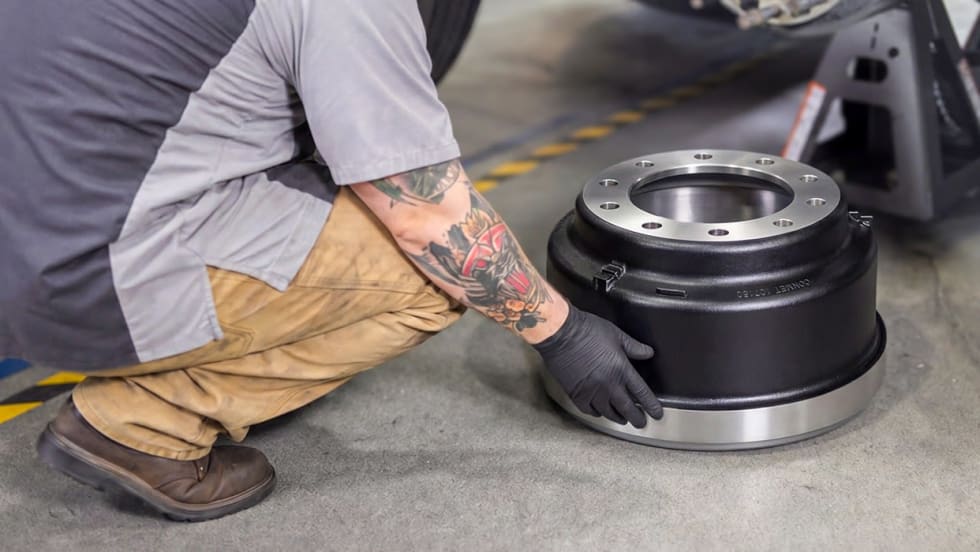
ConMet Expands Aftermarket Brake Drum Lineup With TruCast
A new heavy-duty truck brake drum option in the aftermarket gives customers more flexibility within the ConMet product family.
Read More →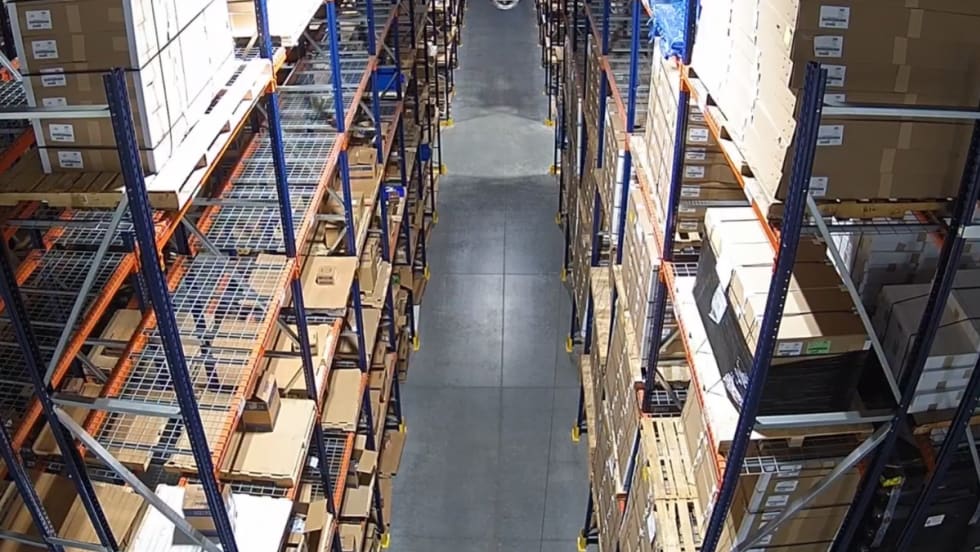
Phillips Opens High-Tech Distribution Center for Faster Parts Delivery
Phillips Industries’ new Cincinnati-area distribution center is now shipping aftermarket trucking parts nationwide, aiming to speed up delivery times for customers.
Read More →
Volvo to Sponsor America’s Road Team for 2025
Volvo Trucks announced that it is extending its exclusive sponsorship of America’s Road Team for 2025.
Read More →
Webb to Start Taking Orders for UltraSet Pre-Adjusted Wheel Hubs
Webb, which recently acquired the Stemco Trifecta pre-adjusted hub program, will soon start taking orders for its replacement pre-assembled hub, the UltraSet.
Read More →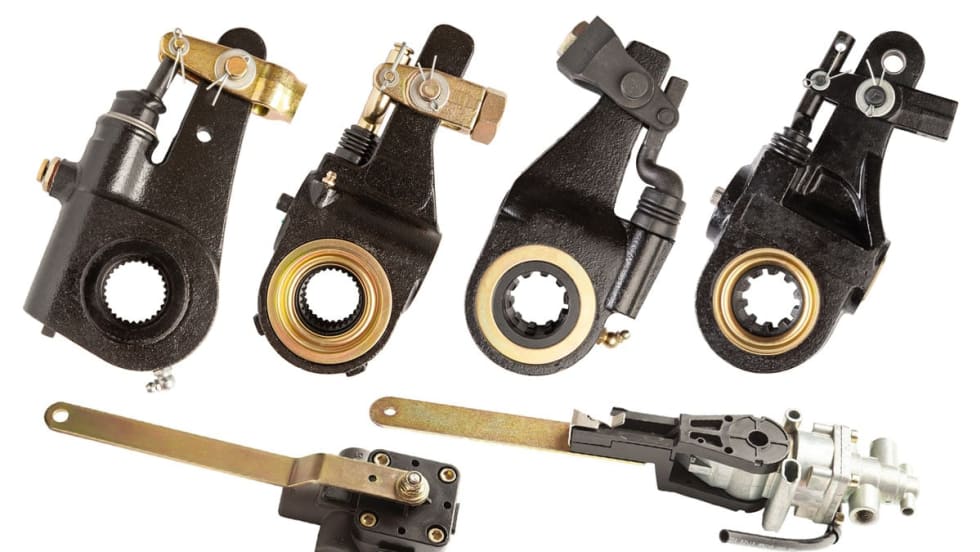
All-Makes Automatic Brake Adjusters, Ride Height Control Valves from Midland
SAF-Holland has added automatic brake adjusters and ride height control valves to its Midland All-Makes Program.
Read More →
ZF Aftermarket Expands [pro]Academy Training
ZF Aftermarket said it is expanding its ZF [pro]Academy training and will be adding 40 new modules this year.
Read More →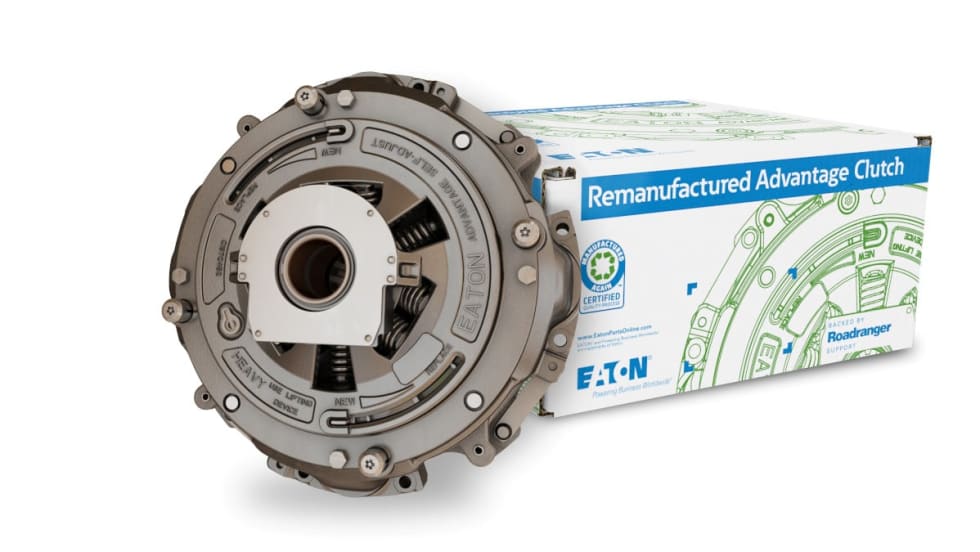
Eaton Adds Remanufactured Advantage Line of Clutches
Eaton has added its Advantage clutches to its remanufactured product line. The clutches feature a unique strap drive intermediate plate designed to allow customers to choose the latest OE specification
Read More →
ConMet Acquires TruckLabs, the Creator of TruckWings
Commercial truck and trailer parts provider ConMet acquired TruckLabs, the company that created TruckWings, an aerodynamic device that attaches to truck cabs and deploys to close the gap between truck and trailer. TruckLabs now operates as a subsidiary of ConMet.
Read More →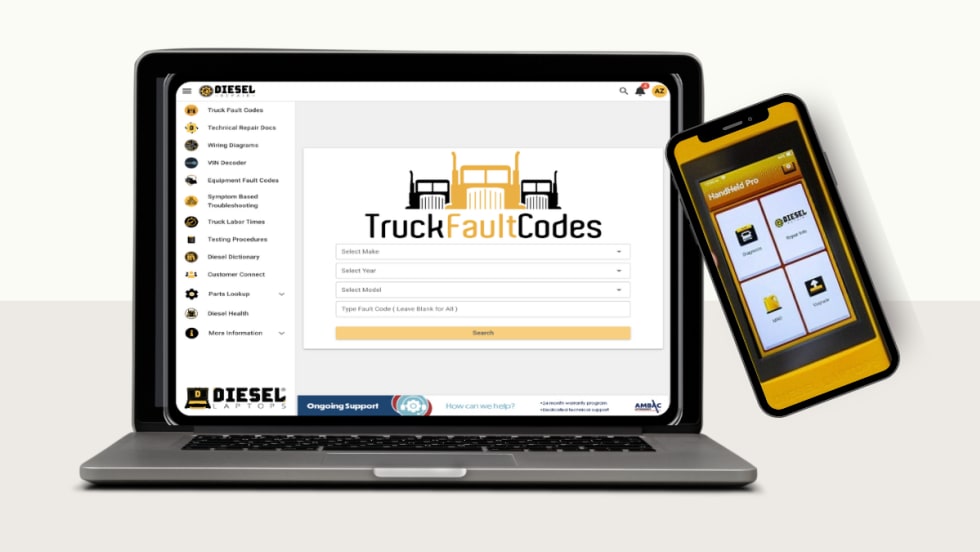
Diesel Laptops Releases Fault-Code-to-Part-Number Tool
Diesel Laptops said its Truck Fault Codes allows users to input a fault code and immediately identify and order the parts needed to complete repair work.
Read More →