With drivers rarely in the same place at the same time, CarriersEdge has helped FTC keep its fleet tops in safety.
Steven Martinez・Web Editor
October 4, 2017
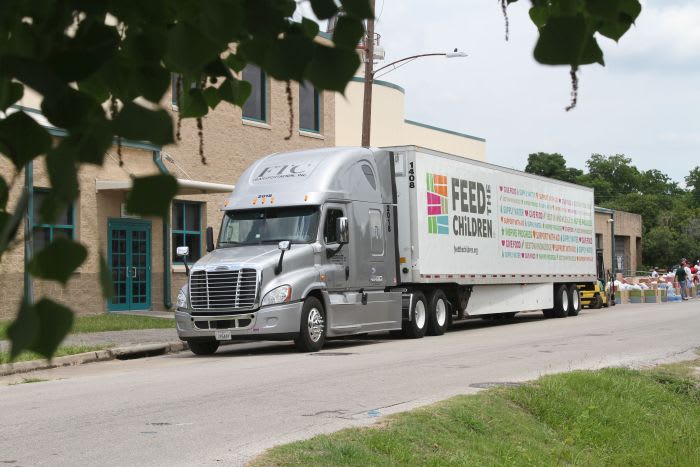
Based in Oklahoma City, FTC Transportation is a small dedicated carrier for the Feed the Children Program, delivering food and relief to those in need.Photo: FTC Transportation
3 min to read
Based in Oklahoma City, FTC Transportation is a small dedicated carrier for the Feed the Children Program, delivering food and relief to those in need.Photo: FTC Transportation
FTC Transportation’s 30 drivers are never in the same place at the same time. Operating in the lower 48 states, some drivers come through the carrier’s terminal in Oklahoma City only once in a month.
Ad Loading...
FTC drivers also have a unique mission. The company is the primary carrier for Feed the Children, a global hunger relief charity. That means regular work with those in need and deployments to disaster areas in moments of tragedy.
The company is also big on workplace safety, winning safety awards from the Truckload Carriers Association, Great West Casualty, and the Oklahoma Trucking Association. But it was searching for a way to improve driver training without having to divert drivers to headquarters.
Ad Loading...
“We do a lot of safety training and try to do a lot of different safety events throughout the year,” says Emory Mills, director of safety and driver administration. “We’re always looking for something different so we can avoid complacency.”
Enter CarriersEdge, which offers online training in a variety of subjects. The training is delivered through video instruction with regular quizzes on the material. Most importantly, it can be delivered anywhere at any time through computers and smart devices, giving FTC options for reaching drivers on the road.
“We wanted to make sure we were reaching the drivers who aren’t necessarily through our office as much,” Mills says.
Drivers can log in any time it’s convenient for them. This gives the company more flexibility to keep drivers up to date on training, allowing for more timely remedial training.
“If somebody had a backing accident, we want them to have some additional training,” Mills says. “We can go into CarriersEdge and assign them something that may be specific to what the concern is.”
Ad Loading...
FTC is also able to use the CarriersEdge platform to send out company updates and communicate with drivers through a monthly PDF newsletter. Balancing scheduled and unscheduled training, the goal is to introduce something new at least once a quarter, while also being able to respond urgently if needed.
CarriersEdge also allows FTC to run reports on a particular program or driver to see what training they’ve completed and their performance on the tests. The tests are pass/fail based on what score FTC decides is a passing grade, and all failed attempts are recorded. This allows Mills and other safety personnel to pinpoint which drivers may need more attention.
“With our small fleet we’re able to pinpoint who’s having a hard time, who needs additional help. Are they understanding, have they done it, have they attempted it? We can see all of that stuff.”
The training method has received mixed reviews from drivers. Some less tech-savvy drivers are not interested in using a tablet or computer. However, many drivers have recognized the value in not having to be routed through Oklahoma City.
“Overall they’ve taken it pretty well, because they can do it at their own pace and at their convenience,” she says.
Ad Loading...
While it’s hard to measure the exact impact of training on the fleet’s safety performance, Mills says drivers have told her the training they received had a direct impact on their driving.
“I’ve had several drivers come back to me and say ‘You know, I watched that training and thought it was no big deal, but it saved me.’”
Fleet Snapshot
Who: FTC Transportation
Where: Oklahoma City, Oklahoma
Fleet: 35 trucks
Operations: Dedicated carrier to Feed the Children Program, also for-hire carriage, brokered and custom loads to keep trucks loaded.
Fun Fact: Named one of the Best Fleets to Drive For by Truckload Carriers Association five consecutive years.
Challenge: Safety training with widely dispersed fleet of drivers.
For fleet managers and collision repair professionals keeping heavy-duty trucks on the road, getting the color right the first time isn't just about appearance — it's about efficiency, turnaround time, and bottom-line results. Discover how today's digital color tools are transforming the repair process from guesswork to precision.
Carriers whose updates were due on or after June 1 have more time, while FMCSA works to stabilize its new registration system and warns of phishing sites impersonating its new carrier registration system, Motus.
Cargo theft is no longer just the cost of doing business. It's a multi-billion-dollar criminal enterprise exploiting vulnerabilities across your fleet, drivers, and supply chain.
Explore how telematics help refrigerated fleets improve visibility, uptime, efficiency, compliance, and cargo protection across connected cold chain operations.
Escalating U.S.-Canada tariffs could disrupt cross-border freight, reduce truck volumes, raise costs, and create new uncertainty for carriers on both sides of the border.
The American Transportation Research Institute wants to know what's worrying trucking fleet managers, drivers, and other stakeholders in its annual Industry Issues survey.
HDT Truck Fleet Innovator Adam Buttgenbach helped PepsiCo build one of North America’s largest EV fleets by focusing on where electric trucks make operational sense.