




How Wilson Logistics Slashed Comebacks With Communications Tech
A new means of communicating has empowered drivers, technicians and fleet managers alike at Wilson Logistics.

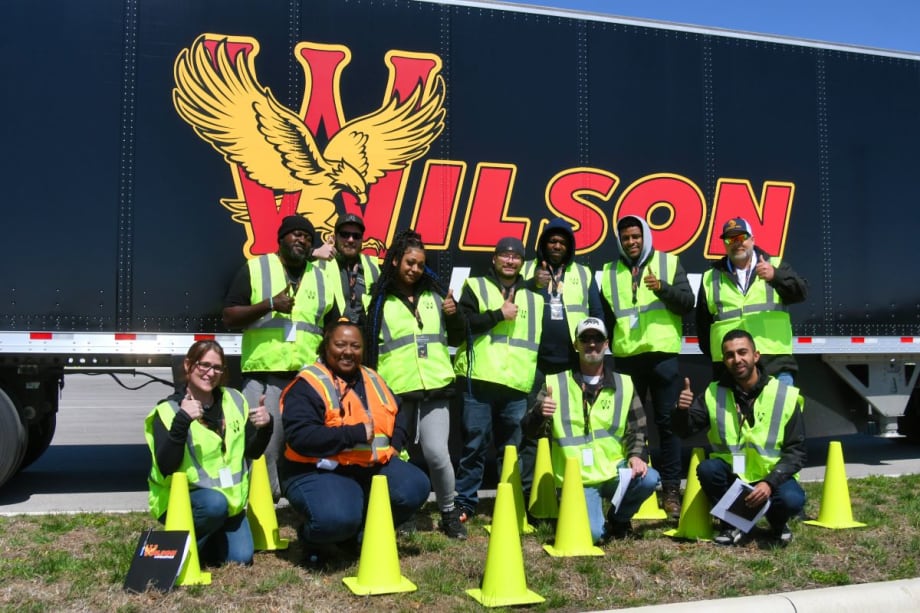
Missouri-based Wilson Logistics perfers to hire new drivers, which made a solid, real-time communication system a must-have for the fleet.
Photo: Wilson Logistics
In 1980, Darrel Wilson hit the road with a single truck. Flash-forward 40-plus years, and Wilson’s single-truck operation has grown into a 500-truck fleet with terminals in Dallas, Texas, and Springfield, Missouri.
Wilson’s hiring strategy is to catch up-and-coming drivers with little or no experience. The idea is to give these young drivers a “launch pad” for their careers – one that will hopefully result in a long-term relationship between the driver and the fleet.
But that strategy comes with a cost. Truck driving is a demanding job. The work can be physically challenging. And life on the road can be trying at times. For new drivers in particular, these realities often come as a shock.
As a former driver himself and an industry veteran of 40 years, Wilson Chief Operating Officer Bruce Stockton puts a heavy emphasis on transparency during the recruitment phase, ensuring prospective drivers get an accurate understanding of job requirements before coming on board.
Fleet Snapshot
Who: Wilson Logistics
Where: Strafford, Missouri
Fleet: 500 tractors
Operations: Regional, dry van
Fun fact: CEO Darrel Wilson was a 2020 HDT Truck Fleet Innovator
Challenge: Effective communication among drivers, technicians and fleet managers.
Stockton also understands the importance communication plays in supporting drivers and lightening the pressure.
“We needed to make it easy for them to communicate and easy for them to vent their questions, their frustrations,” he says. “We have to do a better job every day of communicating with them.”
When Things Go Wrong
Communication is hard enough when everything is going well. But occasional mechanical and equipment issues can quickly lead to communication breakdowns and all sorts of related problems. Stockton was determined to bridge the missing communication link between drivers and the rest of the workforce in those instances.
“In our world, we look at a driver as an internal customer,” Stockton explains. “If there are 530 drivers, there are 85 more people that are non-driving staff. The only reason the 85 of us have a job is because of the 530 drivers that we have. We wanted to make sure that our drivers had a way to communicate with us.”
Stockton reached out to WorkHound, a technology provider specializing in the “democratization” of data-driven employee-employer feedback in real-time, to see what options it had for opening better lines of communication.
With WorkHound’s help, Wilson’s leadership team was able to share feedback across the fleet daily and with each department monthly. This ongoing feedback loop offered cross-departmental perspectives, giving leaders and employees context they didn’t previously have and granting every worker a voice, Stockton says. It also established a true connection between leaders and drivers, where concerns could be addressed before they became bigger problems.
In its first year of adopting WorkHound, the Wilson team amassed a total of 1,539 comments. The company contact rate (how often the company directly responds to feedback) was an impressive 98%, showcasing its commitment to addressing every piece of feedback received.
This new level of engagement had a transformative effect, driving company-wide improvements.

Since adopting the WorkHound communicatrion system, truck returns due to mechnical or other issues have dropped off to zero at Wilson Logistics.
Photo: Wilson Logistics
How Better Communication Eliminated Comebacks
Before drivers get their work assignments for the week, trucks are prepared by Wilson mechanics. Prior to implementing WorkHound, Wilson had a steady flow of “comebacks” — drivers picking up a truck, only to return a short time later with a problem. Sometimes it was a mechanical issue. Other times, it felt more personal: an unkempt truck, an odd smell. Sometimes, it was even preferential, complaining about vehicle color, for example.
HDTX: How HDT Innovators Handle the Driver Shortage
Stockton estimates that of every 10 trucks leaving, one or two could return any given day. This was creating problems not only logistically, but also culturally, pitting the mechanics against drivers in a perceived battle of blame game.
After learning more about these issues through feedback on WorkHound, Wilson’s leadership team committed to change that dynamic. They discussed the issues with managers, who began sharing driver feedback with their technician teams. As managers shared this feedback monthly, mechanics began to better understand their roles in the process, and how their work directly affected others.
To help with this process, Wilson’s leadership decided to incentivize the technicians’ work. When techs delivered top-notch service that didn’t require comebacks, they were compensated in kind with higher earnings. If comebacks occurred, they lost out on that extra income.
With technicians motivated by bonus pay, truck returns dropped to zero. It’s been more than a year since the last one occurred.
“We're much quicker today at identifying and solving those issues than we ever were before,” Stockton says.
Beyond Driver Retention
While WorkHound has helped Wilson Logistics improve its driver retention rates, Bruce says the benefits it offers go a great deal beyond that. It has helped the fleet foster a more holistic and all-encompassing information system, he says — one that makes sure everyone is heard, and ensures that action is taken before small issues become major problems.
Wilson fleet managers now take turns sharing weekly broadcast messages reflecting what they heard, ensuring diverse viewpoints were fairly heard and that raised concerns were addressed. This process, in turn, helps to fortify the information and fleedback loop, making employees feel more valued and heard, Stockton says.
“If turnover is the only measurement tool you're going to use, I think you're going down the wrong path,” he explains. “I don't think you can use just one metric or one key performance indicator to say that WorkHound — or any system — is worth it. It's more holistic than that. Measuring success is all of the things we’ve talked about to show continuous improvement.”
Dig deeper into driver feedback in this episode of HDT Talks Trucking:
More Fleet Management

Color Match Smarter: Tools That Restore & Perform
For fleet managers and collision repair professionals keeping heavy-duty trucks on the road, getting the color right the first time isn't just about appearance — it's about efficiency, turnaround time, and bottom-line results. Discover how today's digital color tools are transforming the repair process from guesswork to precision.
Read More →
FMCSA Pauses Biennial-Update Enforcement Amid Motus Transition
Carriers whose updates were due on or after June 1 have more time, while FMCSA works to stabilize its new registration system and warns of phishing sites impersonating its new carrier registration system, Motus.
Read More →
2026 Blueprint for Countering Smarter Supply Chain Theft
Cargo theft is no longer just the cost of doing business. It's a multi-billion-dollar criminal enterprise exploiting vulnerabilities across your fleet, drivers, and supply chain.
Read More →


How Telematics Improves Visibility, Control, and Performance in Refrigerated Fleets
Explore how telematics help refrigerated fleets improve visibility, uptime, efficiency, compliance, and cargo protection across connected cold chain operations.
Read More →
What the U.S.-Canada Trade War Means for Trucking
Escalating U.S.-Canada tariffs could disrupt cross-border freight, reduce truck volumes, raise costs, and create new uncertainty for carriers on both sides of the border.
Read More →
What Are Trucking’s Top Concerns for 2026?
The American Transportation Research Institute wants to know what's worrying trucking fleet managers, drivers, and other stakeholders in its annual Industry Issues survey.
Read More →
American Trucking Associations Looks for a New Leader
ATA President and CEO Chris Spear abruptly left his job at the association on August 21, at a pivotal time for the trucking industry.
Read More →
Public Wi-Fi Cybersecurity Risks: How Truck Drivers and Fleets Can Protect Their Data
Public Wi-Fi can expose truck drivers and fleets to credential theft, malware, and other cyber threats. Here’s how to reduce the risk on the road.
Read More →
For Nicky Cupp, Fleet Innovation Starts With Frustration
HDT Truck Fleet Innovator Nicky Cupp turns everyday pain points at Fraley & Schilling into opportunities for better technology and smarter processes.
Read More →
Adam Buttgenbach’s Approach to Electric Trucks: Start With Where They Fit
HDT Truck Fleet Innovator Adam Buttgenbach helped PepsiCo build one of North America’s largest EV fleets by focusing on where electric trucks make operational sense.
Read More →