




Electrifying the Windy City
Chicago has ordered 20 heavy-duty, electric-powered trash trucks that will be the first of their kind in the nation. The electric trucks will run almost silently, produce practically no emissions and, with no traditional pow-ertrains to fuel and maintain, will cut operating costs by at least 50%, says Jim Castelaz, chief executive officer of Motiv Power Systems.

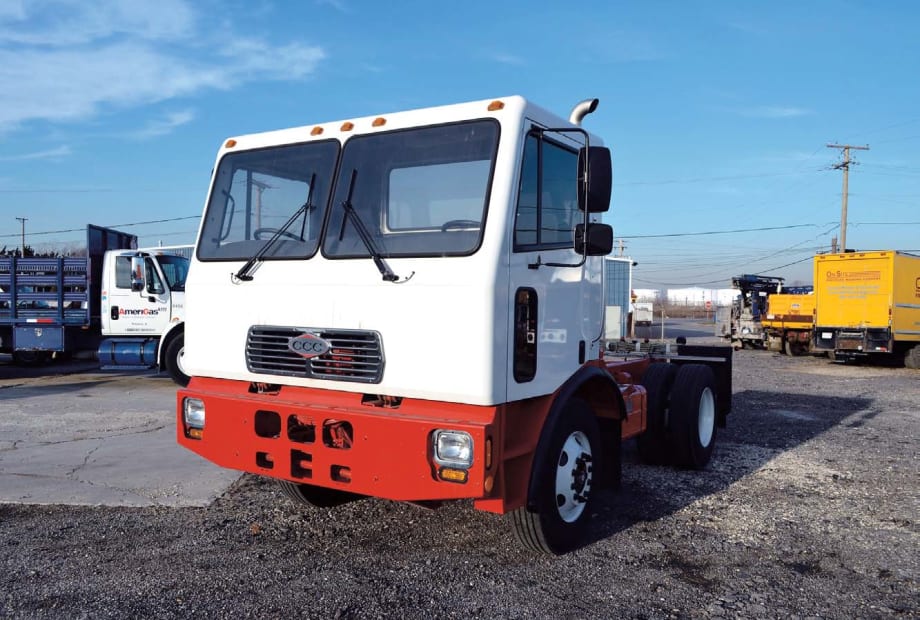
Crane Carrier Corp.'s COE-2 chassis, supplied as rolling glider kits, will be the basis for the Chicago trucks. They'll use Motiv Power electric drive systems and Loadmaster compacting bodies.
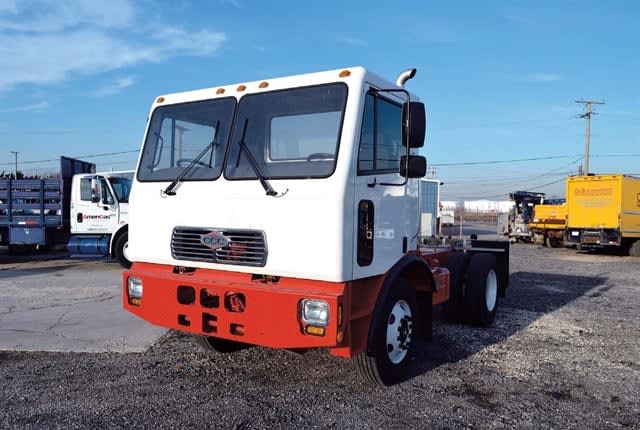
Crane Carrier Corp.'s COE-2 chassis, supplied as rolling glider kits, will be the basis for the Chicago trucks. They'll use Motiv Power electric drive systems and Loadmaster compacting bodies.
Chicago has ordered 20 heavy-duty, electric-powered trash trucks that will be the first of their kind in the nation.
The electric trucks will run almost silently, produce practically no emissions and, with no traditional pow-ertrains to fuel and maintain, will cut operating costs by at least 50%, says Jim Castelaz, chief executive officer of Motiv Power Systems. The company will supply the electronic controls. It will obtain battery packs, motors and associated gear from established manufacturers.
Motiv is only one piece of the city's five-year, $13.4 million contract, which involves three suppliers and a dealer.
The components will be assembled into rolling glider kits furnished by Crane Carrier Corp., says Dave Lopina of Cumberland Service Center of Chicago, the CCC dealer that is helping to coordinate the order. Final assembly will be done by Detroit Chassis in Michigan.
The electric vehicles will be low-cab-forward, three-axle, 52,000-pound-GVW trucks similar to many of Chicago's existing diesel-powered trash collection trucks, Lopina says. In addition to propulsion, electric motors will power hydraulic pumps to run the Loadmaster bodies’ compaction systems.
Motiv Power's “flex electric” system can use components from a variety of suppliers, which makes it scalable for bus and truck chassis grossing from 15,000 to 52,000 pounds, Castelaz explains.
“We've designed the whole system to be compatible with any off-the-shelf motors and batteries, which are brought to a uniform operating standard by our software,” he says. “If Chicago ever wants newer batteries, the old ones can be easily swapped out.”
The company now has a 20-pas-senger shuttle bus operating in the San Francisco Bay area that is proving the concept's worth, he says. The medium-duty bus costs 10 cents per mile to operate, compared to 80 cents per mile for a diesel chassis, according to Motiv.
“As far as I know, this will be the largest all-electric street vehicle in the U.S.,” Castelaz says of the Chicago trash trucks. Each will have 10 battery packs for a total capacity of 200 kilowatt-hours and a range of 60 miles. The batteries will be charged at night and also will be boosted by regenerative braking that “will save brake wear at least as well as hybrids and probably better.”
Chicago chose electric vehicles to supplant its 600 diesel-powered trucks because it has found that hybrid and natural-gas-fueled trucks would not work well in its operations, says Cumberland's Lopina. The first of the electric trucks is expected to enter service late this year, and will collect garbage on regular routes served by the city's sanitation department.
The contract cost will break down to $1.3 million for the first vehicle, which includes a lot of development money, Castelaz says. The cost per truck will then slide downward with the first 10 vehicles, after which each one will be priced at about $500,000 each. That's about twice the cost of a current diesel-powered truck.
Low operating costs will pay back the premium in a reasonable time, he says. Meanwhile, the public will benefit from the trucks’ cleanliness and quietness.
“These EV refuse trucks will provide the streets of Chicago with quiet, emissions-free garbage pick-up, without submitting residents to exces sive diesel pollution or loud noise,” says Shyam Nagrani, Motiv Power System's vice president of business development and marketing. “Who wants to be woken up at 5 a.m. by an idling garbage truck?”
Voucher program will subsidize Chicago EVs
Chicago's 20 electric-powered trash trucks won't be alone, if Mayor Rahm Emanuel has his way. Led by the mayor and using mostly federal money, the city's Department of Transportation is setting up a voucher program that will subsidize a switch from diesel to electric trucks by commercial fleets.
Meanwhile, Smith Electric Vehicles Corp., an active builder of electric trucks, announced it will open a plant in Chicago to serve the anticipated market stemming from the program.
Chicago will be Smith's third location in the United States, joining its headquarters in Kansas City, Mo., and a manufacturing facility in NewYorkCity.
The voucher program's initial $15 million is funded by the federal Congestion Mitigation Air Quality program. It will pay a portion of the incremental cost above standard diesel-powered trucks, or up to $45,000 per truck.
The size of the voucher will be determined by the size of the vehicle battery, encouraging fleet operators to replace their dirtiest diesel trucks with all-electric vehicles first.
The city also is considering additional incentives such as preferential loading zones and decreased registration costs to complement the voucher program.
“Through similar federally funded incentive programs, the city has helped deploy 404 cleaner vehicles, including 159 compressed natural gas livery/taxi vehicles and 223 alternative fuel stations, including 17 CNG and 202 electric vehicle charging stations-the densest network of any major city,” said a city announcement.
Smith is considering locations for its manufacturing facility in conjunction with city officials. The company expects to begin hiring efforts immediately and announce the location when the incentive and development packages tied to the site are complete.
More Fleet Management

Geotab Links Fleet Card to Vehicle Data
The new card combines fuel discounts with telematics-based purchase controls. Geotab’s analysis also points to potential savings from choosing lower-priced fuel stops.
Read More →
How MFA Helps Protect Trucking Fleets
Multi-factor authentication adds protection when passwords are stolen. Here’s how it works and where fleets should start.
Read More →
How Better Freight Data Helps Trucking Teams Get Ahead of Disruption
Trucking and logistics teams have plenty of data. The problem is getting the right information in front of the right people soon enough to act. Better-connected data can help teams spot trouble earlier and make smarter decisions before small problems become big ones.
Read More →

Trimble: Taking Artificial Intelligence in Trucking Beyond Faster Tasks
At Insight 2026, Trimble executives argued that fleets may need to redesign workflows to get more from AI as it introduced new products and enhancements. AI’s value will depend on how fleets combine automation with their people's knowledge.
Read More →
Build a bulletproof fleet: Uniting ELDs and dash cams for total compliance
An ELD can prove compliance, but it cannot always prove what happened on the road. Discover how uniting accurate ELD data with AI-powered dash cam video can help your fleet strengthen compliance, defend against liability, protect drivers and reduce operational costs.
Read More →
Nominations Open for HDT Emerging Leaders
Heavy Duty Trucking is looking for accomplished trucking fleet professionals under 40 who are making an impact and helping lead the industry forward.
Read More →
Why Private Fleets Are Taking More Freight
Private fleets are putting their own trucks on demanding customers and high-cost lanes as companies seek greater control over service, costs, and capacity.
Read More →
Color Match Smarter: Tools That Restore & Perform
For fleet managers and collision repair professionals keeping heavy-duty trucks on the road, getting the color right the first time isn't just about appearance — it's about efficiency, turnaround time, and bottom-line results. Discover how today's digital color tools are transforming the repair process from guesswork to precision.
Read More →
FMCSA Pauses Biennial-Update Enforcement Amid Motus Transition
Carriers whose updates were due on or after June 1 have more time, while FMCSA works to stabilize its new registration system and warns of phishing sites impersonating its new carrier registration system, Motus.
Read More →
2026 Blueprint for Countering Smarter Supply Chain Theft
Cargo theft is no longer just the cost of doing business. It's a multi-billion-dollar criminal enterprise exploiting vulnerabilities across your fleet, drivers, and supply chain.
Read More →