




Don't Forget to Factor DEF into Fuel Costs
2010-model diesels are running well and turning in better fuel economy than their EPA-'07-spec predecessors, according to reports we've heard at industry meetings and in conversations with fleet managers

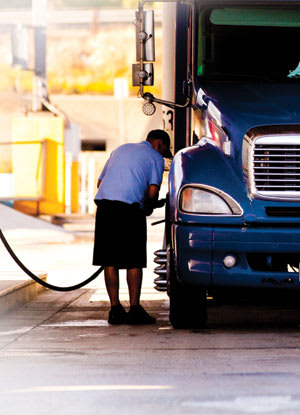
2010-model diesels are running well and turning in better fuel economy than their EPA-'07-spec predecessors, according to reports we've heard at industry meetings and in conversations with fleet managers.
Most truck operators who've bought engines whose exhausts are equipped with selective catalytic reduction aftertreatment systems say that fuel economy is at least as good as what manufacturers claim and in some cases is better.
What about the diesel exhaust fluid that's needed for this process? Spraying DEF into the exhaust to chemically neutralize oxides of nitrogen, or NOx, is the major action of the SCR used by almost all diesel builders. Like fuel, DEF is consumed in everyday running and should be accounted for in any economy reports or claims.
Navistar International, the one engine maker that does not use SCR, coined the term "fluid economy" to mean the total of DEF and fuel consumed in a given number of miles traveled. If DEF is figured in, Navistar executives claim, their fuel-only engines come out as good or better than competitors'.
So, how much DEF is being used? For over-the-road operations, manufacturers employing SCR predict DEF "dosing rates" of 2 to 3 percent. That means 2 to 3 gallons are consumed for every 100 gallons of diesel fuel, and 102-103 gallons of fluid should be factored into a mile-per-gallon calculation.
Truck operators are seeing those levels of DEF dosing, says Dave Michael, general manager of DEF for Mansfield Oil, which sells Air 1-brand diesel exhaust fluid from Yara North America. It has quizzed fleet managers about DEF consumption.
"Fleets tend to hold a lot of this information close to their chests," Michael comments. "With that said, the overwhelming response with regards to consumption ratio of DEF versus diesel is that the number is close to 3 percent. OEMs gave out a range of 2-3 percent when introducing SCR models, so it appears as though real-life scenarios are reporting back at the upper tier, yet still within the communicated range."
Michael also says that long-haul, over-the-road carriers are reporting 10 percent to 11 percent fuel economy improvements, running identical routes, comparing their new SCR units to '09 or older models.
"We have also heard some disappointment coming from regional, hub-and-spoke-type carriers that the fuel economy returns have been a bit lower than expected. We know it's highly dependent on service, road, route, etc., but we haven't seen anything less than promised from early OEM specs."
Chad Dombroski, Yara's director of Air1 operations, believes DEF consumption is generally 2 gallons of DEF for every 100 gallons of diesel. "We've seen some of the larger fleets recommend that their drivers refill DEF one out of every three times they stop for diesel."
He notes that the rate of DEF consumption will vary by fleet, truck, driver, and route. "On average, we've found that 2.5 gallons of Air1 DEF will yield over 350 miles of travel in the U.S., comparable to the distance between New York City and Youngstown, Ohio, and leads to significant fuel savings.
"For example, Volvo's reported fuel efficiency savings of 5 percent, and Penske's reported an 11 percent gain in fuel efficiency when comparing older engines to engines with SCR. Even if you account for the cost of DEF, which accounts for approximately 2 percent of fuel cost in the U.S. on average, depending upon price points and usage, most fleets and OEMs are still seeing a net savings gain of 2 to 9 percent in fuel economy, which can really add up when you multiply that across an entire fleet."
Chris Parker, shop coordinator for Sapp Brothers, a truckstop chain based in Omaha, thinks DEF use is higher. "They say it's a 2 percent dosing rate, but what we're having with customers is 3 and 4 percent," he says.
Sapp sells BlueDEF from Old World Industries, and by March had installed dispensers at truckstops in York and Odessa, Neb., and plans more as the need for the product increases. "The struggle is which side of an island to put it on," Parker says. "Peterbilt puts its DEF tanks on the right side of the truck, but the others put it on the left side. Drivers know where it is on their trucks" and line up accordingly, and it should be convenient for them.
Installing dispensers at fuel islands in cold climes takes some thought, because DEF turns slushy at 28 degrees and freezes at 11 degrees. Underground tanks are not the answer because of probable contamination of the fluid, which must remain pure to work in trucks' urea injection systems. Parker likes the idea of putting storage tanks in heated outbuildings, then plumbing underground below the frost line to the islands.
Some truckstops at first put bulk dispensers in buildings some distance away from fuel islands. That wasn't convenient for drivers, but locating dispensers at fuel islands is the trend. And as the population of new trucks with 2010-spec DEF engines increases, more will appear to better serve users, operators say.
Drivers are "pretty good" about keeping DEF tanks filled, Parker says. "They don't wait 'til it gets down to empty." A typical sale to a driver is 10 gallons, reflecting how little is needed compared to diesel fuel.
Early fears that DEF would not be available in the hinterlands are being dispelled, as fluid producers are striving to serve the increasing market for the stuff. Oslo, Norway-based Yara, for example, has erected a $1.8 billion urea production plant in Saskatchewan for use in Air1 DEF, and it has other facilities in the United States. Terra Environmental Industries has begun production of DEF at a facility in Oklahoma, where it will make 30 million gallons of TerraCair DEF per year.
The fluid's cost is coming down from when it first appeared on the market, when it was more than $12 per gallon. A NAPA auto parts store in Columbus, Ohio, sells a 1-gallon jug of Valvoline-brand DEF for $5.79 and a 2-gallon jug for $11.99. North of the city, a Flying J sells BlueDEF in a 2.5-gallon jug for $13.99, or $5.60 per gallon. The truckstop has installed an underground storage tank with fuel-island dispensers, and they should be operating by early June, a clerk says. The bulk price will be less than a third of the jug price, and at least $1.50 a gallon less than diesel.
If DEF cost about the same as diesel fuel, which is what some initially thought it would, the economics of urea injection would be a simple matter of subtracting the DEF dosing rate from the fuel economy improvement: If a truck gets 8 percent better fuel economy but uses 3 percent DEF, the net economy gain is 5 percent. Cheaper DEF means slightly more arithmetic, but truckers will have more dollars to take to the bank.
Form the June issue of Heavy Duty Trucking
More Equipment
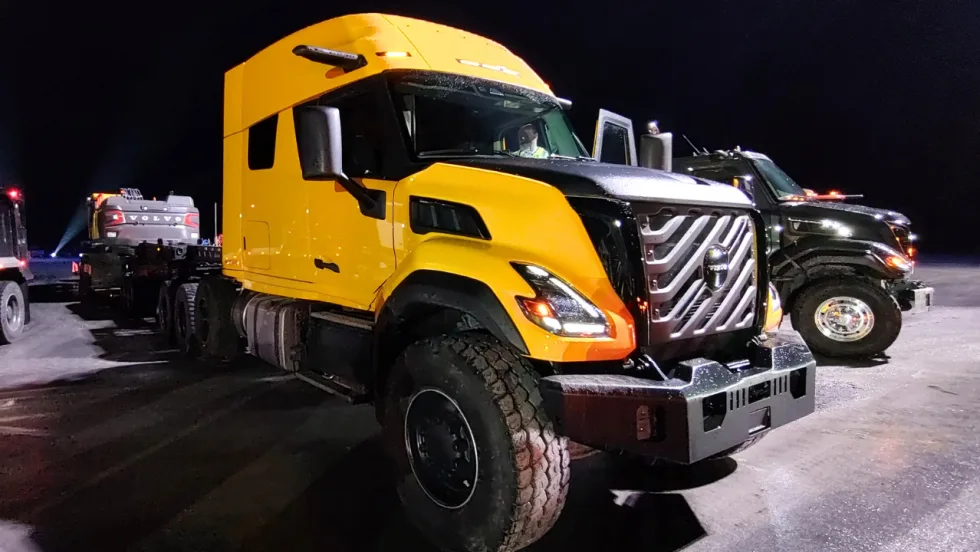
Volvo Unveils New VNX Heavy-Haul and Vocational Truck
Volvo Trucks has launched the VNX, a new vocational truck also available as a tractor in day cab and two sleeper configurations, with one heavy-haul model. The Volvo VNX is powered by Volvo's D13 platform, which delivers up to 540 horsepower and 1,950 pound-feet of torque and is EPA 2027-compliant.
Read More →
How GP Transco Cuts Trucking Fuel Costs, a Tenth of a Gallon at a Time
What’s another tenth of a mile per gallon worth? GP Transco shares how equipment upgrades and driver coaching turn small gains into meaningful fuel savings.
Read More →
Electric Yard Tractors Move Beyond Pilots
Operating-cost savings have overtaken sustainability goals as the leading reason surveyed fleets are adopting battery-electric terminal tractors, according to new NACFE research.
Read More →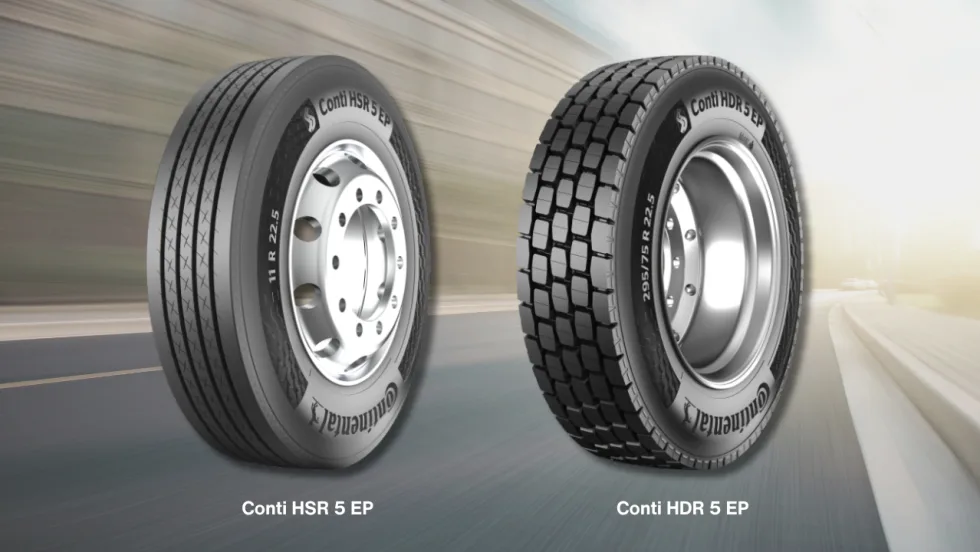
Continental Introduces New Regional Truck Tires
Continental says its new Generation 5 steer and drive tires for regional operations offer longer tread life, with estimated mileage gains of 22% and 19%, respectively.
Read More →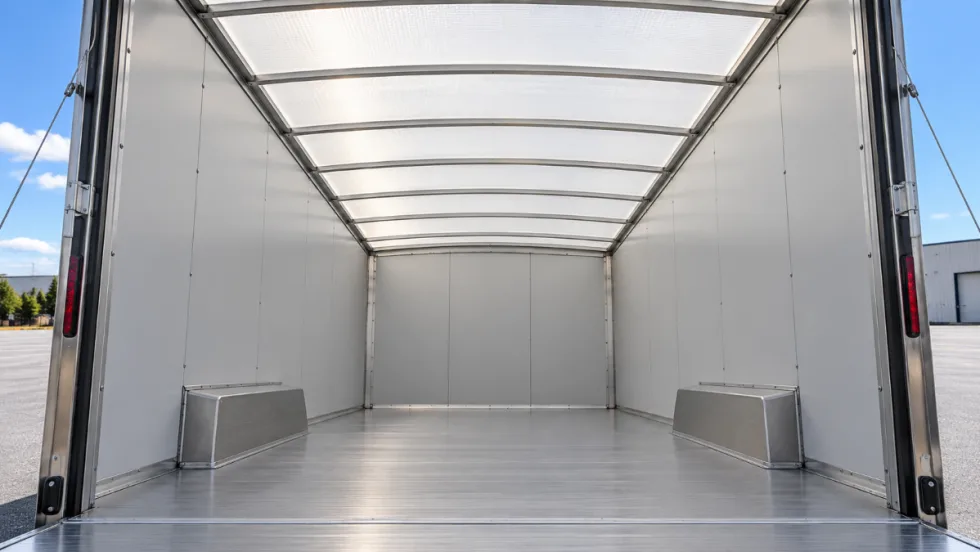
Tekmodo Introduces CargoBright Brand for Translucent Trailer Roofs
CargoBright is designed to diffuse daylight across the cargo area while performing as a working vehicle roof.
Read More →
Fleet Economics Shape Electric Truck Outlook
ACT Research expects costs, charging infrastructure, and technology improvements to drive zero-emission commercial vehicle adoption as federal regulations and incentives retreat.
Read More →
Kodiak Targets Dallas–Houston for Driverless Trucks
The company says its autonomous trucks are completing the I-45 run without a safety observer taking control. It plans to remove the observer by the end of 2026.
Read More →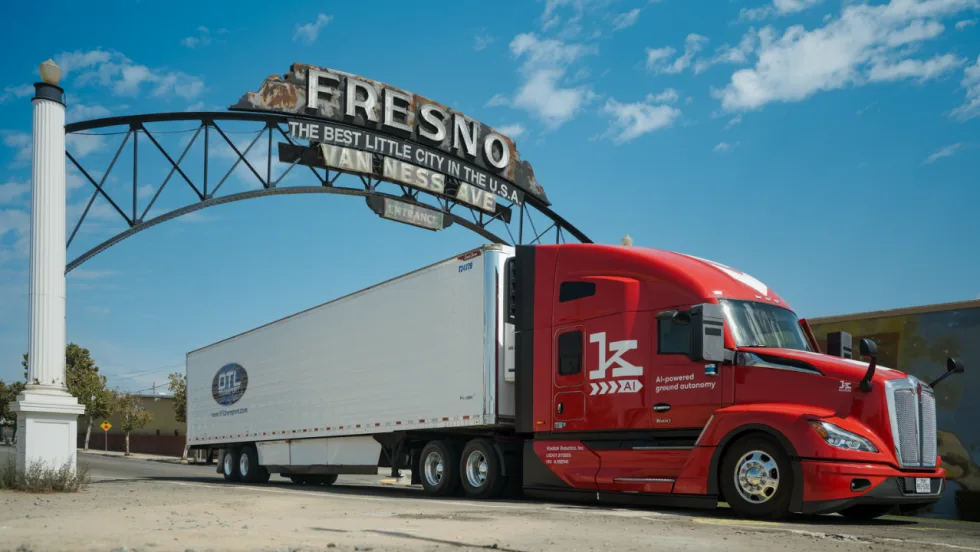
Kodiak Hauls Produce in California Autonomous Truck Pilot
Kodiak AI and DTL Transport have begun hauling produce between Fresno and Los Angeles under California’s new rules for testing heavy-duty autonomous trucks. A safety driver remains behind the wheel.
Read More →
Used-Truck Remarketing Math Is Changing
Used-truck value is no longer just a concern at trade-in. Decisions made throughout a truck’s first life can influence what it’s worth years later.
Read More →
How Volvo Updated Its D13 for EPA 2027 [Watch]
Volvo’s updated D13 promises lower emissions without sacrificing performance or fuel economy. Take a closer look at what changed inside the engine in this HDT Spotlight video.
Read More →