




DEF Tips and Tricks
Fleet companies are facing all kinds of new decisions with diesel exhaust fluid
Fleet companies are facing all kinds of new decisions with diesel exhaust fluid,
which came into play with the Environmental Protection Agency's 2010 emissions standards. DEF is used to treat the exhaust of the engines running selective catalytic reduction (SCR) technology to meet the requirements. All but one engine maker use SCR.
This created a new industry, the DEF market. It started off slow, but today experts believe industry growth will double from last year, to 150 million gallons in 2012. Major truckstops are installing tanks and pumps like there's no tomorrow, because as every old truck is retired to the truck graveyard, a new truck is put into use that most likely needs DEF.
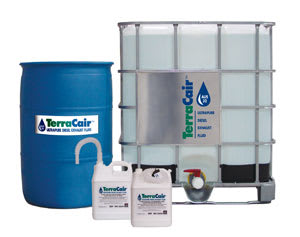
So now fleets might have one truck out of 40 that needs DEF, but that one truck might not get anywhere close to a truckstop that sells DEF. So they are faced with buying it in 2-1/2 gallon jugs, 55-gallon drums, 330-gallon totes or even putting in their own tank system.
Here are a few areas where we've seen questions and concerns with our clients:
DEF Creep
If your drum or tote pumps or fittings look like they were snowed on last night, you're experiencing "DEF creep." The white, powdery substance is the crystallization of urea left behind from DEF evaporation.
For example, after dispensing DEF out of your tote, the hose is left with a residual coating of product. The air will evaporate the water, and urea crystals will begin to build a chain. This will typically happen in about 30 minutes. The crystals will find even the smallest path through connections, especially threaded connections and seal areas.
How do you prevent "DEF creep"? Make sure all fittings that come in contact with DEF are tight and proper seals are used. Try minimizing breaking connections and wipe down any urea crystallization as soon as it forms.
Water can be used to easily wash off urea that has crept onto the truck, tank or dispensing equipment.
Misconceptions
DEF is a whole new frontier, creating lots of questions for fleet owners. I had one CFO ask me if his fuel company was trying to pull a fast one on him about needing DEF. I had to explain to him that they weren't and, like it or not, all of his trucks likely would soon be running DEF.
We have found fleet owners are concerned with their drivers pumping the wrong product into the wrong tank. It appears, for the most part, that DEF tanks have a magnetic interface with the spout of DEF nozzles. What this means is if a driver tries to put the DEF nozzle in the diesel fuel tank, which does not have a magnetic mis-filling adapter, then no DEF will be released.
A few things to consider for extra precaution when using DEF:
- Use dedicated equipment for DEF for dispensing and storing. Don't use funnels or bottles from other products.
- Protect the DEF from fuel, oil, water, grease or anything else except DEF.
- Store DEF between something above 32 degrees and 86 degrees and not in direct sunlight. With this your shelf life should be a solid 12 months.
Before you install a tank, I would strongly recommend to any company to get a solid feel of how much DEF you need today on a daily basis and what you will need in a few years. You don't want to install a 2,000-gallon DEF tank today to realize two years from now you need that tank filled up daily or more often.
Demand and pricing
The pricing for DEF has been all over the board, from $1.80 in bulk to $10 in packages per gallon. The demand has not yet caught up with supply, and that is about to change as the industry doubles in volume this year and I would assume double in volume again next year as new trucks are brought onto market. Since DEF is made from 32.5% urea and the rest purified water, I would not expect any major shortages or price gouging anytime soon, although urea is a product used worldwide and can at times get caught in some volatility.
As a fleet manager all of this extra work could drive you nuts, but look at the bright side: Most fleets find SCR has a performance advantage and has shown an increase of 3-5% in fuel efficiency. At $4 to $5 a gallon for diesel, that's a pretty good deal.
Glen Sokolis is founder and president of Sokolis Group, Warrington, Pa., a fuel management and consulting company.
More Fuel Smarts

Why Diesel Price Relief Efforts May Fall Short
Diesel prices have eased from September’s record high, but doubts about additional Russian supply and limits on dyed-diesel tax relief mean trucking fleets still face expensive fuel. And prices could go higher.
Read More →
Why Small Fuel Savings Matter in Trucking
Can better fuel economy help pay for driver raises? In this podcast, GP Transco explains how small efficiency gains create room to reinvest in its people.
Read More →
How GP Transco Cuts Trucking Fuel Costs, a Tenth of a Gallon at a Time
What’s another tenth of a mile per gallon worth? GP Transco shares how equipment upgrades and driver coaching turn small gains into meaningful fuel savings.
Read More →
Electric Yard Tractors Move Beyond Pilots
Operating-cost savings have overtaken sustainability goals as the leading reason surveyed fleets are adopting battery-electric terminal tractors, according to new NACFE research.
Read More →
Geotab Links Fleet Card to Vehicle Data
The new card combines fuel discounts with telematics-based purchase controls. Geotab’s analysis also points to potential savings from choosing lower-priced fuel stops.
Read More →
Fleet Economics Shape Electric Truck Outlook
ACT Research expects costs, charging infrastructure, and technology improvements to drive zero-emission commercial vehicle adoption as federal regulations and incentives retreat.
Read More →
Wex Adds Cardless Fuel Payments for Over-the-Road Customers
A new fuel card feature for Wex customers offers convenience and security.
Read More →
New California Law Could Shed Light on Electric Truck Prices
Why do battery-electric Class 8 trucks remain so expensive? A California bill signed by Gov. Gavin Newsom would give fleets and state agencies more visibility into what manufacturers charge.
Read More →
How Volvo Updated Its D13 for EPA 2027 [Watch]
Volvo’s updated D13 promises lower emissions without sacrificing performance or fuel economy. Take a closer look at what changed inside the engine in this HDT Spotlight video.
Read More →
Diesel Price Spike Shortens Payback for Natural Gas Trucks, Report Says
Energy Vision estimates fleets could recover the higher purchase price of an RNG-fueled Class 8 tractor in 1.3 to 2.8 years under current fuel-price scenarios.
Read More →