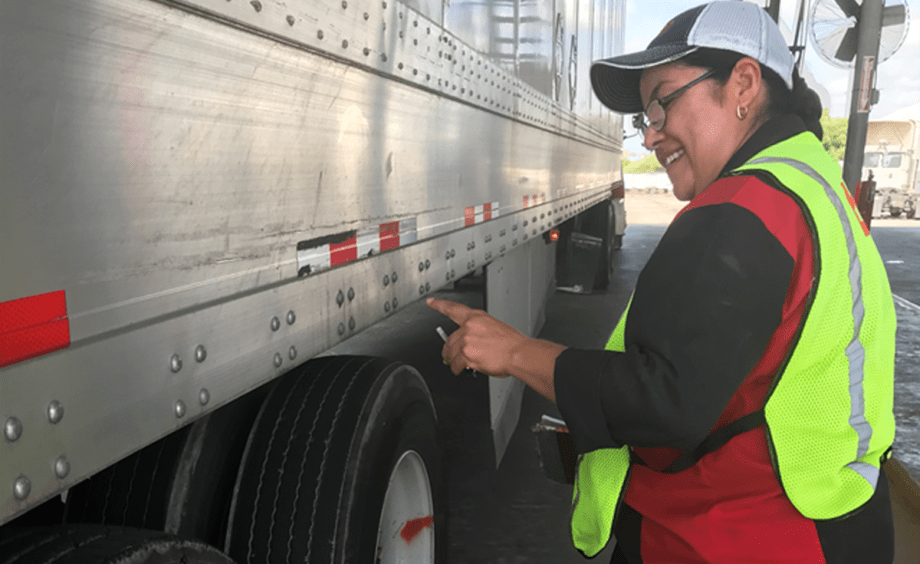
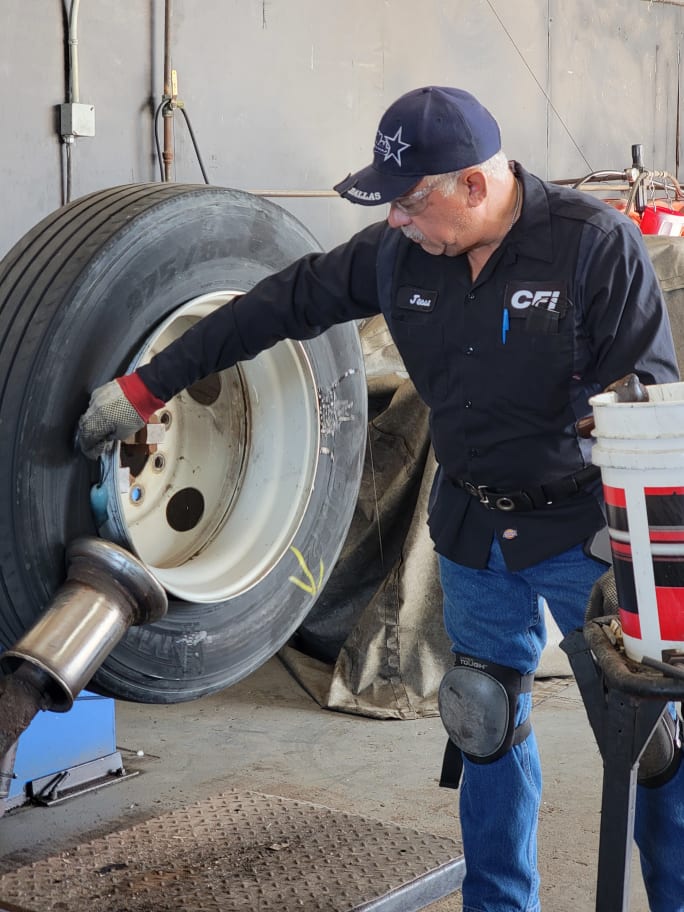
CFI’s Laredo shop went from having the worst safety record in the company to going more than four years without an accident or injury — the longest safety streak in the company’s 75-year history.
CFI’s Laredo shop went from having the worst safety record in the company to going more than four years without an accident or injury — the longest safety streak in the company’s 75-year history.
Photo: CFI
3 min to read
It was July 2017, and Enrique Mendoza had a problem. CFI’s Laredo, Texas, location had been tagged as having the highest number of safety incidents in the entire company, and Mendoza was the shop manager.
Ad Loading...
This metric was creating other problems for the fleet as well, most notably unacceptably high driver and technician turnover.
Mendoza took it upon himself to get the situation under control as quickly as possible. He realized that simply implementing new guidelines and procedures wasn’t going to be enough. He would have to change the very culture in Laredo.
Ad Loading...
As a result of the new safety culture, employee turnover has improved by 100%.
Photo: CFI
Understanding that this process would take time, he began by setting a series of small, easily attainable goals to get the ball rolling.
“One of the first things I did was to get very detailed information on each incident that occurred,” Mendoza says. “I wanted a strong evaluation of each occurrence in order to understand what had happened and develop plans to make sure we kept a repeat incident from occurring.”
Fun Fact: CFI was founded in 1951 by owner-operator Ursul Lewellen with one truck and two trailers.
Challenge: Shop safety
This included thoroughly debriefing everyone involved in an incident, as well as taking immediate and highly visible actions to correct the issues found during the debriefing process.
“I felt that a strong follow-up to an incident with immediate action was critical for getting employee buy-in to what we were doing,” Mendoza says. “And we built on those measures by then taking what we’d learned, and the actions taken, and sharing it throughout the shop with new, detailed safety meetings. But beyond just telling everyone what happened, we also started setting clear goals for the entire team to reach on the safety front. Again, these goals were easily attainable, with an overall goal of having zero incidents in the shop per quarter.”
Still, Mendoza notes, it took a while to get everyone to buy in to the new safety culture.
Ad Loading...
“It really took about a year before I felt we were seeing the kind of progress I was looking for,” he says. “Every time we hit our quarterly goals, we would celebrate with a small barbecue for everyone. We would also share our accomplishments in the shop throughout the entire company with email newsletters and pictures to encourage everyone to take pride in our safety initiatives.”
Today, CFI Laredo has two safety meetings per week. Any time there’s an issue in the shop, employees can write up an honest assessment on potential problems such as a dangerous area or a lack of protective equipment.
“We want them to feel that they can say anything they want to regarding safety without fear,” Mendoza says. “And we closely supervise each department now to make sure goals are being set and reached, and immediately get them any safety equipment they need in order to work safely.”
At the time of our interview, it had been more than 1,630 days since the last injury on the job at CFI Laredo — a stat that Mendoza is understandably proud of. Even better, he says, is that as a result of the new safety culture, the shop has gotten more productive and efficient, and employee turnover has improved by 100%.
“Our people here now feel safe and work with a lot more confidence,” Mendoza says. “We have an open management system where they can share comments and know they’ll be listened to. And they also know they’ll have whatever tools or equipment they need to work safely and efficiently. It took some time to get our new safety culture installed and make it stick. But it has been an extremely positive improvement for us across the board once it did so.”
Ad Loading...
This article first appeared in the Jan/Feb 2022 issue of Heavy Duty Trucking magazine.
For fleet managers and collision repair professionals keeping heavy-duty trucks on the road, getting the color right the first time isn't just about appearance — it's about efficiency, turnaround time, and bottom-line results. Discover how today's digital color tools are transforming the repair process from guesswork to precision.
Carriers whose updates were due on or after June 1 have more time, while FMCSA works to stabilize its new registration system and warns of phishing sites impersonating its new carrier registration system, Motus.
Cargo theft is no longer just the cost of doing business. It's a multi-billion-dollar criminal enterprise exploiting vulnerabilities across your fleet, drivers, and supply chain.
Explore how telematics help refrigerated fleets improve visibility, uptime, efficiency, compliance, and cargo protection across connected cold chain operations.
Escalating U.S.-Canada tariffs could disrupt cross-border freight, reduce truck volumes, raise costs, and create new uncertainty for carriers on both sides of the border.
The American Transportation Research Institute wants to know what's worrying trucking fleet managers, drivers, and other stakeholders in its annual Industry Issues survey.
HDT Truck Fleet Innovator Adam Buttgenbach helped PepsiCo build one of North America’s largest EV fleets by focusing on where electric trucks make operational sense.