




Auburn University Test Track Offers Fuel Economy Testing Opportunities
The trucking industry needs a rational methodology for determining expected fuel economy for new tractors, says representatives for The Labs at Auburn University, Auburn, Ala
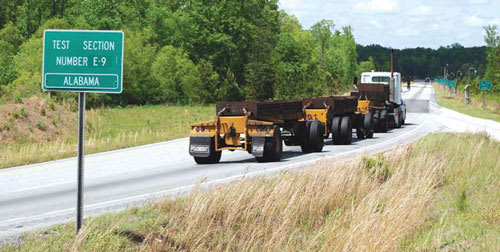
Auburn University has developed a conceptual heavy truck fuel economy rating system at its pavement-testing facility.
The trucking industry needs a rational methodology for determining expected fuel economy for new tractors, says representatives for The Labs at Auburn University, Auburn, Ala.
Under pressure from both management and government to reduce fuel consumption, potential buyers could benefit from a window sticker rating or similar system that would allow them to compare the expected performance of different tractor models designed to meet their service needs.
For the industry and government to give any serious consideration for such a rating system, it would need to be objective, cost effective and flexible enough to meet the needs of all potential users. Auburn University could fill those needs through the proposed use of its program's test track at the National Center for Asphalt Technology (NCAT), a cooperative venture with the National Asphalt Pavement Association's (NAPA) Research and Education Foundation.
About NCAT
The pavement industry's financial endowment supports Auburn's facilities and faculty in improving the performance of hot mix asphalt pavements through research, education, and information services. The NCAT Pavement Test Track is one example of ongoing practical research, and a project that could share interests with the motor carrier industry in product and fuel economy testing.
The inaugural Pavement Test Track was constructed as a partnership between Auburn University and the Alabama Department of Transportation. The 309-acre site near Opelika was subsequently purchased by Auburn University, with improvements, including earthwork, buildings and robusttrack foundation, made by ALDOT.
This investment makes it possible for other state transportation departments to fund the operation of the test track in a prorated manner, based upon the number of pavement test sections they choose to build and test in three-year project cycles. A design lifetime of truck traffic is then applied to the surface of experimental pavements in an accelerated manner. By comparing the performance of two or more sections, NCAT provides recommendations to member states on how to optimize pavement performance and reduce the life-cycle
costs of transportation infrastructures.
Trucks on the Track
Extensive resources are required to support the core mission of pavement research at the off-campus facility. A fleet of heavy triple trucks is run approximately 3,400 miles a day, five days
a week, in order to simulate normal traffic wear to the experimental pavements. To optimize fleet productivity and facilitate vehicle research, each truck is equipped with a wireless datalogger that captures key information from the onboard computer network. Sensors embedded in test sections monitor the environment as well as the pavement's response to passing trucks.
An extensive 802.11 wireless mesh network provides a common transmission platform for data streaming from the trucks as well as from sensors embedded in the roadway. The mesh network itself is a state-of-the-art tool that provides for the seamless, real-time transmission of high-speed data as vehicles move around the track's perimeter.
The Program for Advanced Vehicle Evaluation (PAVE) serves as the operational mechanism and outdoor laboratory for Auburn University's Transportation Research Initiative, made possible by the ongoing research program at the NCAT Pavement Test Track. In order to produce realistic wear on the experimental pavements on the 1.7-mile test oval, it's necessary to run the fleet of heavy trucks more than 750,000 miles a year. Trucking operations at the test track provide an opportunity to study issues that are important to the trucking industry in a highly controlled
and cost-effective manner. The PAVE Research Institute has provided vendors and research sponsors with an affordable opportunity to evaluate new technologies while simultaneously
providing fl eets with reliable and unbiased performance data.
Fuel Economy Testing
The most common type of test run at PAVE has been TMC/SAE Type II Fuel Economy Test Procedure using removable weigh tanks. Auburn University has developed a conceptual heavy-truck fuel economy rating system built upon the tried-and-true Type II test procedure.
In the proposed methodology, the existing PAVE fl eet will be used to generate precision fuel economy test data pulling the standard flatbed triple trailers at an approximate 155,000 pounds gross vehicle weight (GVW), in a double configuration at 114,000 pounds GVW, and in a single confi guration at 72,000 pounds GVW at speeds of 25 mph and 50 mph on the Pavement Test Track for a total of six individual Type II tests.
Two additional tests will be run on the track using full, then empty legal box trailers, followed by a test run using a consensus stop-and-go duty cycle.
Based on these nine Type II fuel tests, a computer model will be developed that accurately predicts the observed data for an infinite combination of speeds and weights. New tractors can be tested at loads and/or speeds agreed upon by consensus that calibrate the models to each
unique vehicle. The information gathered can then be used to produce families of data curves for the such performance comparisons as proposed by the window sticker system.
Additionally, output from this process could be used to populate an online modeling system that allows potential buyers to predict expected fuel economy for actual revenue routes. Users would be able to plot their route on a 3-D road map of the United States and enter GVW values for each segment of the trip. The system could then access the predictive fuel economy model for each tractor tested to estimate fuel economy in a reliable and objective manner.
Why it's Needed
Several different manufacturers have recently made claims regarding tractor aerodynamics and predicted differences in fuel economy, something that could be more easily compared from similar testing on the same test track. While it's true that tractor aerodynamics are important, it may not be the deciding factor in choosing a make and model.
According to Buzz Powell, NCAT's test track manager, approximately 15,000 gallons of diesel fuel are burned each month on the NCAT Pavement Test Track in order to produce wear
on experimental pavements - this is fuel and powering miles that could be utilized to simultaneously rate tractors in an objective manner based on anticipated duty cycles.
For the benefit of fleet owners who need reliable fuel economy estimates, Powell said the industry should encourage the testing and proposed rating system.
Reprinted with permission from the Winter/Spring 2009 issue of Fleet Maintenance & Technology. ©2009 Technology & Maintenance Council - American Trucking Associations.
More Fuel Smarts

Cummins Adjusts 2027 Engine Rollout After EPA Proposal
The engine maker will gradually introduce its new Model Year 2027 diesel engines while continuing to offer current models during the transition, citing the EPA's proposed emissions rule changes.
Read More →
EPA Proposal Could Ease 2027 Truck Costs and Buying Uncertainty
The proposal doesn't change the tougher NOx standard, but it would revise key implementation requirements that manufacturers say have driven up costs and complicated fleet purchasing decisions.
Read More →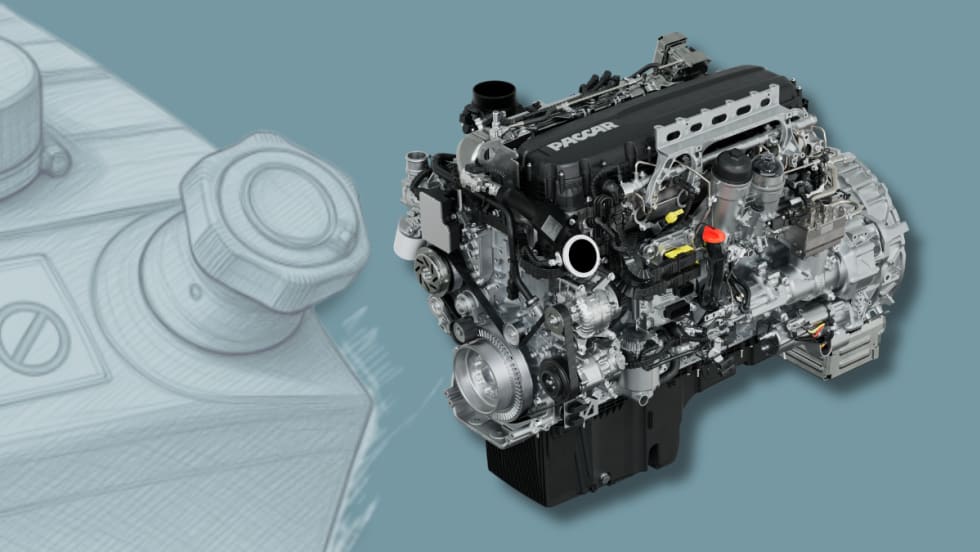
Cummins, Paccar Ease DEF Derates After EPA Guidance
Updated diesel engine software gives truck operators more time to address emissions-system issues while staying compliant with EPA emissions standards.
Read More →
Maintenance in the Messy Middle Part 3: Biodiesel
Biodiesel can reduce emissions, improve fuel-system lubricity and use existing diesel infrastructure. But NACFE’s Messy Middle maintenance report says fleets must actively manage storage, cold-weather operation, filters and oil drain intervals to avoid problems.
Read More →
Enhance Fleet Performance with High-Efficiency Auxiliary Power Units
Drive sustainable cost savings while increasing driver comfort during short- and long-haul logistics operations.
Read More →
Maintenance in the ‘Messy Middle’ Part 2: Renewable Diesel Fuel
NACFE's latest Messy Middle Powertrain Service & Maintenance report says renewable diesel gives fleets an opportunity to reduce carbon emissions without changing trucks, fueling infrastructure or maintenance practices. But technicians still need to understand several important operational differences.
Read More →
The Diesel Engine Enters NACFE’s ‘Messy Middle’
NACFE’s new Messy Middle Powertrain Service & Maintenance report says keeping modern diesel engines running now depends as much on software, diagnostics and data as traditional mechanical service.
Read More →
DTNA Software Update Gives Truckers More Time Before DEF Derates Take Effect
The changes reflect EPA guidance aimed at reducing downtime caused by emissions-system faults while maintaining compliance requirements.
Read More →
New Agentic Predictive Maintenance Report Demonstrates How Degraded Aftertreatment Systems Waste Fuel
Questar analyzed a large mixed-class fleet and discovered it was wasting as much as $30 in fuel per vehicle, per day, because of mechanically degraded aftertreatment systems.
Read More →
New York City's Microhub Project is Delivering Results
Trucking, last-mile delivery companies, and environmental advocates like what they are seeing so far with New York's microhub program.
Read More →