




Are Your Techs Installing Air Disc Brake Calipers Correctly?
A new primer from Bendix offers pointers for making sure heavy-duty air disc brake calipers are installed correctly.

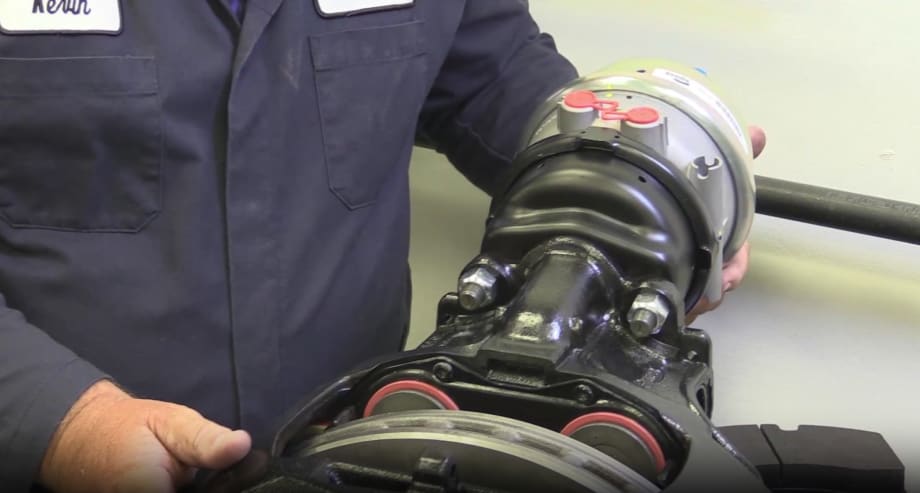
Regular air disc brake preventive maintenance includes examining and addressing issues that could lead to caliper damage and the possibility of a voided warranty.
Photo: Bendix
Air disc brakes (ADBs) have been proven to deliver advantages on the road, in the service bay, and for a fleet’s bottom line. Their success in heavy-duty applications is driving a continued increase in adoption and standard positioning across a wide range of vehicles and trailers. And since their stopping power makes ADBs the most logical choice for supporting advanced driver assistance technologies such as collision mitigation, we’re likely to see even more air disc brakes on North America’s commercial vehicles as these safety systems become more commonplace.
That's why the latest installment of the Bendix Tech Tips series covers what to do if it’s time to replace an air disc brake caliper and how you can protect your investment in the technology.
Know the Signs of a Bad Caliper
Regular ADB preventive maintenance includes examining and addressing issues that could lead to caliper damage and the possibility of a voided warranty, according to Mark Holley, Bendix director of marketing and customer solutions, wheel-end.
“Don’t forget to inspect guide pin movement and take a look at tappets and boots for damage and contamination, for instance, along with checking seals and bushings. The potential for caliper damage is one reason Bendix recommends replacing ADB wear components with genuine replacement parts during a pad change — pad retainer, pad retention springs, and shear adaptors — and includes them in a complete friction replacement kit.”
In the shop, technicians conducting an annual wheel-off inspection should make sure the caliper slides freely. Take a moment to examine the rotor. Look at the overall condition of the rotor and evaluate the color. If the rotor is a bright rusty-red color, it could be an indicator to inspect the caliper more closely.
For further information, refer to your air disc brake manufacturer’s service data sheet.
Choose the Right Replacement
Holley notes that there have been significant advancements in ADB technology since they were first introduced in the heavy-duty market in 2006.
"ADB adjusters today are more robust than previous generations and can better maintain the proper running clearance," he said. "Some ...versions can over-adjust, increasing the potential risk for dragging brakes and thermal events."
If you’re exploring remanufactured calipers as a replacement option, make sure to ask about the reman process.
"True remanufacturing adheres to the same rigorous processes and standards used to make OEM calipers. Remanufacturing also always involves replacing or repairing a core’s components to bring the part up to OEM specs."
What to Remember in the Garage
Once you’ve made your caliper choice, consistency is key: If you’re buying a caliper, for example, (either remanufactured by the OEM or service new) make sure it has the same design so you maintain all the features of your original brake, Holley suggested. He sid non-genuine calipers will not have the same adjuster as your original brake, so you would lose that benefit.
Keep in mind that if you purchase an aftermarket caliper, then you will need to purchase two calipers to maintain performance across the axle, just like when a slack adjuster is replaced. Even minor differences in caliper construction and performance can cause brake pull or lead one brake to drag and overheat.
For similar reasons, friction types also must match across the entire axle. In addition, because they may fit the wheel-end envelope differently, aftermarket calipers may interfere with suspension clearance, which impacts brake performance and can damage the suspension.
Other key points during new caliper installation include:
Holding the caliper only on the exterior. To prevent injury, never insert your fingers between the caliper and carrier.
Ensuring the newly installed caliper slides freely and can be moved by hand pressure only over the entire length of the guide pin arrangement.
Making sure the hose routing arrangement doesn’t restrict the full travel of the caliper.
Not overloading or damaging the adjuster.
Torquing bolts to proper spec and proper sequence.
Longer life cycles are another benefit of air disc brakes. The right part selection and maintenance practices will help you keep them operating safely and deliver lower total cost of ownership
You can find more information from the Bendix Tech Tips series in the Bendix multimedia center at knowledge-dock.com. Additional instructional videos and interactive education on wheel-ends, air systems, and electronics are also available at the Bendix On-Line Brake School, www.brake-school.com, and at B2Bendix.com. You can reach the Bendix Tech Team at 1-800-AIR-BRAKE, option 2.
More Maintenance

Color Match Smarter: Tools That Restore & Perform
For fleet managers and collision repair professionals keeping heavy-duty trucks on the road, getting the color right the first time isn't just about appearance — it's about efficiency, turnaround time, and bottom-line results. Discover how today's digital color tools are transforming the repair process from guesswork to precision.
Read More →
Wrong Repair Prompts Recall of Freightliner, Western Star 4x2 Trucks
DTNA is recalling more than 2,400 trucks that received an incompatible software fix instead of the hardware repair required to address brake valve corrosion.
Read More →
Truck Drivers Need More Than Another Alert
Fleets have more visibility into truck health, safety events, and driver activity than ever. The next challenge is turning all that information into useful guidance for the person who has to decide what to do next.
Read More →
The Maintenance Checks Trucking Fleets Should Prioritize Before Fall Freight Picks Up
Making it through August isn’t the same as being ready for the next several months of operation. Find out what systems may have suffered from summer heat and need to be checked out before fall.
Read More →
What Three Fleets Are Doing Differently When Buying Truck Parts in 2026
With freight improving but costs still climbing, fleet maintenance executives explain how they're balancing price, quality, and supplier relationships.
Read More →
Paccar Recalls 2027 Trucks Built This Summer for Possible Electrical Problem
The nearly 6,000 Kenworth and Peterbilt trucks in the recall could potentially lose engine power, among other things.
Read More →
Will API PC-12 Oil Change Trucking Fleet Maintenance?
The new API PC-12 heavy-duty engine oil category reflects the changing demands of modern diesel engines. But fleets like Foodliner are looking to getting their own data before making decisions on adopting the new oils and questions such as extending oil drain intervals.
Read More →
Brake Safety Week to Focus on Drums and Rotors
Commercial vehicle inspectors are focusing on truck brakes during CVSA's Brake Safety Week, August 23-29.
Read More →Possible Battery-Cable Fires Prompt Recall of 15,000+ International MV and HV Trucks
On the recalled vehicles, manufacturing variations can cause the battery interconnect cable to contact the auxiliary stud and hold down the bracket.
Read More →
Rush, MCT Team Up to Grow Refrigeration Service Network
The joint venture will operate MCT's network of Carrier Transicold dealerships and mobile service locations, with the companies promising greater service capacity and uptime for refrigerated fleets.
Read More →