




4 Ways to Know if Personal Conveyance is Being Used Correctly
Carriers are right to be concerned about managing personal conveyance, and drivers who misuse personal conveyance are essentially creating false logs.

Drivers may be misusing personal conveyance to complete assignments when short on, or out of, hours.
Photo: Jim Park
In a study conducted by J. J. Keller and Associates, Inc., respondents reported that one of the biggest challenges around hours-of-service compliance is managing personal conveyance. Carriers are right to be concerned about compliance in this area: Drivers who misuse personal conveyance are essentially creating false logs.
But misuse isn’t impossible to identify. Carriers that can’t confidently say that personal conveyance is being used appropriately might want to start by watching for certain patterns in personal conveyance data and considering what those patterns might be telling them.
Brandon Wiseman of TruckSafe Consulting explored personal conveyance in 2022, read his piece here: Personal Conveyance: Is It Worth It?
1. Compare the Balance of Weekly Personal Conveyance (PC) Use
Carriers that run on a weekly cycle and allow drivers to keep their commercial vehicles at home should see a good amount of personal conveyance use at the beginning and end of the week. The amount, however, should be balanced.
If significantly more personal conveyance occurs at the end of the week compared to the start of the week, further investigation might be warranted. Drivers may be misusing personal conveyance by using it to complete assignments when short on (or out of) hours.
2. Know What’s Typical — Amount and Frequency
In certain operations, such as those where drivers are assigned to remote work locations for extended periods, or those with day-cab drivers that stay out overnight, carriers may see daily use of personal conveyance. The key in such setups will be watching for drivers that have excessive amounts of personal conveyance or abnormal spikes in its use.
For instance, if the average driver has one hour per day of personal conveyance, but one driver has four hours one day, the latter deserves special attention.
Likewise, if the average driver at a company is using personal conveyance one to three times a week, but one driver used it nine times in a week, this is another spot where the use of personal conveyance should receive special attention.
In short, carriers should keep an eye out for sudden spikes in the amount or frequency of personal conveyance use on a day-to-day or week-to-week basis. If these show up without a corresponding change in operation, the carrier must take the time to look into such anomalies.
3. Addressing 'Abnormalities'
When the misuse of personal conveyance is discovered, carriers don’t have to immediately assume abuse is to blame. A driver first starting to use personal conveyance may simply need additional training on the concept.
Where abuse is identified, however, the key is to catch the issue early and make sure drivers understand the carrier’s commitment to keeping logs in line. This may be a matter of a simple correction, a warning, or even discipline if the situation merits it.
4. Respect the Data
The important thing is that a carrier remain committed to listening to what the data is telling them. Again, those that don’t do that risk accepting false logs from drivers.
Tom Bray is a transportation industry consultant at J.J. Keller & Associates, with an extensive background in DOT compliance, driver training, CDL testing and more. This article was authored under the guidance and editorial standards of HDT’s editors to provide useful information to our readers.
More Safety & Compliance

FMCSA Pauses Biennial-Update Enforcement Amid Motus Transition
Carriers whose updates were due on or after June 1 have more time, while FMCSA works to stabilize its new registration system and warns of phishing sites impersonating its new carrier registration system, Motus.
Read More →
ZF Expands Commercial Vehicle Push in North America
ZF is expanding its North American commercial-vehicle presence with new transmission applications, electrification, trailer technology and autonomous-driving systems.
Read More →
Truck Drivers Need More Than Another Alert
Fleets have more visibility into truck health, safety events, and driver activity than ever. The next challenge is turning all that information into useful guidance for the person who has to decide what to do next.
Read More →
Tesla Wants a Self-Driving Semi. Are Cameras Enough?
Could Tesla’s camera-only autonomous driving technology work on an 80,000-pound Semi? In this commentary, HDT's Deborah Lockridge takes a look at Tesla, Cybercab, and how autonomous trucks see the road.
Read More →
What DOT’s Automated Vehicle Strategy Means for Trucking
The U.S. Department of Transportation issued a new automated-vehicle strategy that outlines plans for driverless-truck regulations, cross-state freight corridors, and federal safety standards.
Read More →
NYC Expands Speed, Pedestrian Safety Tech Across Fleet
New York City is expanding intelligent speed assistance and pedestrian-alert systems across its municipal fleet, moving the technologies from pilot programs into vehicle procurement and retrofit requirements.
Read More →
FMCSA Removes 110 Truck Driver Training Schools from Certified ELDT List
Federal regulators also are targeting more than 160 additional training providers and launching a nationwide audit of third-party CDL skills testers as part of a broader crackdown on trucking fraud.
Read More →
Beyond DOT Compliance: What Makes a Trucking Fleet Truly Safe?
A trucking fleet can follow every rule and still make unsafe decisions. The real test comes when safety conflicts with freight, productivity, or cost.
Read More →
Hours of Service Pilot Programs: FMCSA Readies for 2027 Rollout
Two pilot programs could eventually reshape hours-of-service rules, giving truck drivers options to pause their 14-hour clock or use longer split sleeper rest periods.
Read More →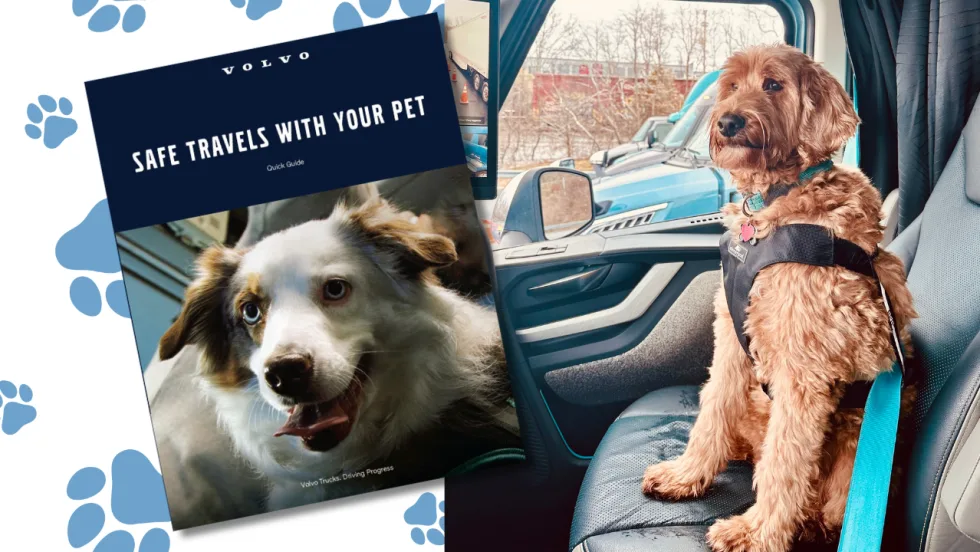
New Guide Offers Pet Safety Tips for Truck Drivers
Hundreds of thousands of pets travel in truck cabs. A new safety guide from Volvo Trucks and the Center for Pet Safety offers practical advice for truck drivers who bring dogs and cats along for the ride.
Read More →