




4 Ways Technology Can Reduce Your Cost-per-Mile
Fleet managers understand that reducing cost-per-mile (CPM) by a single penny means huge savings, considering the number of miles a fleet drives each year. Here's how technology can help.
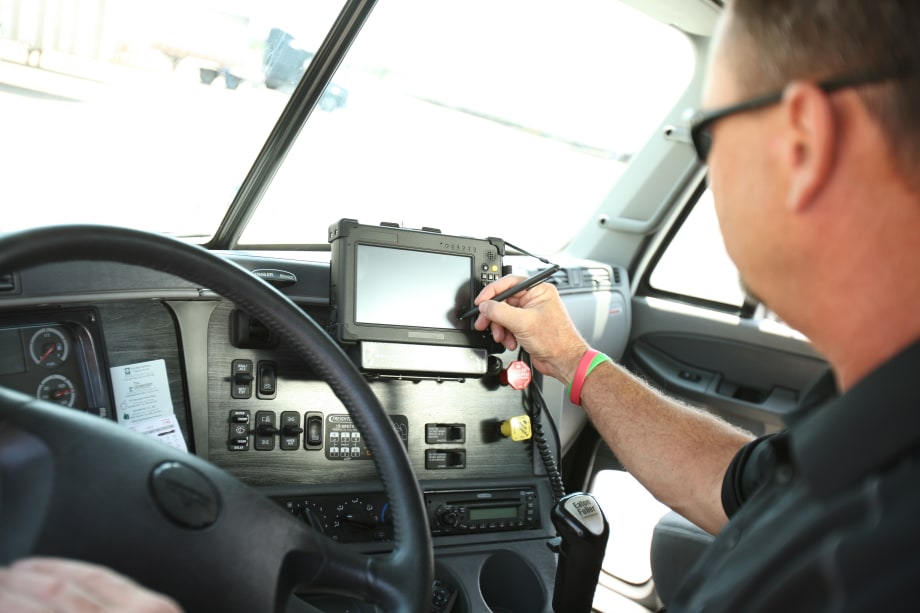
On-board computing systems can help cut cost per mile through helping improve fuel mileage, reducing out of route miles and more.
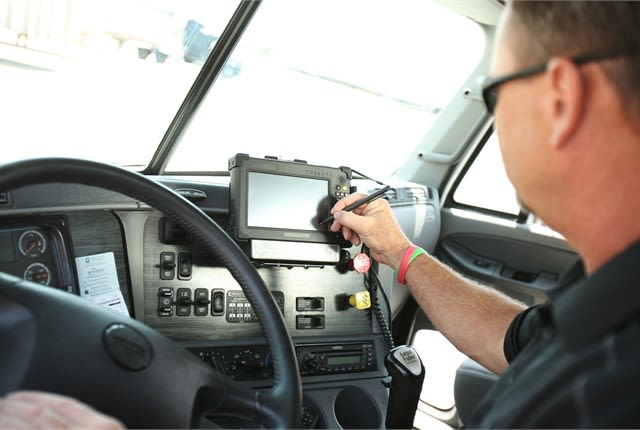
On-board computing systems can help cut cost per mile through helping improve fuel mileage, reducing out of route miles and more.
Ben Franklin would have to admit that in the world of transportation, a penny saved is far more than a penny earned. Fleet managers understand that reducing cost-per-mile (CPM) by a single penny means huge savings, considering the number of miles a fleet drives each year. Therefore, reducing CPM is crucial for improving the bottom line and margins.
You can’t manage what you can’t measure – a fact makes onboard computing and other technologies undeniably relevant to reducing CPM. Technology is critical for not only gathering and assessing pertinent data, but also tracking progress and highlighting issues that impede progress.
In each of the following four areas, technology continues to deliver exceptional return on investment.
1. Reduce fuel consumption
Fuel consumption and the volatility of fuel prices will always plague fleet managers as one of the largest contributors to CPM. Therefore, improving miles-per-gallon will yield outstanding results in lowering CPM. One of the quickest ways to succeed is to monitor driver performance and provide tools that enable drivers to contribute to this effort.
EOBR-generated data in the form of weekly engine reports track each driver’s speed, long idle and shifting habits. The information identifies drivers who may be burning excessive fuel, and can also help pinpoint vehicles that may be underperforming.
Most drivers want to perform like professionals. When fuel performance data is translated into a scorecard, it becomes a coaching tool. It raises driver awareness of a driving habit that needs changing, an important first step in the improvement process.
Motivating and incentivizing drivers to maintain improvement takes an mpg program to the next level. Creating competition among drivers by posting (in the driver break room where they will surely draw a crowd) weekly scorecard rankings is an approach that has helped many fleets keep their driving habits top of mind. No one with a strong sense of pride wants to be last, let alone near the bottom.
Make mpg a team effort by sharing fuel savings in the form of a reward for the top 10% of performers. Adding a monthly or quarterly incentive further stokes their competitive spirit.
On the flip side, focus coaching efforts on drivers in the bottom 10%.
More about scorecards: In addition to a fuel program, they are valuable for reducing vehicle maintenance and insurance costs, and improving safety (more about that later). Be sure to monitor driver performance by driver name, not truck number, to avoid data glitches due to slip-seating and other factors. You can coach a driver, not a truck.
2. Reduce out-of-route miles
Out-of-route miles burn unnecessary fuel, cause unnecessary wear and tear on vehicles, diminish driver productivity, and erode customer service—all of which wreak havoc with CPM. Reduce out-of-route miles and your CPM will drop.
Create a report that compares actual miles driven with published miles for each trip. Establish a variance tolerance (a percent rather than number of miles). Flag drivers who exceed the threshold and include this performance metric on the driver scorecard. Since this behavior is coachable, it is important to learn the cause of each flagged incident, take corrective measures and track progress.
Adopt a navigation application for dispatch communication and routing to calculate the most efficient routes based on vehicle profile and routing parameters such as truck-restricted and prohibited roads and load type, including hazardous materials. Integration with routing software eliminates driver entry of erroneous addresses that may cause liability and safety issues as well as out-of-route miles.
Drivers may be directed to the correct entrance and delivery spot, so they know exactly where to enter the delivery area, where to park and where to exit. Since most accidents occur in parking areas, this is a valuable safety benefit as well. In addition, when spoken turn-by-turn directions are provided, a navigation application eliminates the number one cause of accidents – visual distraction.
Another navigation application feature optimizes fuel purchase by searching for fuel stations within a given radius along a designated route. Stations can be dynamically sorted by pump price or within a fleet’s specific network of pre-approved stations.
A Winnipeg, Canada-based carrier integrated a navigation application with its routing software for greater compliance with pre-planned routes. Routes from the back-office synchronize in real-time to deliver guidance to the vehicle. In fostering better compliance with routing, the integration supports reality-based pricing and billing and payroll. Customers are billed for miles driven, and drivers are paid for miles driven and hours worked.
Next Page: Develop a comprehensive safety program[PAGEBREAK]
3. Develop a comprehensive safety program
Lawsuits, accidents, insurance premiums, and safety-related infractions can be huge cost drivers, particularly with fines and penalties imposed by the DOT's Compliance, Safety, Accountability enforceent program.
In addition, unsafe practices lead to time-consuming compliance reviews that tie up operational resources and damage productivity. There’s no question that every electronic safety tool pays for itself.
Start by electronically monitoring hours of service. Fatigued driving is the number one cause of accidents involving trucks. It tops CSA’s list of “red flag violations,” which automatically incur a compliance review, which puts a huge dent in drive time.
In addition, roadside inspections destroy driver productivity. Since carriers are measured against their peer group (with number of comparable units), those that have electronic logs will automatically be rated at the highest level of HOS compliance. The have-nots are at a distinct disadvantage.
Installing electronic logs helped a Florida carrier bring driver OOS down from 90% to 35%, with incremental improvements along the way. Without DOT scrutiny, driver productivity increased 30%. The improved safety track record reduced liability and physical damage insurance premiums by 20% after the first year and an additional 10% the following year.
Trucks equipped with electronic logs are typically waved through roadside inspections, helping drivers maximize drive time and adhere to their delivery schedule.
When an electronic log system is integrated with a transportation management system, dispatchers can make better decisions based on drivers’ available hours to ensure optimal drive time and productivity and improve compliance. Fleets eliminate risking a costly safety violation by having to bring back a driver who is out of drive time.
Accident prevention is key in curbing insurance premiums since underwriters assign more favorable rates to safer, lower-risk fleets. Here are a few more ideas for your safety program:
Safety-related driving behaviors on the driver scorecard (sudden accelerations and decelerations, excessive speed) keep drivers engaged in the program and enable coaching.
Onboard computing data can help recreate accidents and protect drivers and their carriers against frivolous lawsuits.
Exception notification will alert driver managers in real-time of risky driving behavior, so they can immediately communicate with drivers and head off problems.
4. Reduce on-the-road maintenance
Fleets with reactive maintenance face unexpected, costly breakdowns. Drivers are forced to waste drive time, delivery schedules crumble, customer service suffers, and excessive repair costs prevail.
On the other hand, proactive maintenance (“an ounce of prevention…”) can prevent unnecessary schedule interruptions and surprise breakdowns that eat away at revenue miles driven per day. There are a couple of proven maintenance practices that can help control maintenance costs.
Monitoring fault codes creates an early-warning system that informs maintenance about vehicle issues, so they can determine the urgency of an issue and schedule necessary repairs to minimize impact on driver schedules and drive time. Early issue resolution also can preclude major maintenance costs.
On the other side of the coin, maintenance can reassure drivers when the fault code is nothing, eliminating an unnecessary trip back to the terminal or out-of-route driving for a repair by a third party.
Electronic driver vehicle inspection reports (eDVIRs) automate the creation of inspection tickets. A centralized closed-loop maintenance application creates a work order when it detects a vehicle defect identified by a driver in an eDVIR form message. A sophisticated system automatically red-tags safety-related issues for highest priority maintenance. When the vehicle repair is completed, the system notifies dispatch and the vehicle’s scheduled driver, detailing the mechanic and corrective action that was completed and documenting the vehicle’s availability for use.
The complete report and eDVIRs that do not require maintenance are stored in the system to provide a comprehensive vehicle maintenance history. Having a vehicle’s maintenance/repair history enables better decisions about future issues, as well as vehicle purchases.
An eDVIR system reports enables the carrier to track the effectiveness of a preventive maintenance program. All inspection reports become part of the maintenance history, tracked by driver, vehicle, driver/vehicle combinations and frequency. Chronic issues stand out. Drivers who never report maintenance issues are trained about how to identify potential problems.
Closing thought: just get started
Take that important first step and start working on one of these areas.
More Fleet Management

How Telematics Improves Visibility, Control, and Performance in Refrigerated Fleets
Explore how telematics help refrigerated fleets improve visibility, uptime, efficiency, compliance, and cargo protection across connected cold chain operations.
Read More →
What the U.S.-Canada Trade War Means for Trucking
Escalating U.S.-Canada tariffs could disrupt cross-border freight, reduce truck volumes, raise costs, and create new uncertainty for carriers on both sides of the border.
Read More →
What Are Trucking’s Top Concerns for 2026?
The American Transportation Research Institute wants to know what's worrying trucking fleet managers, drivers, and other stakeholders in its annual Industry Issues survey.
Read More →

American Trucking Associations Looks for a New Leader
ATA President and CEO Chris Spear abruptly left his job at the association on August 21, at a pivotal time for the trucking industry.
Read More →
Public Wi-Fi Cybersecurity Risks: How Truck Drivers and Fleets Can Protect Their Data
Public Wi-Fi can expose truck drivers and fleets to credential theft, malware, and other cyber threats. Here’s how to reduce the risk on the road.
Read More →
For Nicky Cupp, Fleet Innovation Starts With Frustration
HDT Truck Fleet Innovator Nicky Cupp turns everyday pain points at Fraley & Schilling into opportunities for better technology and smarter processes.
Read More →
Adam Buttgenbach’s Approach to Electric Trucks: Start With Where They Fit
HDT Truck Fleet Innovator Adam Buttgenbach helped PepsiCo build one of North America’s largest EV fleets by focusing on where electric trucks make operational sense.
Read More →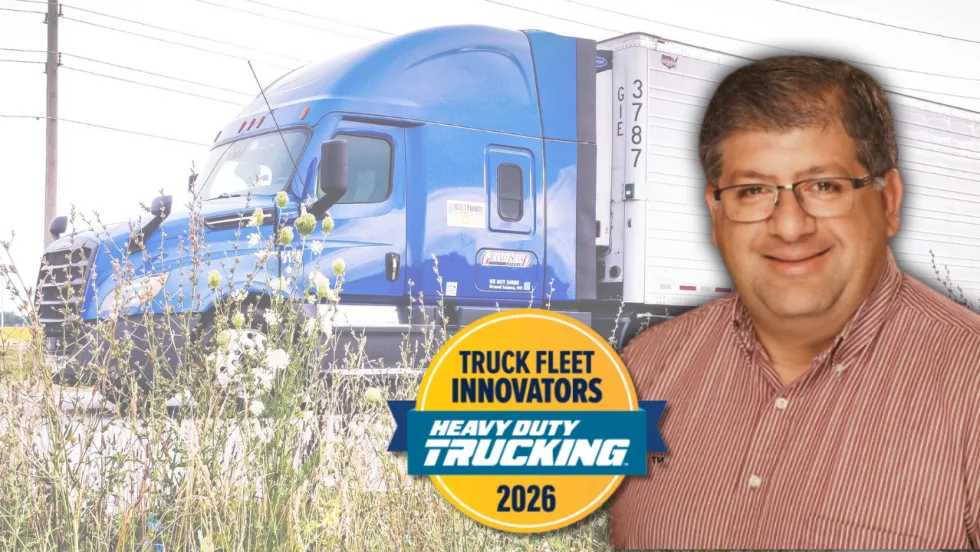
Deen Albert: Let Automation Do the Math, People Make the Decisions
HDT Truck Fleet Innovator Deen Albert makes sure people are still at the heart of operations at Grand Island Express, even while adopting artificial intelligence tools. AI-assisted dispatch helped boost revenue 25% with the same number of trucks.
Read More →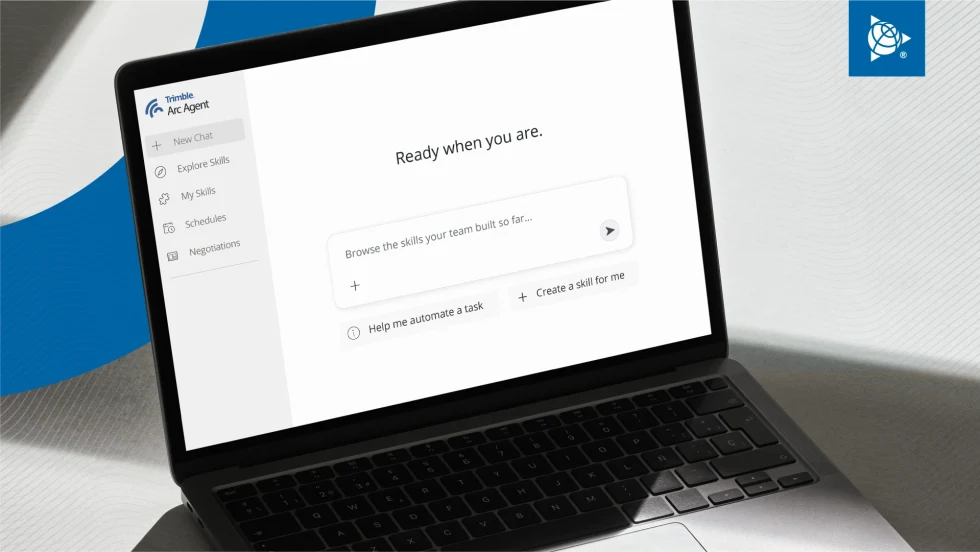
Trimble’s New AI Agent Takes Aim at Fleet Back-Office Busywork
Arc Agent works across Trimble TMS products to automate repetitive tasks such as freight orders, maintenance, invoices, fuel costs and more.
Read More →
How HDT’s 2026 Truck Fleet Innovators Are Rethinking Fleet Operations
Meet five trucking leaders who are challenging assumptions, solving operational problems, and putting innovative ideas to work.
Read More →