




How Trucking Fleets Can Use Custom Apps to Preserve the Owner-Operator Model
4 Ways Mobile Apps Can Elevate the Truck Driver Experience
Trucking fleets are turning to custom mobile apps to simplify truck drivers' lives and tackle common industry pain points.
by Jim Field, Eleos Technologies
January 23, 2025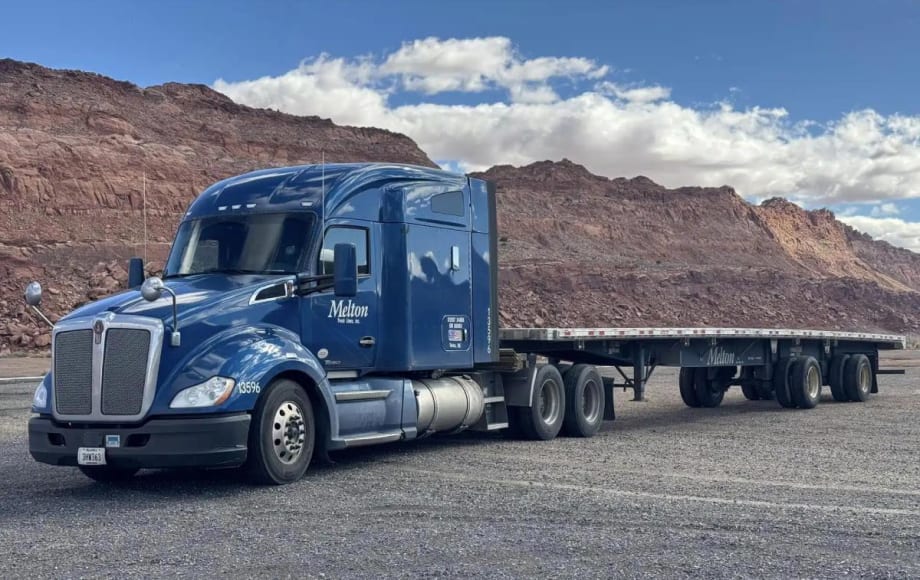
Melton Truck Lines created an integrated workflow for drivers, creating organized, prioritized communication channels.
Photo: Melton Truck Lines
4 min to read
The workday can quickly become a centrifuge of transportation and logistics challenges for truck drivers. Does anything go exactly as planned? Traffic, weather, detention time, and other unforeseen events can quickly spiral the workday out of control.
It’s no wonder truck drivers experience high levels of stress and frustration.
Custom mobile driver apps can address many of the challenges faced by drivers in heavy-duty trucking.
This article highlights four ways fleets elevate the driver experience by giving them all the tools to do their jobs efficiently and effectively, inside and outside the cab.
1. Streamlining the Non-Driving Workload for Truck Drivers
Trip planning, load documentation, and other non-driving tasks consume precious time that truck drivers could spend on the road. Carrier-based mobile apps can dramatically reduce nonproductive activities, getting drivers back on the road faster and equipping them with everything they need to deliver safely and on time.
Take Fraley and Schilling's innovative approach. The Rushville, Indiana-based fleet’s custom app enables drivers to self-dispatch with remarkable simplicity.
With just a few taps, truck drivers can access available loads, assign themselves, and complete necessary documentation through their mobile driver app. The system intelligently validates data, reducing errors and administrative overhead.
Fraley and Schilling operates more than 650 power units. In addition to flatbeds, the company has dry vans, pneumatic tankers, and intermodal assets. Its custom app’s productivity features include:
- One-tap task completion mechanisms
- Automated data validation to minimize manual entry
- Forms that adapt to different load types (flatbed, refrigerated, tanker, intermodal)
2. Saving Time on Trip Planning
Trip planning is time-consuming. Truck Drivers often spend 30 minutes or more daily using multiple apps to search for fuel stops, traffic, weather conditions, and points of interest along their routes.
Integrated trip-planning features in a custom mobile app can integrate traffic, weather, fuel networks, ETA calculations, and other tools into a user-friendly interface. With the technology, drivers can routinely complete trip planning in 15 minutes or less.
For instance, K&B Transportation added a custom weather alert system to enhance the capability of its driver app.
The South Sioux City, Nebraska-based fleet has over 2,000 assets and is a leader in transporting perishable food products. The feature enhances driver safety by channeling severe weather warnings through a dedicated newsfeed, with read-aloud functionality to prevent driver distraction.
The system requires driver acknowledgment, ensuring critical safety information is noticed.
The results include an 80% decrease in DOT recordable accidents year over year.
The fleet also communicates with customers proactively about potential delivery changes due to weather.
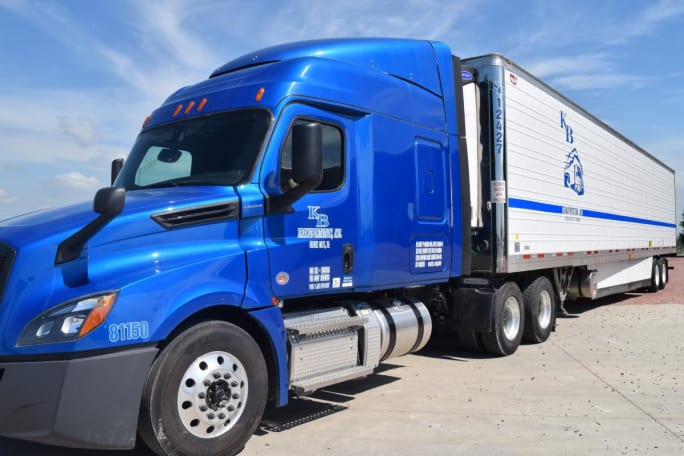
K&B Transportation added a custom weather alert system to enhance the capability of its driver app.
Photo: K&B Transportation
3. Improving Truck Driver Training and Onboarding
Driver training methods in heavy-duty trucking have many opportunities for improvement.
For example, the driver onboarding experience is often lengthy and expensive. Custom mobile apps are transforming the paradigm by enabling remote orientation training and ongoing learning from on-demand resources.
NAPA Transportation's approach is a great example. The Mechanicsburg, Pennsylvania-based truckload fleet has 400 trucks in dry van, refrigerated, and flatbed operations. The fleet created a dynamic training database to cross-reference media files with current equipment assignments, ensuring drivers can access relevant training materials immediately.
NAPA’s results include reducing driver turnover to 55% (compared to the industry average of 94%), saving more than $1 million in annual training costs, and speeding up onboarding and road readiness.
4. Clarifying Communication With Truck Drivers
Communication has historically been a significant challenge in trucking.
Traditional in-cab systems often overwhelm drivers with undifferentiated messages from various departments. Custom mobile apps solve this by creating organized, prioritized communication channels.
Melton Truck Lines' custom app showcases the potential of sophisticated communication platforms.
The Tulsa, Oklahoma-based flatbed carrier has nearly 1,500 trucks. Using custom app technology, Melton created an integrated workflow that sends information to drivers sequentially.
The workflow includes a daily demand map that helps drivers make scheduling decisions about loads while giving the fleet better information about driver availability.
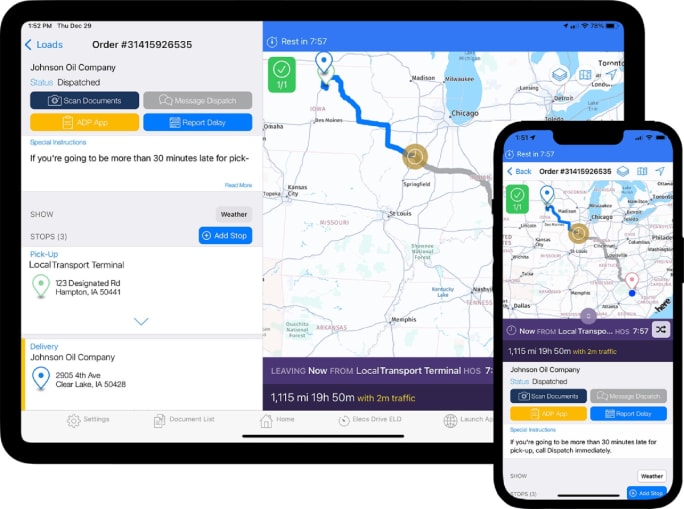
Trip planning, load documentation, and other non-driving tasks consume precious time truck drivers could spend on the road. Mobile apps can help.
Photo: Eleos
How to Choose the Right Custom App Platform for Your Heavy-Duty Trucking Fleet
Several critical factors guide fleet decision-making for a custom mobile app solution. One of the most vital is seamless integration with existing mobile and back-office systems at motor carriers.
Other considerations include robust pre-built components, a user-friendly interface, and customization capabilities to address operational needs.
Scalability, which allows a custom app platform to accommodate growth and evolving operational needs, is also paramount, along with robust data security and privacy protections.
Custom mobile apps for trucking are more than a technological upgrade. They help fleets solve business challenges by simplifying workflows, enhancing communication, and elevating the driver experience, enabling them to stand out among industry peers.

About the Author: Jim Field is the CEO of Eleos Technologies, a company based in Greenville, South Carolina. Eleos helps trucking fleets create custom driver apps. This article was authored and edited according to Heavy Duty Trucking’s editorial standards and style to provide useful information to our readers. Opinions expressed may not reflect those of HDT.
Subscribe to Our Newsletter
More Drivers

Truck Drivers Need More Than Another Alert
Fleets have more visibility into truck health, safety events, and driver activity than ever. The next challenge is turning all that information into useful guidance for the person who has to decide what to do next.
Read More →
FMCSA Removes 110 Truck Driver Training Schools from Certified ELDT List
Federal regulators also are targeting more than 160 additional training providers and launching a nationwide audit of third-party CDL skills testers as part of a broader crackdown on trucking fraud.
Read More →
Hours of Service Pilot Programs: FMCSA Readies for 2027 Rollout
Two pilot programs could eventually reshape hours-of-service rules, giving truck drivers options to pause their 14-hour clock or use longer split sleeper rest periods.
Read More →
Medical Cards, English Proficiency Reshape Roadcheck Violations
Medical-card violations jumped to the top of the driver out-of-service list during CVSA’s 2026 International Roadcheck, while English-language proficiency violations appeared among the leading violations for the first time.
Read More →
Driver Trust Can Make or Break the Success of Fleet Safety Technology
New Teletrac Navman research suggests that onboarding, transparency about driver data, and positive feedback can play a significant role in how commercial drivers respond to safety and coaching technology.
Read More →
EEOC Sues KLLM Over Alleged Sex Discrimination in Driver Training
KLLM is facing a federal sex-discrimination lawsuit over policies the EEOC alleges put female truck driver trainees at a disadvantage.
Read More →
FMCSA Moves to Codify English Language Requirements for Commercial Drivers
By changing regulations on English-language proficiency requirements for commercial drivers, rather than relying on a guidance memo, the FMCSA said future administrations won't be able to walk back the Trump administration's stricter enforcement with just a memo.
Read More →
Drivers Put Western Star Trucks to the Test at Star Nation Experience
Watch to get an inside look at the Western Star trucks, technology, and community behind the Star Nation Experience 2026!
Read More →
Trump Administration Looks to Put More Veterans Behind the Wheel
The Freedom Haulers program pulls together existing and expanded programs at several federal agencies to recruit veterans to drive commercial heavy-duty trucks and cut the red tape for them to get a CDL, training, and employment.
Read More →
Putting Mack’s Command Steer to the Test
A test drive of Mack’s Command Steer active steering system evaluates how it can make truck driving easier and less tiring.
Read More →