





4 Ways Corporate Culture Can Help Retain Women at Your Fleet
3 Elements of Effective Truck Terminal Management
What’s the secret recipe for success when managing a new truck terminal? Estes Express Lines' Dallas terminal manager shares her leadership philosophy.
February 24, 2023
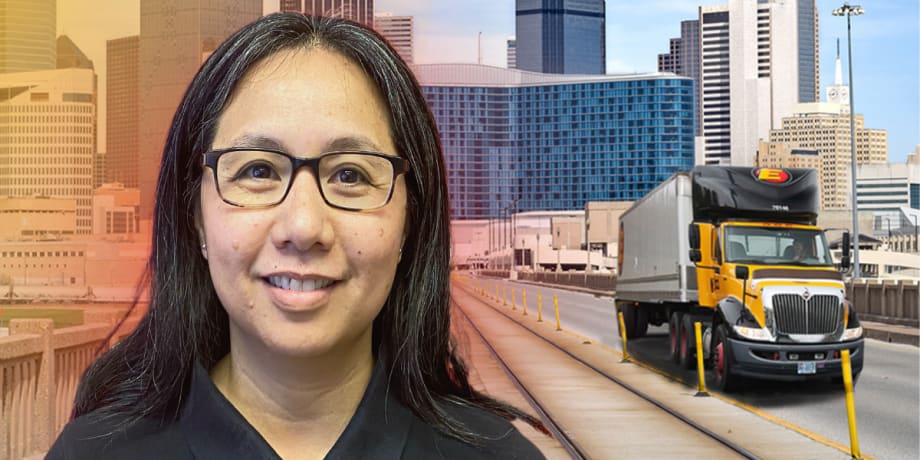
Estes Express Lines' Dallas Terminal Manager Tammy Mangham oversees more than 300 employees.
Photo: Estes Express Lines
4 min to read
For 13 years, Tammy Mangham has transformed operations and terminals at Estes Express Lines. While her latest move doubles the amount of employees she oversees, and involves integrating new processes and teams, Mangham’s down-to-earth management style has allowed an almost seamless transition.
Estes has more than 22,000 employees, a fleet of more than 8,500 tractors and 34,000 trailers, and a network of over 270 terminals. About six weeks ago, Mangham was transferred from the carrier’s Irving, Texas, terminal overseeing about 160 employees, to its Dallas facility, where she now leads more than 300 employees. So, what’s the secret recipe for success when managing a new truck terminal?
Here are three elements of terminal management Mangham says make up her leadership philosophy.
1. Set Clear Expectations
If you speak to Mangham about her leadership style, even she gets tired of using the word “communication.” But there’s a reason it’s so important as a trucking terminal manager, especially one in charge of integrating members of other facilities into its operations. She believes communication is the building block for measured success.
“I learned that I had to treat people well, because there's a lot of hands doing what we do to get to the end results,” she explains. “I had to learn how to talk to certain people to get the best out of them. And that requires us knowing a little bit about employees. Communication is big.”
She adds: “Everything fails; even in our own personal life, when we don't communicate well.”
The first step for herself, and anyone reporting to her, is setting clear expectations of the job for everyone on the team.
“I always sit down when I take a role: what is it that you want for me? I want a clear understanding of what my responsibility is and what I am going to be held accountable to,” she explained. “I use those metrics and expectations that they give me as a guide.”
From those expectations, she sets up processes that allow her, and her whole team, to succeed.
2. Adhere to Processes
“Everyone sees things differently, but we need everyone to have the same vision,” Mangham says of creating a common goal to achieve. To make sure this happens, Mangham ensures there is a process for everything her terminal team does. It takes the guess work and stress out of success.
“I encourage [terminal employees] to set up a process,” she says. “I say: Let's follow it, and then our results, and everything that we work for, will come.”
3. Establish a “Can-Do” Attitude
With every new leadership change there can be some apprehension. Will the day-to-day duties of terminal employees change? Will they have to relearn all the programs or processes they’ve mastered?
Mangham said successfully introducing yourself as new leadership is all in the approach, and in the ability to establish a positive attitude in the terminal culture.
“The reality is — the way I manage things — I don’t go around fixing things that aren’t broken,” Mangham explained. “I’m going to watch things. I’m not going to come in here and change y’alls way of life. Even if I do have to change it, I’m not aggressive about it. I try to sell them on the message. And by the end of it, they’ll probably think that they came up with the idea. And that’s a win for me.”
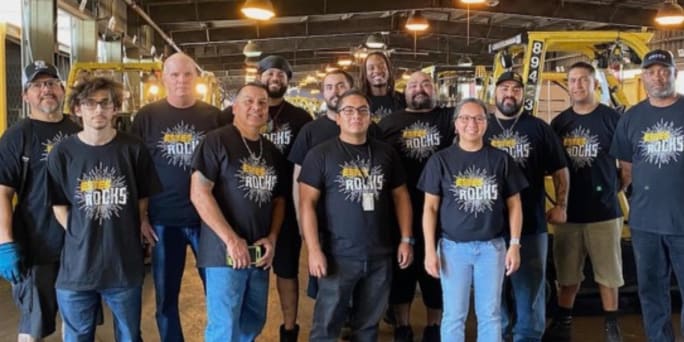
Estes has a network of over 270 terminals.
Photo: Estes Express Lines
Mangham came to her Dallas post from smaller terminals which tend to have less resources. Because of this, she and her operations managers had to learn a lot of things firsthand. That’s something that has helped her relate to employees across the terminal, and has helped shape her management style and helps earn her respect.
“I expect my team to be the type of people that roll up their sleeves and help our employees out,” she said. “I just ask them to on board with that … and have an open mind.”
She says she tries to establish an environment of “yes people.”
“We find ways to say ‘yes’ to our customers and internal [employees],” she said. “If there’s a way to do it, we’re going to try to do it.”
Subscribe to Our Newsletter
More Fleet Management

Sponsored•September 16, 2026
Color Match Smarter: Tools That Restore & Perform
For fleet managers and collision repair professionals keeping heavy-duty trucks on the road, getting the color right the first time isn't just about appearance — it's about efficiency, turnaround time, and bottom-line results. Discover how today's digital color tools are transforming the repair process from guesswork to precision.
Read More →
FMCSA Pauses Biennial-Update Enforcement Amid Motus Transition
Carriers whose updates were due on or after June 1 have more time, while FMCSA works to stabilize its new registration system and warns of phishing sites impersonating its new carrier registration system, Motus.
Read More →
Sponsored•September 14, 2026
2026 Blueprint for Countering Smarter Supply Chain Theft
Cargo theft is no longer just the cost of doing business. It's a multi-billion-dollar criminal enterprise exploiting vulnerabilities across your fleet, drivers, and supply chain.
Read More →


Sponsored•September 1, 2026
How Telematics Improves Visibility, Control, and Performance in Refrigerated Fleets
Explore how telematics help refrigerated fleets improve visibility, uptime, efficiency, compliance, and cargo protection across connected cold chain operations.
Read More →
What the U.S.-Canada Trade War Means for Trucking
Escalating U.S.-Canada tariffs could disrupt cross-border freight, reduce truck volumes, raise costs, and create new uncertainty for carriers on both sides of the border.
Read More →
What Are Trucking’s Top Concerns for 2026?
The American Transportation Research Institute wants to know what's worrying trucking fleet managers, drivers, and other stakeholders in its annual Industry Issues survey.
Read More →
American Trucking Associations Looks for a New Leader
ATA President and CEO Chris Spear abruptly left his job at the association on August 21, at a pivotal time for the trucking industry.
Read More →
Public Wi-Fi Cybersecurity Risks: How Truck Drivers and Fleets Can Protect Their Data
Public Wi-Fi can expose truck drivers and fleets to credential theft, malware, and other cyber threats. Here’s how to reduce the risk on the road.
Read More →
For Nicky Cupp, Fleet Innovation Starts With Frustration
HDT Truck Fleet Innovator Nicky Cupp turns everyday pain points at Fraley & Schilling into opportunities for better technology and smarter processes.
Read More →
Adam Buttgenbach’s Approach to Electric Trucks: Start With Where They Fit
HDT Truck Fleet Innovator Adam Buttgenbach helped PepsiCo build one of North America’s largest EV fleets by focusing on where electric trucks make operational sense.
Read More →