




A Perfect Tire? Goodyear's IMPACT Manufacturing Process
While true perfection may only be possible in unearthly realms, Goodyear's IMPACT (short for Integrated Manufacturing, Precision Assembly, Cellular Technology) produces "a perfect tire," according to Richard "Red" Richardson

While true perfection may only be possible in unearthly realms, Goodyear's IMPACT (short for Integrated Manufacturing, Precision Assembly, Cellular Technology) produces "a perfect tire," according to Richard "Red" Richardson,
who's been building tires at Goodyear’s Danville, Va., plant for 34 years.
More than five years in development, IMPACT represents a new technology that integrates component formation and assembly, automated tire assembly and curing within a cellular system. Goodyear says the result is significant improvement in tire quality, uniformity and manufacturing "turns." The new method of tire building also increases precision, manufacturing efficiency and reduces production costs.
According to Goodyear, IMPACT increases productivity by 135% and cuts cycle times by 70%. In addition, it minimizes splices and reduces the number of process steps by half. "This allows for improved consistency, from tire to tire," said Dan Harrison, manager of Quality & Technology at the Danville plant. "The result is that the IMPACT system manufactures tires with exceptional uniformity and precision. We’ve taken the variability out of steer tire manufacturing."
IMPACT serves to replace today’s traditional method for assembling components and building tires that requires huge factories and hundreds of steps. In the conventional process, components such as natural and synthetic rubber, carbon black, chemicals and other ingredients are combined in huge mixing machines called banburys. The compounds are combined with other materials to create components such as plies, belts, sidewalls, barrier, beads and other tire parts. They are extruded and rolled into rolls. A tire builder then assembles these components into a so-called "green tire," which is later cured in a press.
"Back before IMPACT everything was hands-on," Richardson said. "We would apply every component by hand. You eyeballed everything according to the specs you had. We produced a quality tire but my level of quality might not be the same as your level of quality."
In the company’s Akron technical center, Goodyear engineers designed the "hot former," a unique calendering system that produces and forms 12 of a truck tire’s 23 components in a continuous manufacturing system. Goodyear has secured six U.S. patents for the device, which is the core of IMPACT.
The hot former consists of several pairs of heated steel rollers and a conveyor system. Each pair of rollers squeezes out and forms one of the tire components. A trained operator using a laser-guided machine lays down and combines the components into a continuous sheet of rubber material. The material is then wound into specially designed reels, which are moved to the tire building area. With the hot former, Goodyear is able to keep tire components fresher, which makes it easier to adhere them to other components when they are formed together.
"Tires have traditionally been made from a lot of unique components," Harrison said. "Now we’ve eliminated those individual steps. By building a single ‘mono-component,’ we’ve significantly reduced the impact of the four S’s – sets, spotting, splices and symmetry. With the hot former and the IMPACT process, we have very little variation. We’ve taken a lot of the human intervention out of it."
Richardson says his job has changed but he still enjoys it. "Working this machine certainly keeps you on your toes. The machine takes the guesswork out of building a tire and allows us to have a hand in controlling quality. Instead of making six splices as I did before, I now just make one with the machine and it’s accurate."
More Aftermarket
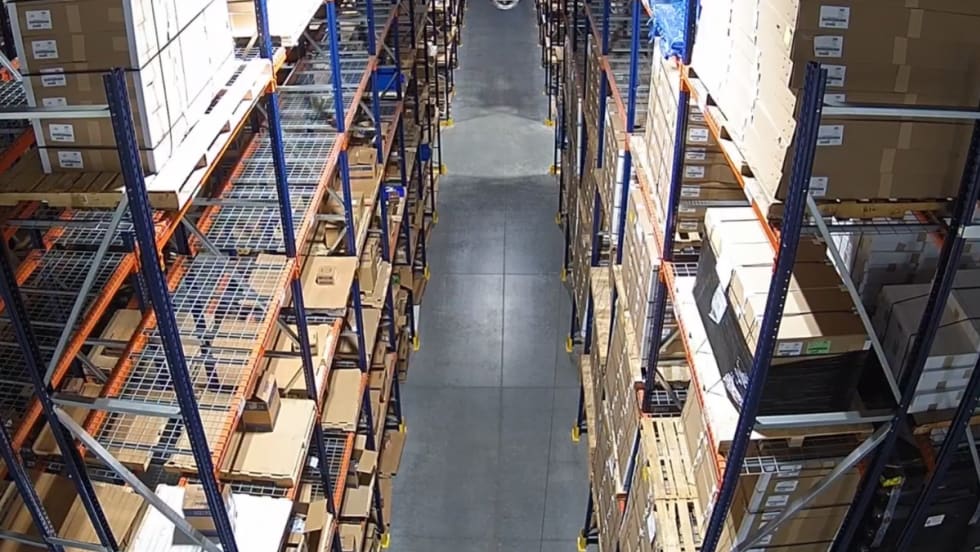
Phillips Opens High-Tech Distribution Center for Faster Parts Delivery
Phillips Industries’ new Cincinnati-area distribution center is now shipping aftermarket trucking parts nationwide, aiming to speed up delivery times for customers.
Read More →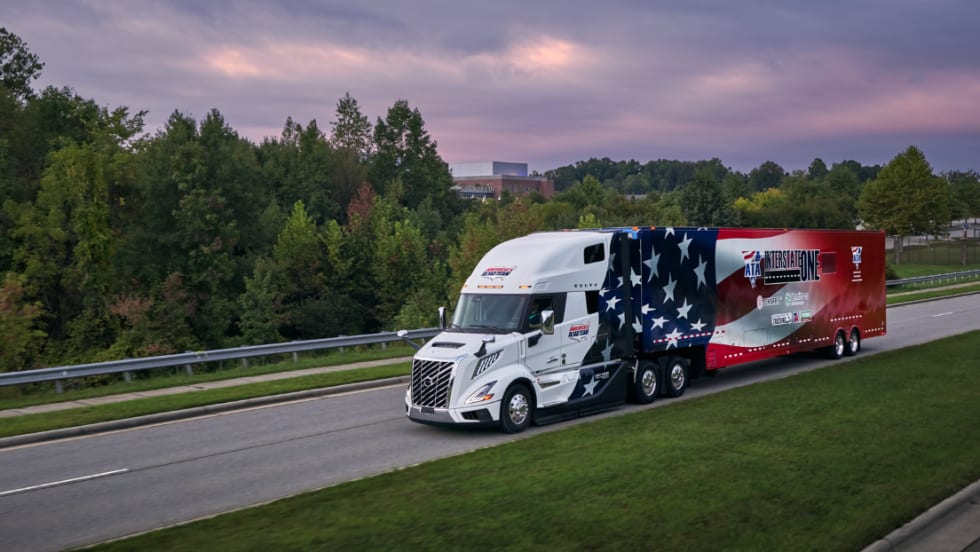
Volvo to Sponsor America’s Road Team for 2025
Volvo Trucks announced that it is extending its exclusive sponsorship of America’s Road Team for 2025.
Read More →
Webb to Start Taking Orders for UltraSet Pre-Adjusted Wheel Hubs
Webb, which recently acquired the Stemco Trifecta pre-adjusted hub program, will soon start taking orders for its replacement pre-assembled hub, the UltraSet.
Read More →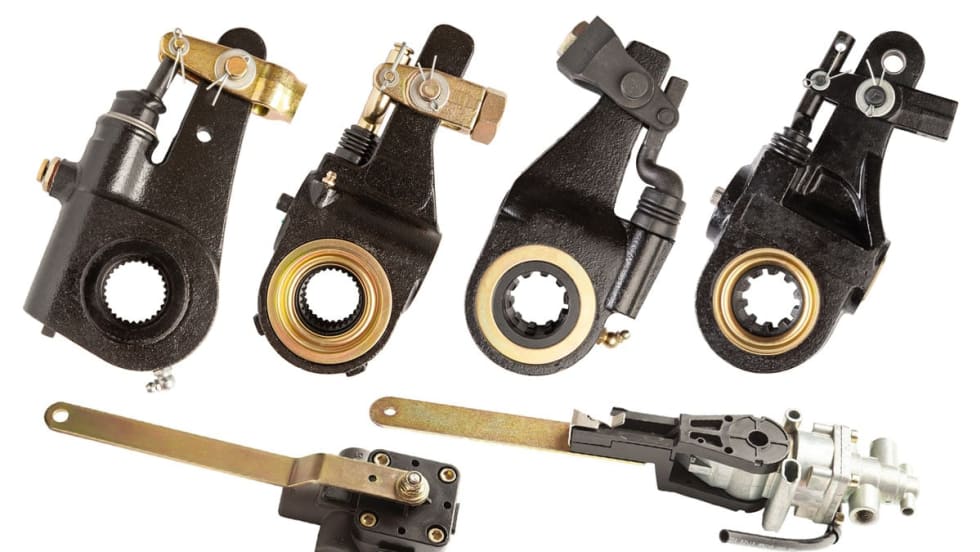
All-Makes Automatic Brake Adjusters, Ride Height Control Valves from Midland
SAF-Holland has added automatic brake adjusters and ride height control valves to its Midland All-Makes Program.
Read More →
ZF Aftermarket Expands [pro]Academy Training
ZF Aftermarket said it is expanding its ZF [pro]Academy training and will be adding 40 new modules this year.
Read More →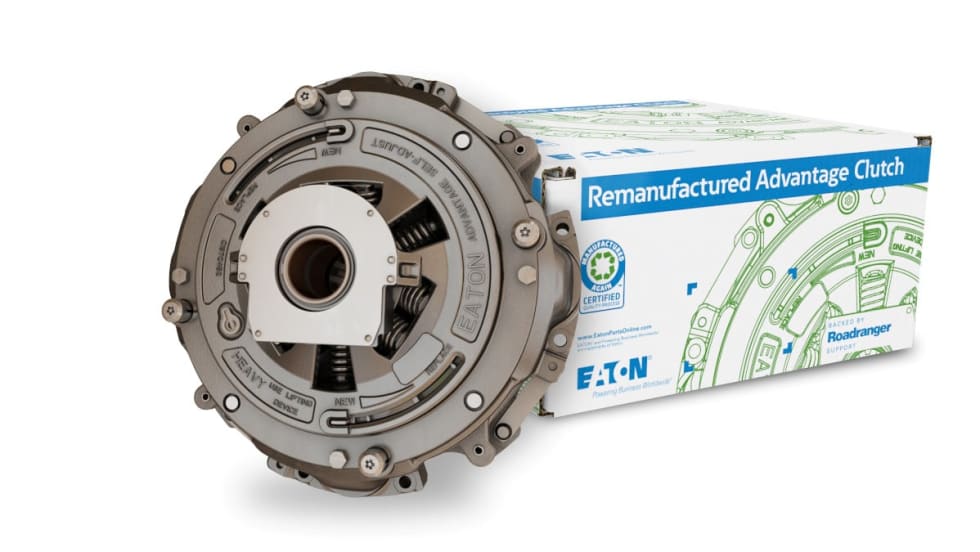
Eaton Adds Remanufactured Advantage Line of Clutches
Eaton has added its Advantage clutches to its remanufactured product line. The clutches feature a unique strap drive intermediate plate designed to allow customers to choose the latest OE specification
Read More →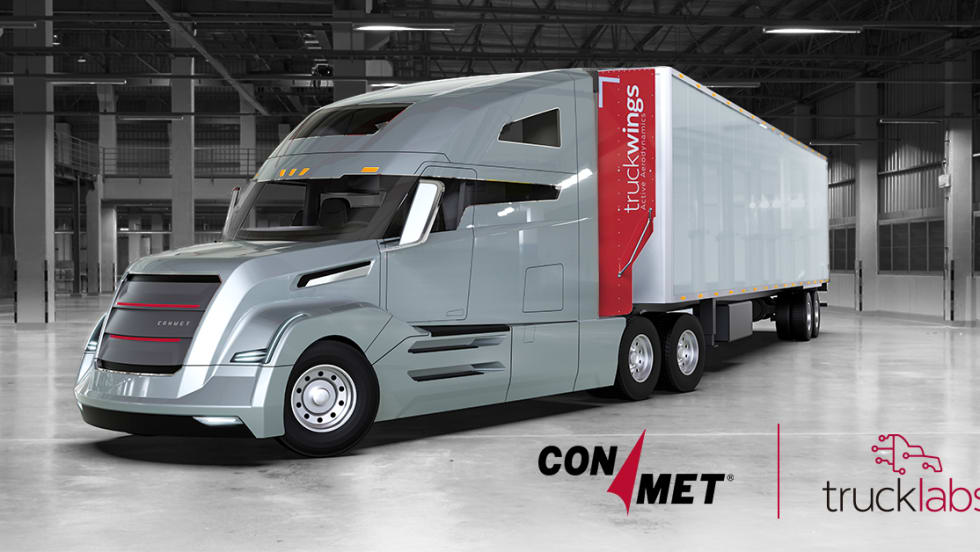
ConMet Acquires TruckLabs, the Creator of TruckWings
Commercial truck and trailer parts provider ConMet acquired TruckLabs, the company that created TruckWings, an aerodynamic device that attaches to truck cabs and deploys to close the gap between truck and trailer. TruckLabs now operates as a subsidiary of ConMet.
Read More →
Diesel Laptops Releases Fault-Code-to-Part-Number Tool
Diesel Laptops said its Truck Fault Codes allows users to input a fault code and immediately identify and order the parts needed to complete repair work.
Read More →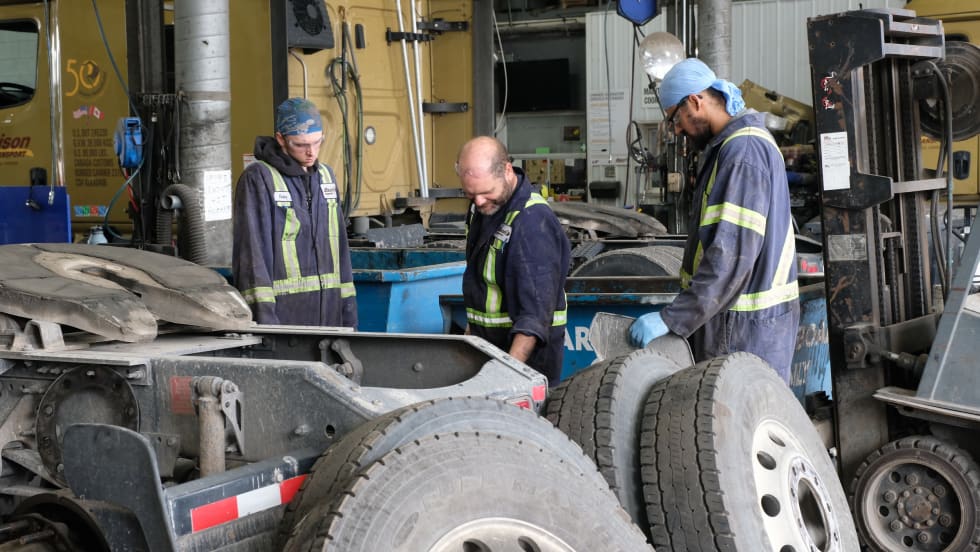
Heavy Duty Parts and Labor Costs Dropped in Q2
A benchmarking report from TMC and Decisiv reveals good news for fleets as heavy-duty parts and labor costs dropped in the second quarter of 2023.
Read More →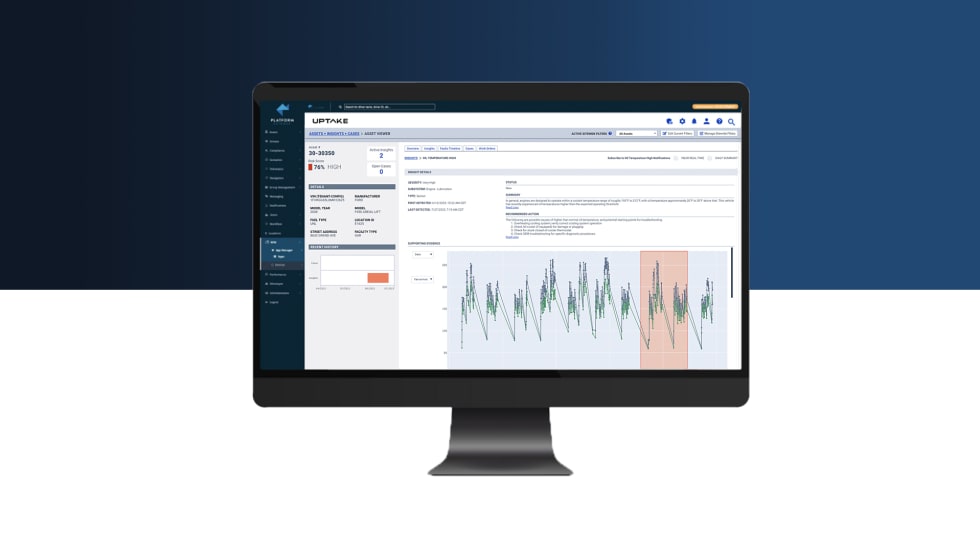
Platform Science, Uptake Partner on Predictive Maintenance Platform
Platform Science and Uptake have formed a partnership aimed at bringing a comprehensive predictive maintenance program to market for U.S. truck fleets.
Read More →