Heavy Duty Trucking Logo
MenuMENU
SearchSEARCH

Can You Get Stellar MPG Without Holding up Traffic?

Owner-operator and fuel economy pioneer Henry Albert is attempting to take the lessons he learned breaking the 10 mpg barrier and see if he can log double-digit mpg numbers at higher highway speeds.

June 25, 2019
Can You Get Stellar MPG Without Holding up Traffic?

Owner-operator and fuel economy pioneer Henry Albert is attempting to take the lessons he learned breaking the 10 mpg barrier and see if he can log double-digit mpg numbers at higher highway speeds.

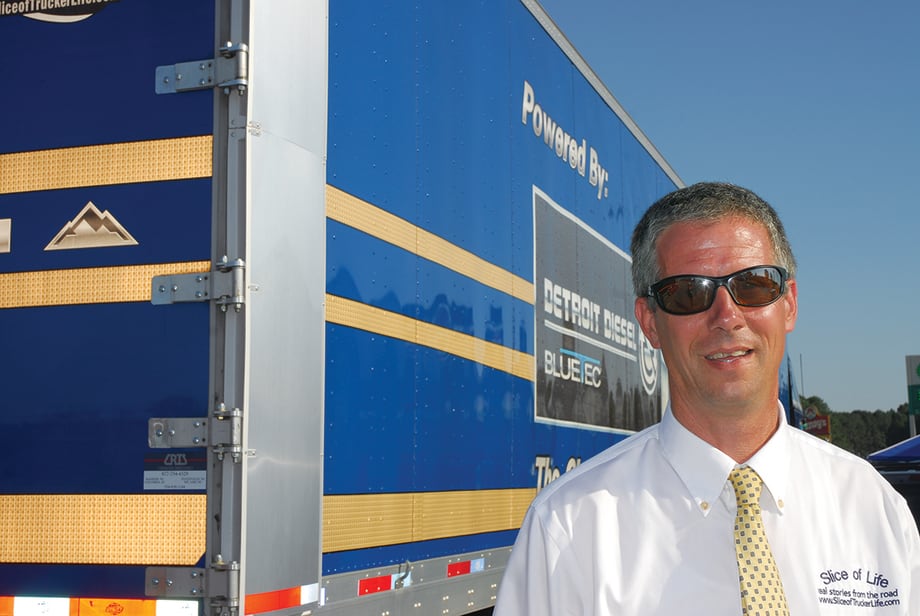
Photo: Henry Albert

3 min to read


About a decade ago, owner-operator Henry Albert emerged as an early leader in the push to break the then-elusive 10 mpg barrier for tractor-trailers. He became one of the first drivers to routinely log double-digit mpg numbers on his dedicated long-haul run between Charlotte, North Carolina, and Pecos, Texas.

Ad Loading...

At the time, he was on the cutting edge of trying new technologies such as 6x2 axles, advanced aerodynamics, automated manual transmissions, and adaptive cruise control. Today Albert finds himself working to adapt the lessons he learned during those days to a changed trucking environment.

“The economy is hot right now, with good freight rates,” Albert says. “So the interest is in a shift toward more productivity and higher vehicle speeds. Which has led to a dilemma of sorts.”

Ad Loading...

At the height of his double-digit fuel runs, Albert slowed his truck down to 62 to 65 mph and achieved a lifetime average for his Freightliner Cascadia of 10.1 mpg. 

But could he break into double-digit mpg numbers upping his cruising speeds to the legal speed limits on his runs – up to 75 mph in Texas?

“By increasing to those speeds, I can cut 22 to 26 hours out of the time spent on that run,” Albert says. “And I could use that extra time to take on an additional local route near home, or just quality time with my family.”

Boosting his speed to the legal limit along his dedicated route costs him an extra $60 a week in fuel costs, on average – a figure Albert says is acceptable given the boost in productivity. But he isn’t happy unless he has a technical problem to occupy his mind: Can he get that increased productivity without sacrificing fuel economy? Can he have his cake and eat it, too?

“On a few occasions, when conditions were right, I have logged above 10 mpg during this project,” Albert says. “But getting to that number as an average is elusive.”

Ad Loading...

The formerly slow Albert now finds it difficult to keep his cruise control engaged at all times, because he’s constantly running up on other trucks that are cruising at 65 mph. “One of the new things I’m doing to deal with this is to limit the over/under settings on my cruise control so the truck doesn’t roll out too much on downgrades. I want to stay under 75 mph to keep my tires in good shape.”

When climbing a grade, Albert has the cruise set to drop 8 mph before the throttle engages to optimize his fuel burn without too drastic a drop in momentum. But he’s pleased with the predictive cruise control in general, which he says does an excellent job of using GPS to read the terrain ahead and set the powertrain up to best deal with changes in elevation. 

He’s also working to fine-tune his aerodynamics. “But I don’t think I have it dialed in yet,” he says.

In the meantime, Albert shares some hard-won lessons that he still thinks can help drivers everywhere. “Don’t drive any faster than you need to,” he says. “If you can slow down, do so. Watch your trailer gap and get it in as tight as possible. And don’t pick a fight with the air you’re driving through. Take on as much aerodynamic equipment as you can, and make use of it.”


Subscribe to Our Newsletter

More Fuel Smarts

Four men in suits on the National Mall with giant video screen showing capitol building in the background
Equipmentby Deborah LockridgeJuly 10, 2026

EPA Proposal Could Ease 2027 Truck Costs and Buying Uncertainty

The proposal doesn't change the tougher NOx standard, but it would revise key implementation requirements that manufacturers say have driven up costs and complicated fleet purchasing decisions.

Read More →
Illustration showing Paccar MX engine with sketch illustration of DEF fill tank in background
Equipmentby Deborah LockridgeJuly 7, 2026

Cummins, Paccar Ease DEF Derates After EPA Guidance

Updated diesel engine software gives truck operators more time to address emissions-system issues while staying compliant with EPA emissions standards.

Read More →
Illustration with wrenches in background with "Maintenance in the Messy Middle: Biodiesel" text and NACFE Run on Less logo
Maintenanceby Jack RobertsJuly 2, 2026

Maintenance in the Messy Middle Part 3: Biodiesel

Biodiesel can reduce emissions, improve fuel-system lubricity and use existing diesel infrastructure. But NACFE’s Messy Middle maintenance report says fleets must actively manage storage, cold-weather operation, filters and oil drain intervals to avoid problems.

Read More →
Ad Loading...
thermo king heavy duty trucking
SponsoredJuly 1, 2026

Enhance Fleet Performance with High-Efficiency Auxiliary Power Units

Drive sustainable cost savings while increasing driver comfort during short- and long-haul logistics operations.

Read More →
Illustration with wrenches in background with "Maintenance in the Messy Middle: Renewable Diesel" text and NACFE Run on Less logo
Maintenanceby Jack RobertsJune 29, 2026

Maintenance in the ‘Messy Middle’ Part 2: Renewable Diesel Fuel

NACFE's latest Messy Middle Powertrain Service & Maintenance report says renewable diesel gives fleets an opportunity to reduce carbon emissions without changing trucks, fueling infrastructure or maintenance practices. But technicians still need to understand several important operational differences.

Read More →
Illustration messy middle maintenance diesel with wrenches in background
Maintenanceby Jack RobertsJune 26, 2026

The Diesel Engine Enters NACFE’s ‘Messy Middle’

NACFE’s new Messy Middle Powertrain Service & Maintenance report says keeping modern diesel engines running now depends as much on software, diagnostics and data as traditional mechanical service.

Read More →
Ad Loading...
Illustration showing DEF tank and Detroit engine
Equipmentby Deborah LockridgeJune 18, 2026

DTNA Software Update Gives Truckers More Time Before DEF Derates Take Effect

The changes reflect EPA guidance aimed at reducing downtime caused by emissions-system faults while maintaining compliance requirements.

Read More →
Illustration of exhaust aftertreatment system on an AI-inspired blue background and a green fuel pump nozzle in the foreground.
Maintenanceby Deborah LockridgeJune 15, 2026

New Agentic Predictive Maintenance Report Demonstrates How Degraded Aftertreatment Systems Waste Fuel

Questar analyzed a large mixed-class fleet and discovered it was wasting as much as $30 in fuel per vehicle, per day, because of mechanically degraded aftertreatment systems.

Read More →
Amazon electric cargo bike on New York City street
Fleet Managementby Deborah LockridgeJune 15, 2026

New York City's Microhub Project is Delivering Results

Trucking, last-mile delivery companies, and environmental advocates like what they are seeing so far with New York's microhub program.

Read More →
Ad Loading...
Red Kenworth truck pulling Paper Transport trailer
Fuel Smartsby Deborah LockridgeJune 2, 2026

Lessons Learned About Alternative Fuels: Start Small, Stay Flexible

Practical advice on adopting alternative fuels and ZEVs from HDT's 2026 Top Green Fleets, from renewable diesel and natural gas to electric trucks.

Read More →