




Test Drive: Kenworth T680 Advantage
A new powertrain, enhanced aerodynamics and light-weighting make the T680 Advantage the most fuel-efficient Kenworth ever.

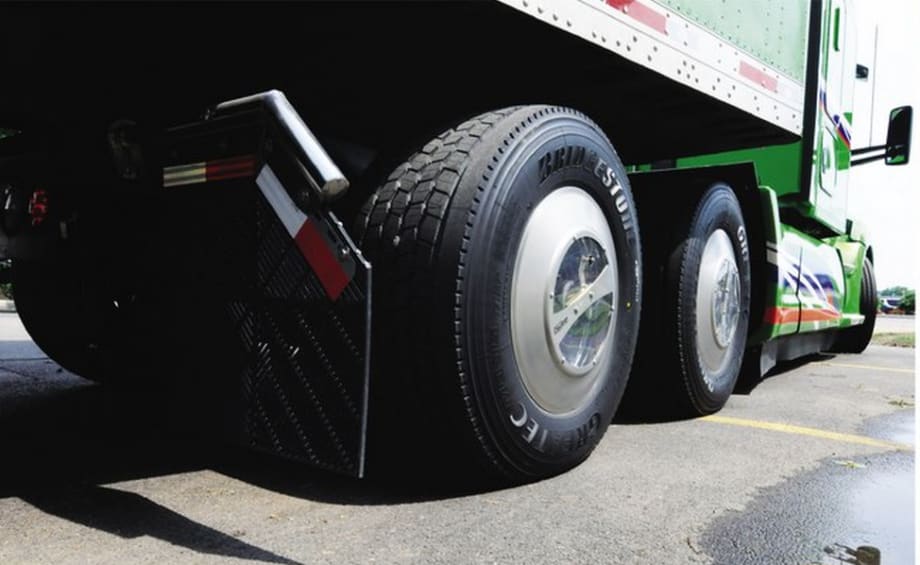
The package includes SmartWay-certified tires. We had Bridgestone Greatec M835s. Buyers can choose between wide-base single wheels and tires or fuel-efficient duals. Photo: Jim Park
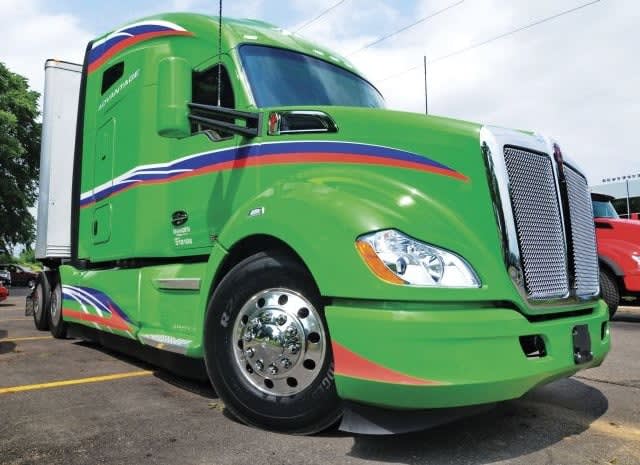
Kenworth pushed the T680 into new aero territory with an add-on package that is said to lower drag by about 2%. Photo: Jim Park
Kenworth’s T680 started turning heads the day it launched at the Mid-America Trucking Show in 2012. Two years later, with 15,000 units in service, the T680 represents half of all Kenworth’s production.
In mid-2014, Kenworth upped the stakes in the fuel-efficiency game with the release of its Advantage package for the T680. The company claims the add-ons and the new powertrain cut fuel consumption by as much as 5% compared to a base-model T680.
“The aero package is a combination of factory-installed components that help streamline air out and around the vehicle, reducing drag and tightening the distance between the sleeper and the trailer,” explains Brett VanVoorhis, Kenworth’s on-highway marketing manager. “On the powertrain side, the Advantage package includes the Paccar MX-13 engine, the Eaton Fuller Advantage 10-speed automated manual transmission, and several high-efficiency drive-axle options including a 6x2 arrangement and Dana’s new AdvanTek 40 axle. Tires are the final piece, with SmartWay-certified low-rolling-resistance wide-singles or fuel-efficient duals.”
Most of the new stuff is passive, which is to say, the driver hasn’t much influence over how it works. The engine and powertrain are mostly immune to driver influence as well, but I’ll get to that in a minute. The only real interface the driver has with the truck is the steering wheel — in our case, a Smart Wheel.
Smart Wheel has the radio controls as well as the cruise control so drivers won’t have to take their hands off the wheel to adjust any of the settings. VanVoorhis believes drivers with easier access to the cruise control settings will be more inclined to use it regularly, thus saving more fuel.
The cruise control on this truck also automatically engages the Bendix Wingman Advanced system with adaptive cruise. In addition to the electronic stability functionality, this is like an early-warning system of potential rear-end collisions. When the system senses the distance between the truck and something out front, and that distance closes, it prompts the driver to back off a bit. If the object gets too close, the Wingman Advanced system will apply the brakes. It’s designed to maintain a safe following distance. We tested the Wingman Advanced system on a couple of occasions and found it effective without being overly intrusive.
The other fuel-economy improver the driver can respond to is the big bright driver display in the dash called the Driver Performance Center. It gives the driver real-time fuel economy information as well as a rolling average against which he or she can measure current performance. It’s easy to see, and it’s weighted so it shows movement rather than full on and full off as some earlier displays did. The driver can actually tell when some action produces a change in fuel consumption.
How accurate it actually is I can’t say, but the fact that it provides immediate visual feedback is good, and I think drivers will take to it quite willingly. The display in the test truck showed 8.1 mpg rolling average for the day, so I guess I wasn’t doing too badly.
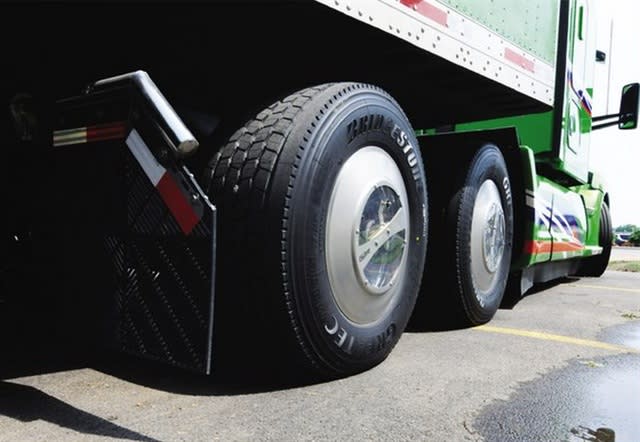
The package includes SmartWay-certified tires. We had Bridgestone Greatec M835s. Buyers can choose between wide-base single wheels and tires or fuel-efficient duals. Photo: Jim Park
The Paccar/Eaton powertrain
The new powertrain is the premier feature of the Advantage package. It does downspeeding pretty effectively.
We drove the truck over a 30-mile route near Kenworth’s Chillicothe, Ohio, manufacturing plant. It was a mix of four-lane and two-lane roads as well as a few twisting turns and even a bit of heavy traffic — situations drivers will face every day with the truck.
The truck had the the EPA-2013 version of the MX-13 engine, which Kenworth says is even more efficient than previous versions. Our multi-torque version was rated at 455 hp with 1,550/1,750 lb-ft of torque. The Eaton Fuller 10-speed automated Advantage transmission let the engine spend most of its time between 1,000 and 1,200 rpm, which is an incredibly fuel-efficient operating range. The Advantage transmission hangs on until that last possible moment before downshifting, making full use of the engine’s broad torque curve.
The engine ran at 1,050 rpm at 55 mph, at 60 mph it was turning 1,175 rpm.
I’m not sure many drivers would yet be willing to run an engine that low if it were left up to them. However, the automated transmission makes those decisions for the driver, and the drivetrain is obviously designed to tolerate all that torque.
To provide a picture of how the powertrain is “geared” for fuel economy, from a traffic light leaving the plant, I made a full throttle application and kept my foot on the floor until we were up in 8th gear. It started in 2nd gear, shifted into 3rd at 1,600 rpm, skipped up to 5th and dropped into gear at 1,000 rpm, from 6th to 7th at 1,600, dropping back to 1,100 rpm. It went to 1,600 again before shifting into 8th, where the engine speed dropped back to 1,000. It never exceeded 1,600 rpm even though I had my foot right into it.
That kind of performance is engineered to save fuel. And believe me, the acceleration was good, not screaming fast or lethargic. Just what a good driver would do under normal circumstances. Later I tried a similar launch with medium pedal position and the rpm were slightly lower in each gear.
As I have reported previously, the T680 is a really nice truck to drive, with a comfortably sized cab and excellent steering response. Perhaps the most (or least) noticeable aspect of the truck is how quiet it is.
This time I had a sound meter with me. Cruising at 55 mph at 1,050 rpm, the meter showed 74dB. At 1,000 rpm, where some of the low rumble could be heard, the meter tipped 76 dB. As a reference, my Ford Taurus measures 74 dB at highway speed. The T680 is a very quiet ride, made somewhat better than the original by the aero package that helps move the air around the truck in a more orderly — and quieter — fashion.
It’ll be interesting to see where Kenworth goes next with the T680. The Mid-America Trucking Show is just around the corner, so if the truck maker has anything up its sleeve, we’re bound to see it then.
More Fuel Smarts

Trucking’s Diesel Squeeze Isn’t Letting Up
With diesel topping $6 a gallon nationally, ATA's Bob Costello explains why fleets should prepare for continued pressure at the pump.
Read More →
FlowBelow Redesigns Trailer AeroSlider to Cut Fuel Use
The lighter trailer aerodynamic system installs in less than 45 minutes, according to the company, with potential payback in under a year depending on fuel prices and trailer mileage.
Read More →
Why Diesel Price Relief Efforts May Fall Short
Diesel prices have eased from September’s record high, but doubts about additional Russian supply and limits on dyed-diesel tax relief mean trucking fleets still face expensive fuel. And prices could go higher.
Read More →
Why Small Fuel Savings Matter in Trucking
Can better fuel economy help pay for driver raises? In this podcast, GP Transco explains how small efficiency gains create room to reinvest in its people.
Read More →
How GP Transco Cuts Trucking Fuel Costs, a Tenth of a Gallon at a Time
What’s another tenth of a mile per gallon worth? GP Transco shares how equipment upgrades and driver coaching turn small gains into meaningful fuel savings.
Read More →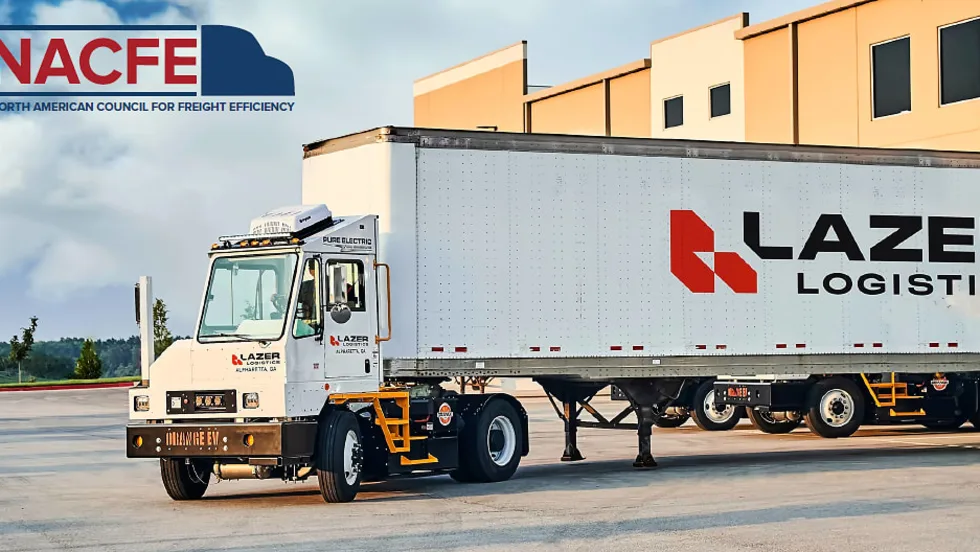
Electric Yard Tractors Move Beyond Pilots
Operating-cost savings have overtaken sustainability goals as the leading reason surveyed fleets are adopting battery-electric terminal tractors, according to new NACFE research.
Read More →
Geotab Links Fleet Card to Vehicle Data
The new card combines fuel discounts with telematics-based purchase controls. Geotab’s analysis also points to potential savings from choosing lower-priced fuel stops.
Read More →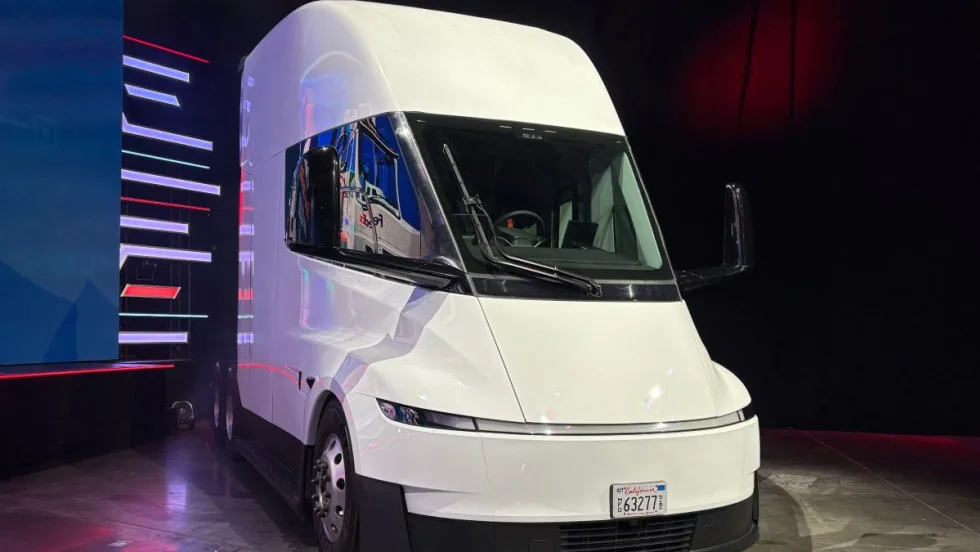
Fleet Economics Shape Electric Truck Outlook
ACT Research expects costs, charging infrastructure, and technology improvements to drive zero-emission commercial vehicle adoption as federal regulations and incentives retreat.
Read More →
Wex Adds Cardless Fuel Payments for Over-the-Road Customers
A new fuel card feature for Wex customers offers convenience and security.
Read More →
New California Law Could Shed Light on Electric Truck Prices
Why do battery-electric Class 8 trucks remain so expensive? A California bill signed by Gov. Gavin Newsom would give fleets and state agencies more visibility into what manufacturers charge.
Read More →