




A Quick Guide to Alternative Fuels
The world no longer seems concerned about "peak oil" (the idea that oil reserves are going to run out), and today's clean-diesel engines have addressed many environmental concerns about truck exhaust. Most industry experts believe conventional diesel fuel will remain the dominant fuel for commercial vehicles for decades to come

The world no longer seems concerned about "peak oil" (the idea that oil reserves are going to run out), and today's clean-diesel engines have addressed many environmental concerns about truck exhaust. Most industry experts believe conventional diesel fuel will remain the dominant fuel for commercial vehicles for decades to come.
There is, nevertheless, growing interest in alternative fuels for a number of reasons:
1. Although new technology has made it possible to get to previously untapped oil reserves, it's also harder to get to that oil. That, along with growing global demand, means oil will continue to be expensive.
2. There is still concern about U.S. dependency on foreign oil.
3. Alternative fuels can make sense for some trucking operations and for some shippers as a way to address concerns about price volatility, the environment and a "green" image.
Natural gas has grabbed most of the headlines lately, thanks to the domestic boom in production and corresponding low prices, and we'll look at it in depth in our August issue.
In addition to the alternative fuels summarized on these two pages, there are a couple of alternatives not quite ready for prime time:
- Dimethyl ether (DME): A colorless gas transformed into liquid under low pressure, made from biomass or natural gas, sometimes called synthetic LPG (propane). It's biodegradable, noncorrosive, produces no soot and can run in a diesel engine with only minor modifications. Efficiency is as high as ordinary diesel. Volvo has had trucks running on DME in Sweden since 2010 and is looking into the fuel for North America.
- Hydrogen/fuel cells: A fuel cell converts hydrogen and oxygen into water, in the process producing electricity. Ingredients are abundant; oxygen is in the atmosphere, but hydrogen must first be extracted from other compounds, such as water or natural gas (at special installations) or diesel fuel (in the cell). A fuel cell is low maintenance and emits nothing but water vapor.
The technology is expensive and still far away in mainstream terms. Critics say it costs more to produce hydrogen than is earned by using hydrogen in fuel cells. Daimler, however, believes it's the fuel of the future, and Vision Motor Corp. of El Segundo, Calif., is offering its Tyrano fuel-cell model for drayage use.
Natural gas
What: Actually a mixture of gases formed from the fossil remains of ancient plants and animals buried deep in the earth. Main ingredient is methane. Stored and handled as compressed (CNG), OK for local and regional operations, or cryogenically liquefied (LNG), better suited for long-haul operations because it's denser.
Pros: Vast U.S. resources, current low fuel prices, simple aftertreatment. Even without government incentives, many fleets find solid ROI.
Cons: Production by "fracking" is controversial because of environmental concerns. Range is an issue, but fueling infrastructure is growing. Bulky, heavy onboard tanks. Stiff up-front costs for vehicle equipment and fueling stations. As demand climbs and drillers cut back on production, gas prices could rise.
On the ground: Infrastructure is expanding; Freightliner Trucks and Westport Innovations ran cross-country trips in CNG-powered trucks last month to prove the availability of the fuel on the road. Cummins builds 8.9-liter and (soon) 11.9-liter spark-ignited engines, which some truck makers offer with CNG equipment, and is working on a 15-liter that can run CNG or LNG. Some truck makers also offer Westport's dual-fuel (gas and diesel) 15-liter engine with LNG equipment. Volvo and Mack will have a dual-fuel LNG 13-liter engine in 2014. Ford, General Motors and Ram will offer bi-fuel setups (CNG and gasoline are burned separately) in certain pickups by fall.
Biomethane
What: Chemically identical to conventional natural gas but produced locally from organic waste such as animal manure or sewage.
Pros: Low greenhouse gas emissions. Renewable resource that makes use of what otherwise would be waste.
Cons: High capital cost for facilities to refine biogas to quality needed to run in engines. Potential water pollution concerns.
On the ground: Waste Management runs a number of trucks on liquefied biomethane from decomposing waste at landfills. Dairies are turning cow manure into biomethane to run their trucks.
Propane
What: Tri-carbon alkane that's a gas at atmospheric pressure but liquefies under low pressure. Produced from natural gas processing and crude oil refining. Nontoxic, colorless, virtually odorless. Also called LPG (liquefied petroleum gas).
Pros: Currently inexpensive like natural gas but contains more energy. Filling facilities are less expensive. Fewer emissions than gasoline. Suitable for lighter-duty vehicles. Popular as a vehicle fuel overseas, where it's called "autogas."
Cons: Up-front cost for conversion. Better-known in the U.S. for barbeques and rural heating than for vehicle power.
On the ground: Several companies (Roush CleanTech and CleanFuel USA among them) offer propane conversion packages for Ford, GM and Ram trucks and some buses.
Biodiesel
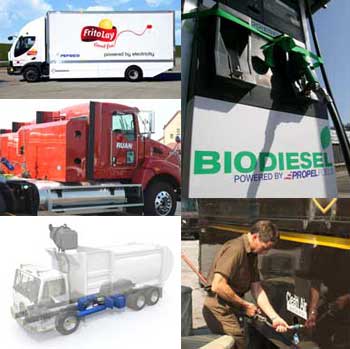
What: Made from plant or animal fats such as soy, canola, even used fryer oil. Usually blended 5% or 20% with conventional diesel (B5 and B20, respectively).
Pros: Renewable fuel, domestically available.
Cons: Prices slightly higher, lower fuel mileage than diesel. Quality concerns; may cause problems in extremely cold weather. Concern about competing for food sources.
On the ground: The next generation of biofuels may be made from algae.
All-electric
What: Runs on batteries charged by plugging in to the electrical grid.
Pros: Lower cost per mile, less maintenance, quiet ride, no emissions.
Cons: Higher up-front costs, range anxiety, infrastructure/power grid concerns, battery costs.
On the ground: Companies running battery-electric delivery trucks include FedEx and Frito-Lay.
Diesel-electric hybrid
What: An electric motor provides additional power to launch the vehicle and improves fuel economy in stop-and-go operations.
Pros: Doesn't require separate fueling infrastructure, greatly improves fuel mileage. Optional electronic PTO can mean even more savings for high-idling applications such as utility fleets.
Cons: Use currently is largely limited to operations with lots of stop-and-go operations, such as refuse trucks or package delivery. Higher up-front costs than diesel.
On the ground: Most medium-duty truck makers offer Eaton's hybrid system, and BAE Systems now has one for heavy- and medium-duty trucks.
Hydraulic hybrid
What: Uses pressurized fluid, instead of electric power, as an additional or alternative power source along with an engine. Recovers the vehicle's kinetic energy during braking and decelerating, aka regenerative braking.
Pros: Better fuel economy, decreased brake wear.
Cons: Only makes sense for stop-and-go operations such as refuse trucks and city buses; weight concerns.
On the ground:
Available as retrofit or as a factory option from some OEs using Eaton or Parker Hannifin systems.
From the June 2012 issue of HDT
More Fuel Smarts
Why Small Fuel Savings Matter in Trucking
Can better fuel economy help pay for driver raises? In this podcast, GP Transco explains how small efficiency gains create room to reinvest in its people.
Read More →
How GP Transco Cuts Trucking Fuel Costs, a Tenth of a Gallon at a Time
What’s another tenth of a mile per gallon worth? GP Transco shares how equipment upgrades and driver coaching turn small gains into meaningful fuel savings.
Read More →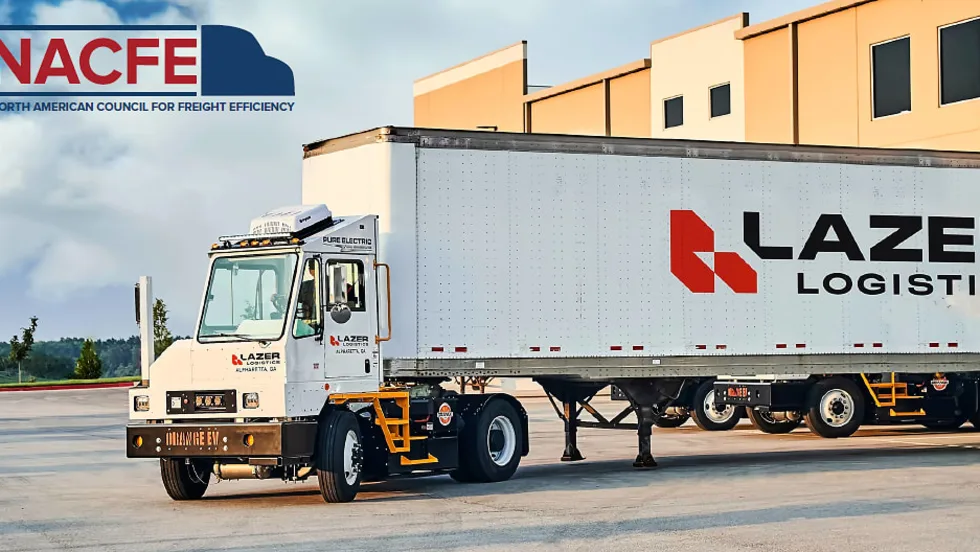
Electric Yard Tractors Move Beyond Pilots
Operating-cost savings have overtaken sustainability goals as the leading reason surveyed fleets are adopting battery-electric terminal tractors, according to new NACFE research.
Read More →
Geotab Links Fleet Card to Vehicle Data
The new card combines fuel discounts with telematics-based purchase controls. Geotab’s analysis also points to potential savings from choosing lower-priced fuel stops.
Read More →
Fleet Economics Shape Electric Truck Outlook
ACT Research expects costs, charging infrastructure, and technology improvements to drive zero-emission commercial vehicle adoption as federal regulations and incentives retreat.
Read More →
Wex Adds Cardless Fuel Payments for Over-the-Road Customers
A new fuel card feature for Wex customers offers convenience and security.
Read More →
New California Law Could Shed Light on Electric Truck Prices
Why do battery-electric Class 8 trucks remain so expensive? A California bill signed by Gov. Gavin Newsom would give fleets and state agencies more visibility into what manufacturers charge.
Read More →
How Volvo Updated Its D13 for EPA 2027 [Watch]
Volvo’s updated D13 promises lower emissions without sacrificing performance or fuel economy. Take a closer look at what changed inside the engine in this HDT Spotlight video.
Read More →
Diesel Price Spike Shortens Payback for Natural Gas Trucks, Report Says
Energy Vision estimates fleets could recover the higher purchase price of an RNG-fueled Class 8 tractor in 1.3 to 2.8 years under current fuel-price scenarios.
Read More →
Calstart Becomes Catalyst Mobility, Reflecting Broader Focus
Calstart is now Catalyst Mobility, reflecting the nonprofit’s growing national role in clean transportation, including zero-emission trucks, infrastructure and incentive programs.
Read More →