




Schneider National Safety Guru Don Osterberg on the FMCSA's New Enforcement Program
We spoke with Don Osterberg, vice president of safety at mega-carrier Schneider National and a leader in trucking safety, about the Federal Motor Carrier Safety Administration's new Compliance, Safety, and Accountability enforcement progra

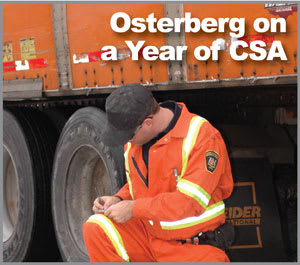
Schneider National's efforts to improve its CSA scores have resulted in a favorable trend in the number of inspections with violations. Photo by Jim Park.
We spoke with Don Osterberg, vice president of safety at mega-carrier Schneider National and a leader in trucking safety, about the Federal Motor Carrier Safety Administration's new Compliance, Safety, and Accountability enforcement program
-- one year after the agency made the new CSA Safety Measurement System database available to the public.
Q: Where are we today vs. a year ago when it comes to CSA?
A: I think one thing lost among CSA critics is that the predecessor program, SafeStat, was flawed in many fundamental ways. In my view, CSA on its worst day is better than SafeStat was on its best day.
I predicted CSA would create visibility and drive accountability, which would have the effect of driving carrier and driver behavior. And it has.
One of the reports I get monthly shows Schneider's number of inspections with violations, and it's been a dramatically southeasterly sloping favorable trend line in the reduction of inspections with violations.
Immediately above that graph is one that essentially shows our CSA BASICs score, which is a relative score to comparably sized carriers. The reality in CSA is you have to improve at a rate faster than your competitors in order for your score to improve. What we see is while our scores are improving, the slope of that line is flatter than the slope of the line that represents our inspections with violations. Said another way, the CSA rising tide is raising all boats, from my observations.
Q: What areas still need to be addressed?
A: I've really been encouraged that the FMCSA has been actively listening to those areas that need to be tweaked.
Most importantly, we need to address the issue of crash accountability. Company drivers and motor carriers should not be assessed CSA points for crashes that they had no way to prevent.
I could give you any number of anecdotes. Just this last week, we had an individual who committed suicide by jumping off an overpass into the path of our truck. First off all, what a horrific experience for our driver, and second, we should not accrue CSA points for a crash like that.
Probably the second one, more broadly speaking, is severity rankings need to be addressed. A specific example I use is low tread depth on trailer tires, which carries a severity of 8 out of 10. We did a very comprehensive test with Goodyear at their San Angelo, Texas, test facility. We tested maneuverability and stopping distance on both wet and dry pavement with new trailer tires and with trailer tires less than 2/32 inch tread depth. There was no measurable difference in the performance. Said another way, low trailer tire tread depth doesn't correlate to crash risk. Certainly low tread depth on a steer tire, perhaps even a drive tire, could have clear causal implications for crashes. Not so for trailer tires. Those should be weighted much lower, perhaps 2.
A third area where improvement is needed is the consistency and timeliness of reporting from the states, so we have a more level playing field across all the states.
Q: What impact are CSA scores having on things like insurance costs and shipper relationships?
A: Certainly more and more shippers are increasing their carrier qualification processes and standards. They are looking at CSA, as in my view they should be. I think we're seeing that in the shipper community, their awareness that this is a differentiator they should look at in their carrier qualification process.
It's too early to tell if insurance providers are using it. Certainly they are looking at it. Why wouldn't you? It's certainly relevant.
Q: How do you think CSA has changed adoption of technology?
A: I think we're going to see a proliferation of electronic logging, irrespective of regulation. The inherent imprecision of paper logs really creates issues at roadside and in litigation. I certainly think EOBRs are a great tool to help improve fatigued driving BASIC CSA scores.
Q: How do you think CSA has changed driver recruiting/hiring?
A: I think certainly access to the Pre-employment Screening Program, or PSP as it's called, I think that's quite widely used by many motor carriers today, if not most. We have added the PSP as one of the checks we use in our prequalification process. We already had a pretty rigorous screening process we used to qualify new drivers; with the addition of PSP it's just more robust.
One of the things we recognize as the best predictor of a future incident is a previous incident of the same behavior. One of the things PSP does is it gives us visibility to drivers who had roadside incidents in the past. Even if we do decide to hire them, it gives us insights on the expectations we need to set for that driver and also the training we give them.
While PSP is not technically part of CSA, the practical reality is they share the same database. The same violations that accrue CSA points are in PSP. No points are in the system, but you can look at those violations and assign CSA points to it.
Q: What other steps have you taken to improve your CSA scores?
A: The number one thing to affect changing behaviors is just visibility. When we can communicate the importance to our drivers, I think they very quickly recognize that they really have skin in the game. I think the essence of the A in CSA, accountability, has caused drivers to say to themselves, "I'm accountable, so I'm going to do a more thorough pretrip inspection." Just education and awareness and using the data to give visibility to driver behavior so it can be addressed.
There are a few areas related to vehicle maintenance where we've modified a number of processes. We are doing more proactive trailer inspections. We've changed the pull point for trailer tires -- we don't want to risk an 8-point severity violation for low trailer tire tread depth.
Again, the granularity of the data that is now available, I think helps sharpen focus on those areas.
From the January 2012 issue of HDT.
More Fleet Management
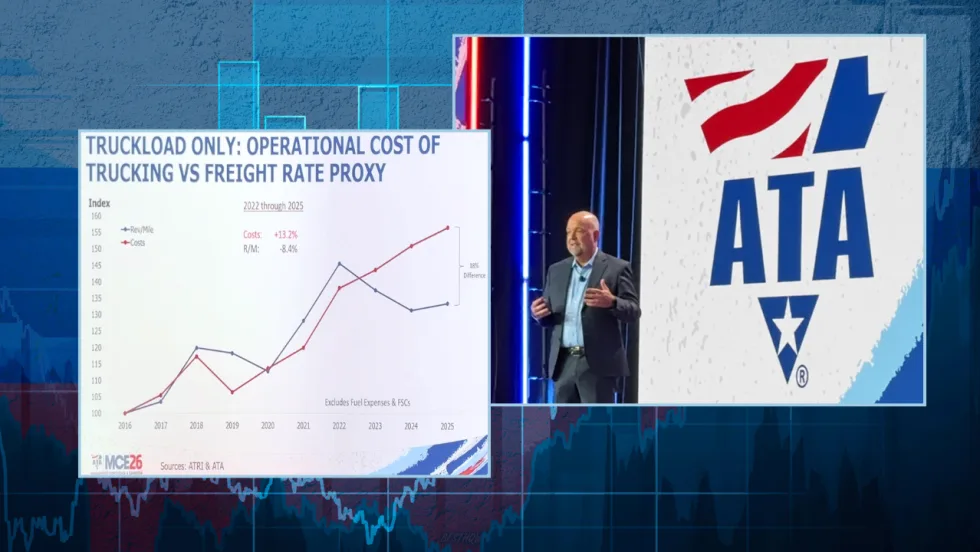
Why This Trucking Recovery Is Different
Freight demand remains sluggish, but rising costs and tougher enforcement have taken enough capacity out of the market to change the outlook for motor carriers.
Read More →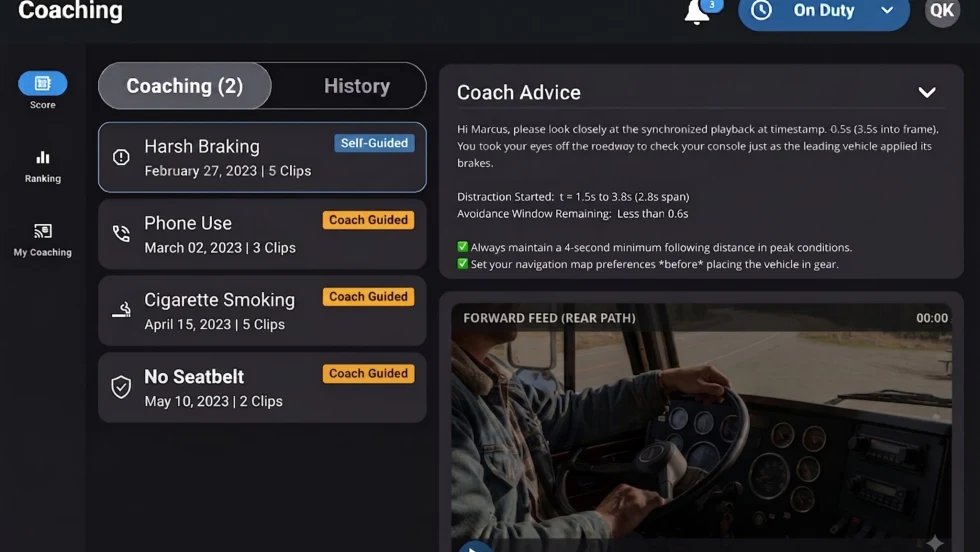
Platform Science Adds Dispatch and Safety Tools
Four additions to PS Fleet help fleets monitor loads, manage driver coaching, share truck locations and adjust video system settings.
Read More →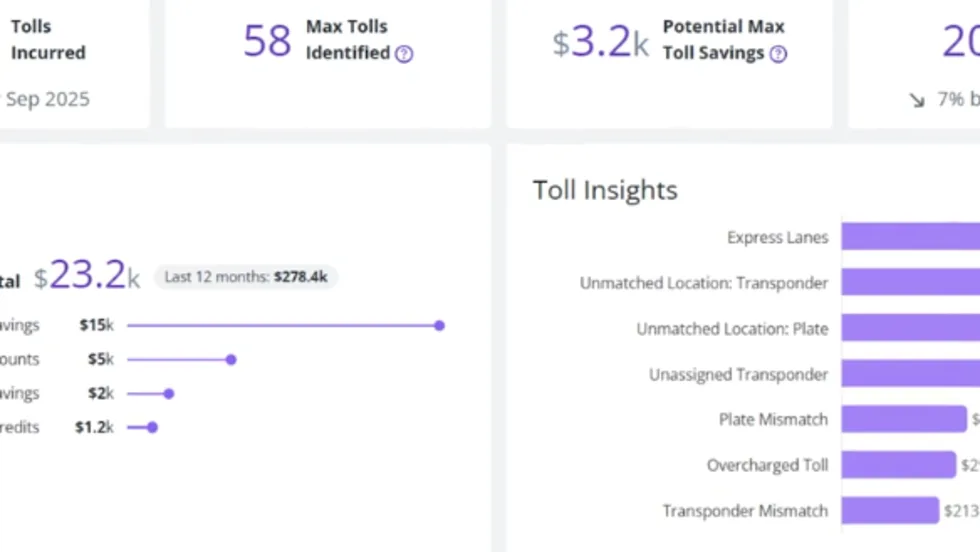
PrePass Intelligence Mines Fleet Bypass, Toll and Safety Data
PrePass Intelligence helps fleets measure bypass savings, flag potential toll overcharges, and spot suspicious transactions by combining data from separate systems.
Read More →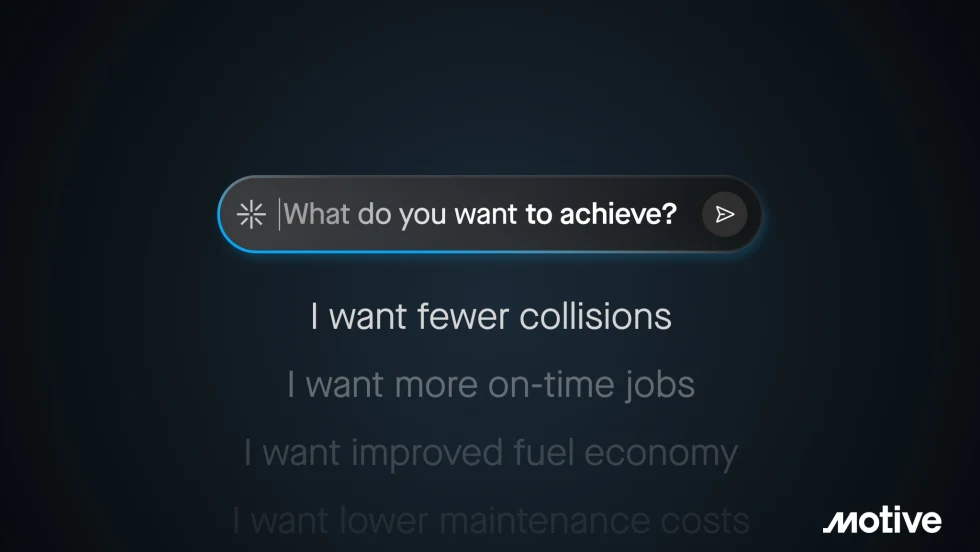
Motive Adds AI Agents for Fleet Operations
New tools automate follow-up on fleet data, from maintenance work orders to driver alerts, with two-way voice conversations planned for later this year.
Read More →
Can You Beat Our Trucking Trivia Challenge?
Test your truck knowledge with 19 trivia questions from Heavy Duty Trucking Exchange. Can you keep up with the fleet pros?
Read More →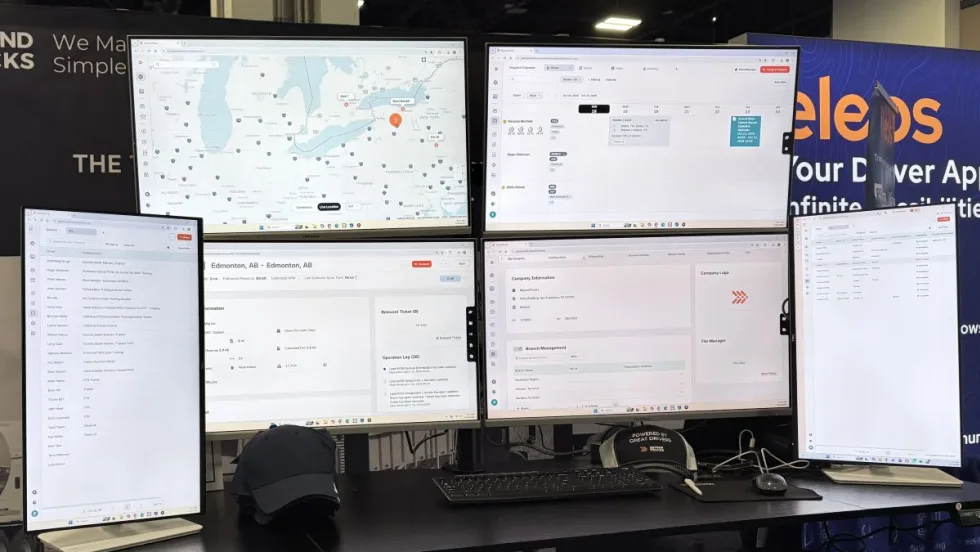
BeyondTrucks Adds Rules Checks to Dispatch
New Compatibility Engine checks driver qualifications, equipment requirements and fleet policies before loads are dispatched.
Read More →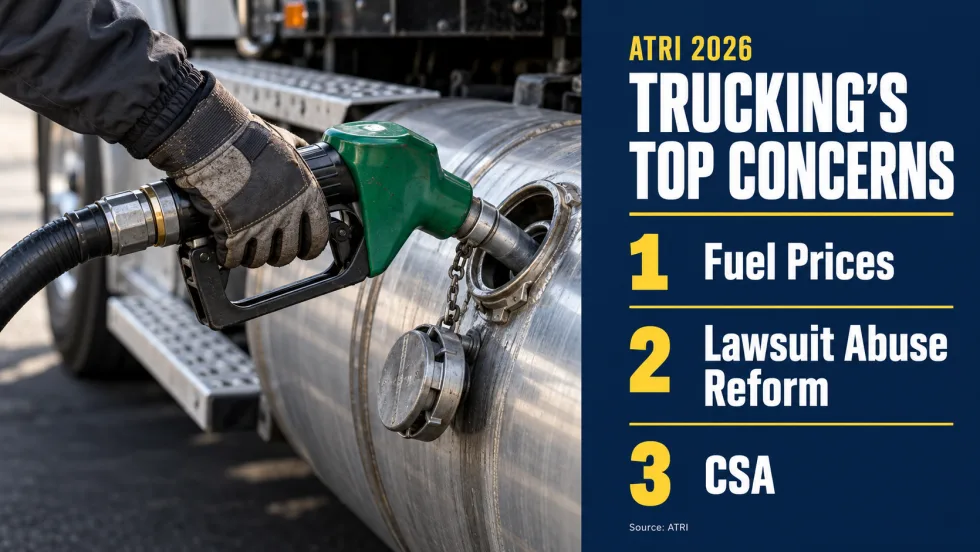
Diesel Prices Hijack Trucking’s Worry List
ATRI’s annual survey finds cautious optimism about freight, but diesel costs, litigation, and insurance continue to squeeze fleets. Drivers have different priorities on several issues.
Read More →
Nomination Deadline Extended for HDT Emerging Leaders
Just a few more days to nominate accomplished trucking fleet professionals under 40 who are making an impact and helping lead the industry forward for the HDT Emerging Leaders award. Deadline extended to October 20!
Read More →
What Will ATA’s New Leader Bring to Trucking's Table?
Incoming President and CEO Mark Colson’s record in Alabama offers clues about his priorities and approach following Chris Spear’s abrupt departure as the head of the American Trucking Associations.
Read More →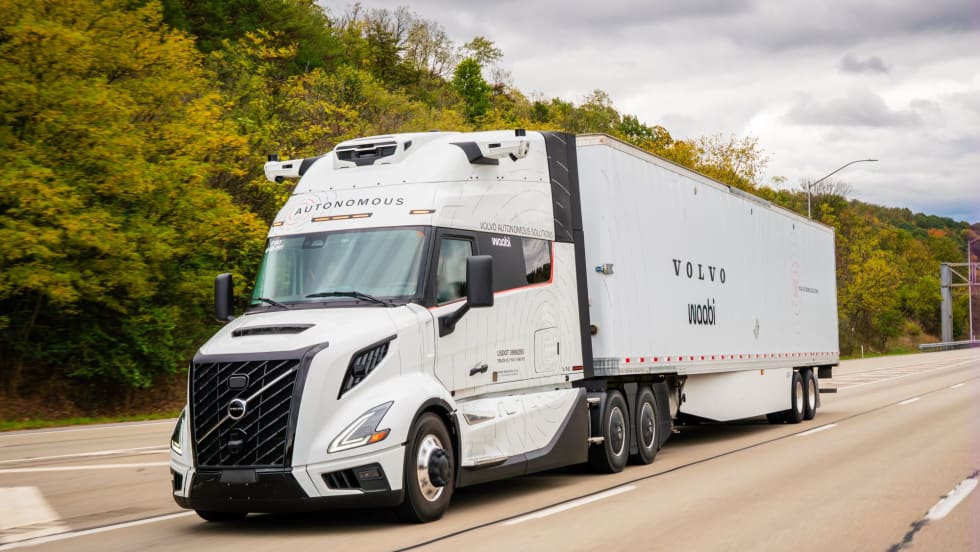
Volvo, Waabi Start Commercial Autonomous Operations in Texas
Volvo VNL Autonomous trucks, powered by the Waabi Driver, are hauling freight directly to third-party facilities for a customer in Texas.
Read More →