



Shell Rotella’s next-generation concept truck, nicknamed the Starship, is set to debut early in 2018 and the company says it will focus on freight efficiency rather than raw miles per gallon.
 MENU
MENU SEARCH
Shell Rotella’s next-generation concept truck, nicknamed the Starship, is set to debut early in 2018, and the company says it will focus on freight efficiency rather than raw miles per gallon.
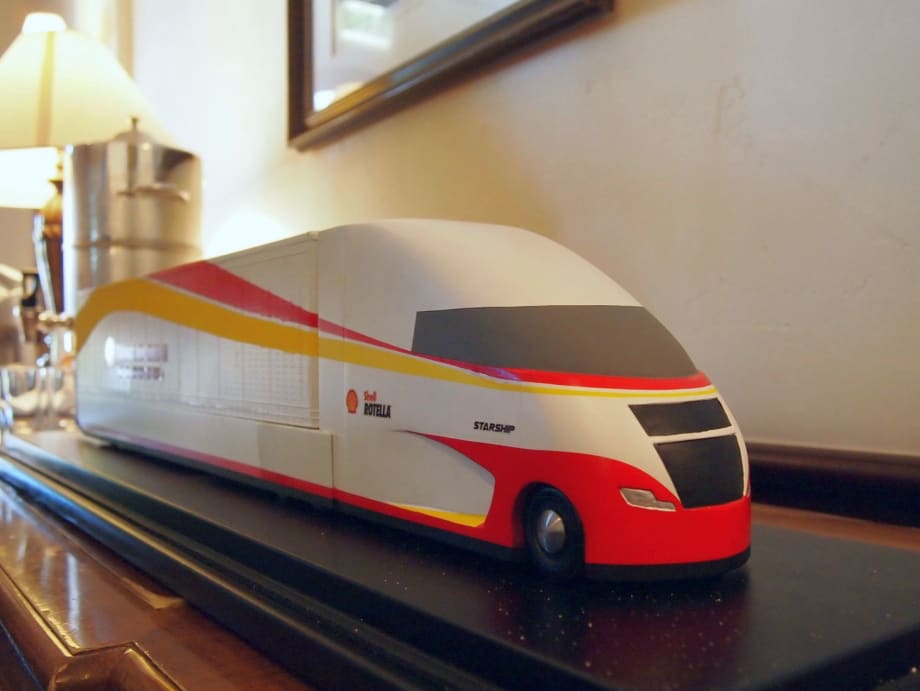
Scale model of Shell's Starship concept truck. Photo: Steven Martinez
Shell Rotella’s next-generation concept truck, nicknamed the Starship, is set to debut early in 2018 and the company says it will focus on freight efficiency rather than raw miles per gallon.
The truck, which the company has been teasing since 2015, is a collaborative effort between Shell and the Airflow Truck Company, which builds custom Class 8 trucks and trailers designed to push aerodynamic, fuel-efficient design. For this project, the cab of the truck and the trailer are being custom made to reduce weight and rolling resistance while streamlining aerodynamics.
While not designed to be put into production, the concept vehicle is also not supposed to represent a far-flung future. Bob Mainwaring, Shell Lubricants technology manager for innovation, explained to reporters at a California briefing this week that it is Shell’s vision for 5-15 years in the future.
A lot of emphasis was placed on freight ton efficiency as the primary metric for the Starship vehicle, eschewing fuel economy as the be-all and end-all of fuel efficiency. Mainwaring described freight ton efficiency as maximizing the usefulness of fuel mileage. When tuning a vehicle for fuel economy, the best way to achieve it is to run lightweight and slow, he said. However, using gallons per ton-mile instead of miles per gallon incentivizes carrying as much weight as possible as efficiently as possible.
“Go Slow, Go Heavy” is the mantra for thinking about how to improve freight efficiency. An example Shell gave was that a car with one passenger might achieve 30 mpg and be considered fuel efficient. But that same car carrying three people and only hitting 28 mpg is actually being far more efficient overall. In other words, the more goods you carry, the more efficient your fuel usage actually is.
To improve freight efficiency, the Starship project has emphasized aerodynamics, lightweighting, reducing rolling resistance, and use of low-viscosity oils. When the Starship is finally unveiled next year, Shell plans to take the vehicle coast to coast to test it, from California to Florida on a drive designed to maximize efficiency and generally avoiding congestion when possible. The company says it isn’t aiming for specific number goals and is treating the Starship as “thought leadership on wheels.”


New guidance allows engine makers to replace problematic DEF sensors with NOx-based systems, aiming to reduce unnecessary derates and downtime caused by failures in the sensors designed to monitor diesel exhaust fluid on trucks.
Read More →
Is your company a leader in sustainability efforts among trucking fleets? If so, Heavy Duty Trucking's editors want to hear from you.
Read More →
Artificial intelligence, the software-defined vehicle, telematics, autonomous trucks, electric trucks and alternative fuels, and more in this HDT Talks Trucking interview
Read More →
With global oil flows disrupted, U.S. diesel prices have topped $5 across every region, climbing sharply in the past few weeks.
Read More →
The impact of the Iran conflict extends beyond fuel costs, bringing more fraud and cybersecurity risks to the trucking industry.
Read More →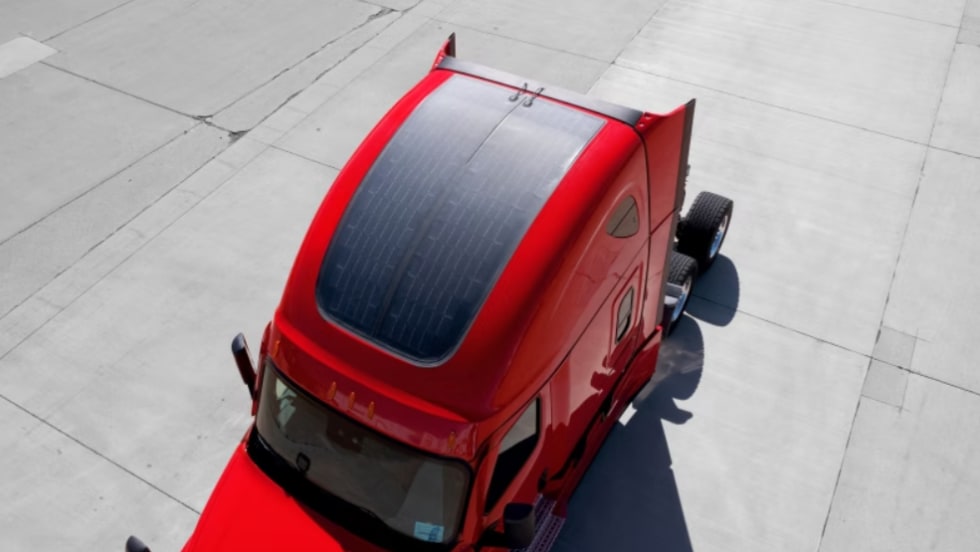
The company’s expanded EPEQ ecosystem includes flexible solar panels, lithium batteries, hydraulic power systems, and a portable fast charger for electric trucks.
Read More →
Listen as Mike Roeth of the North American Council for Freight Efficiency shares insights into battery-electric trucks, natural gas, biofuels, and clean diesel on this episode of HDT Talks Trucking.
Read More →
NACFE's Run on Less - Messy Middle project demonstrates the power of data in helping to guide the future of alternative fuels and powertrains for heavy-duty trucks.
Read More →
Mike Kucharski, vice president of refrigerated carrier JKC Trucking, says diesel price jumps tied to global instability are squeezing carriers already struggling with weak freight rates.
Read More →
In today’s cost-conscious market, fleets are finding new ways to get more value from every truck on the road. See how smarter maintenance strategies can boost uptime, control costs and drive stronger long-term returns.
Read More →