




Mitsubishi Fuso Bringing Electric eCanter to U.S.
Mitsubishi Fuso Truck of America has introduced the eCanter battery-powered Class 4 truck, offering the first 50 units to a select group of customers by the end of the year on a two-year lease.
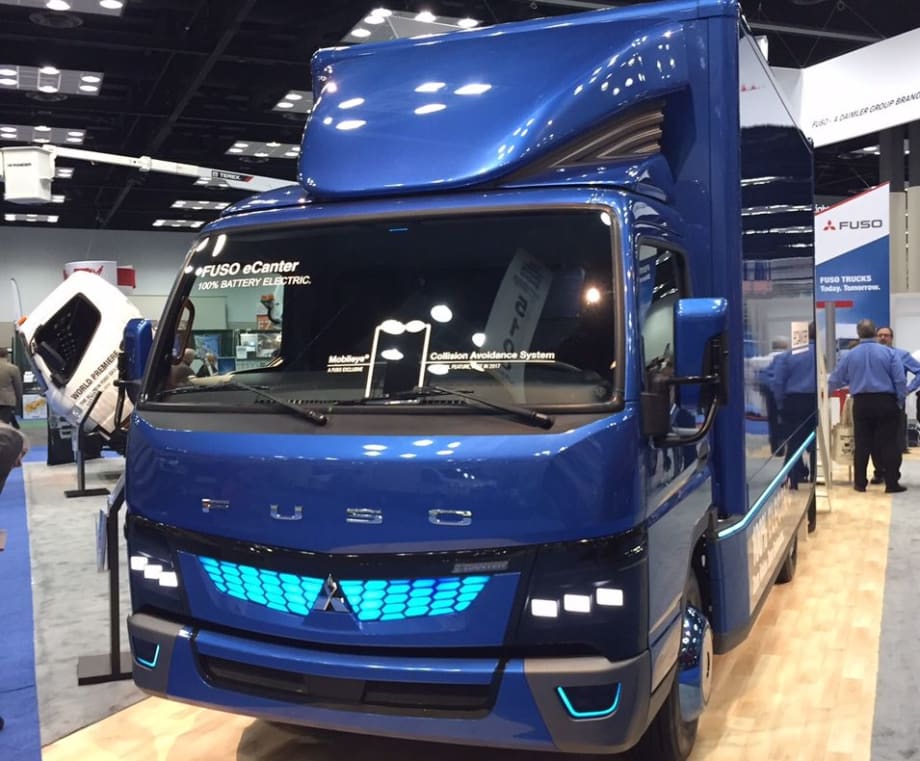
Photo by Chris Brown.
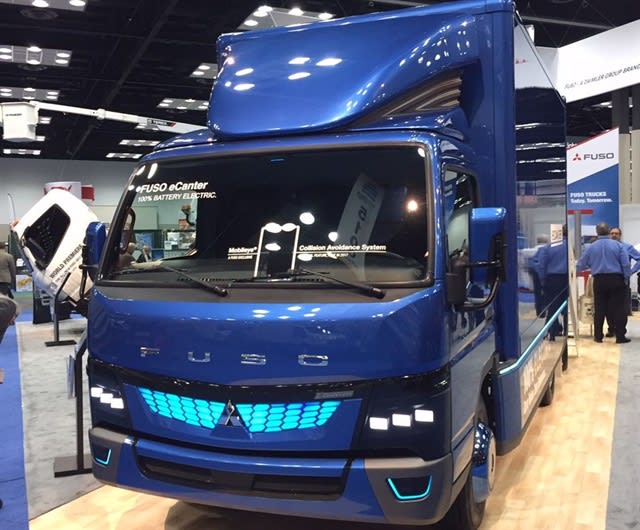
Photo by Chris Brown.
Mitsubishi Fuso Truck of America has introduced the eCanter battery-powered Class 4 truck, offering the first 50 units to a select group of customers by the end of the year, the company announced at the NTEA Work Truck Show in Indianapolis.
The electric trucks will be made available in the U.S., Europe, and Japan as part of a two-year lease, allowing companies time to use the vehicle before trading up to the next generation. The company says the trucks will cost 15-20% more than comparable diesel models.
The Class 4 truck has a 100-mile range, 15,995-pound Gross Vehicle Weight rating, and a 9,380-pound payload capacity. The batteries can be quick-charged within an hour at a DC charging station or over the course of eight hours using a 230-volt outlet. The vehicle will also have flexible battery options to allow customers that need less range than 100 miles to opt for fewer batteries and increase payload capacity.
“We believe the eCanter will help us chart the future of medium-duty trucking in urban environments," said Jecka Glasman, Fuso president and CEO. "It delivers up to a 100-mile range, with zero emissions and zero noise pollution — what we call positive energy. We’ve had preliminary conversations with multiple customers and they are enthusiastic about the possibilities this new truck represents.”
The electric motor generates 173 horsepower and 494 lb.-ft. of torque - more torque than the company’s V10 gasoline motor in its Class 6 truck, according to Mitsubishi Fuso. The motor is powered by six batteries, which the company says are preconditioned during charging to ensure the range stays consistent in cold and hot weather. The drivetrain is fitted to a standard 151.6-inch cab chassis that is 33.5 inches wide - similar to the company’s traditional diesel cabovers. This allows the vehicle to be fitted with the same body attachments as some current models - a plus for upfitters.
The vehicle features two-stage electric regenerative braking system, electric HVAC, and a high-capacity power take-off (PTO) for applications that need it.
The Fuso eCanter was originally shown off last year by Daimler Trucks Asia at the IAA Commercial Vehicle Show in Hannover, Germany, aimed at urban delivery in the Southern California and New York City markets.
"Better fuel economy is one aspect, but our customers are telling us how important it is to have a quiet truck in urban environments," said William Lyons, vice president of sales operations. "It is a big concern on [the] quality of life in cities today. This truck addresses that."
More Fuel Smarts

Trucking’s Diesel Squeeze Isn’t Letting Up
With diesel topping $6 a gallon nationally, ATA's Bob Costello explains why fleets should prepare for continued pressure at the pump.
Read More →
FlowBelow Redesigns Trailer AeroSlider to Cut Fuel Use
The lighter trailer aerodynamic system installs in less than 45 minutes, according to the company, with potential payback in under a year depending on fuel prices and trailer mileage.
Read More →
Why Diesel Price Relief Efforts May Fall Short
Diesel prices have eased from September’s record high, but doubts about additional Russian supply and limits on dyed-diesel tax relief mean trucking fleets still face expensive fuel. And prices could go higher.
Read More →
Why Small Fuel Savings Matter in Trucking
Can better fuel economy help pay for driver raises? In this podcast, GP Transco explains how small efficiency gains create room to reinvest in its people.
Read More →
How GP Transco Cuts Trucking Fuel Costs, a Tenth of a Gallon at a Time
What’s another tenth of a mile per gallon worth? GP Transco shares how equipment upgrades and driver coaching turn small gains into meaningful fuel savings.
Read More →
Electric Yard Tractors Move Beyond Pilots
Operating-cost savings have overtaken sustainability goals as the leading reason surveyed fleets are adopting battery-electric terminal tractors, according to new NACFE research.
Read More →
Geotab Links Fleet Card to Vehicle Data
The new card combines fuel discounts with telematics-based purchase controls. Geotab’s analysis also points to potential savings from choosing lower-priced fuel stops.
Read More →
Fleet Economics Shape Electric Truck Outlook
ACT Research expects costs, charging infrastructure, and technology improvements to drive zero-emission commercial vehicle adoption as federal regulations and incentives retreat.
Read More →
Wex Adds Cardless Fuel Payments for Over-the-Road Customers
A new fuel card feature for Wex customers offers convenience and security.
Read More →
New California Law Could Shed Light on Electric Truck Prices
Why do battery-electric Class 8 trucks remain so expensive? A California bill signed by Gov. Gavin Newsom would give fleets and state agencies more visibility into what manufacturers charge.
Read More →