




Daimler Enters Medium-Duty Engine Market with DD5
Daimler Trucks North America's new Detroit DD5 engine will begin production in October. The four-cylinder engine offers several benefits over competitive medium-duty engines, including maintenance intervals, fuel economy and durability.
July 28, 2016

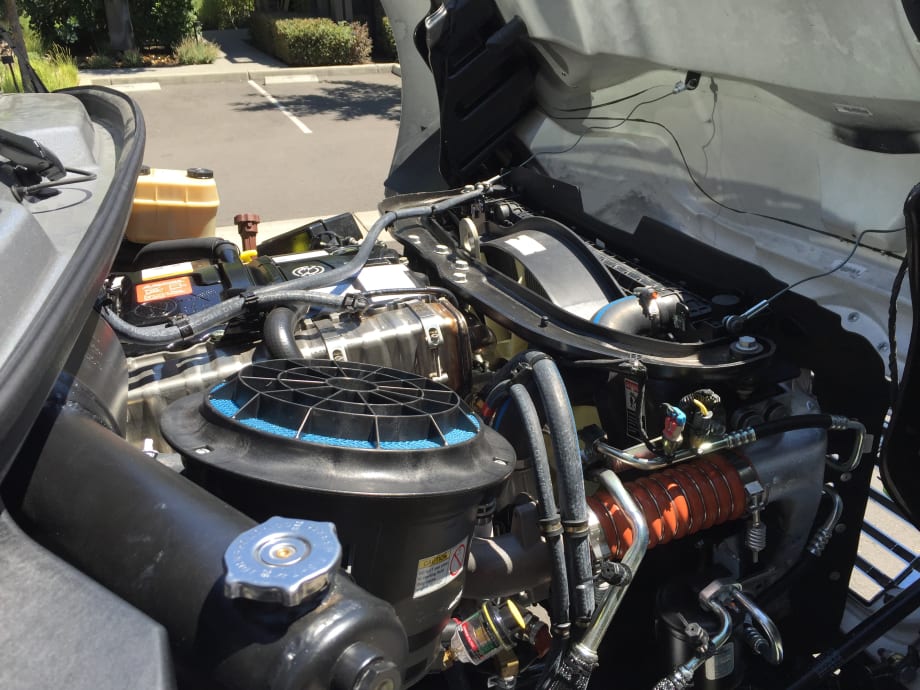
The DD5 installed in a Freightliner M102 box truck. Photo by Deborah Lockridge
4 min to read
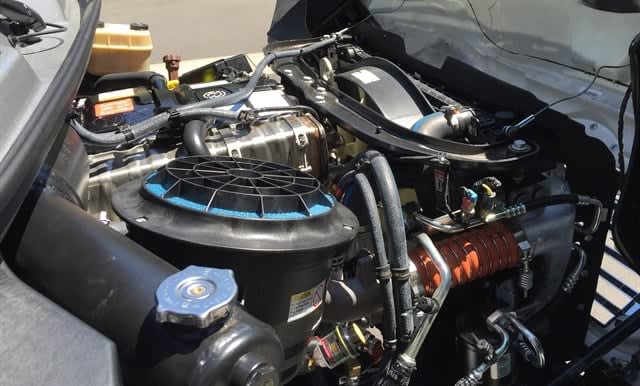
The DD5 installed in a Freightliner M102 box truck.Photo by Deborah Lockridge
Daimler Trucks North America says it plans to play a major role in the medium-duty engine market, and is taking the first steps with the new Detroit DD5 engine, which will begin production in October.
“We didn’t come into this market being cocky; we took a cautious approach,” said Kary Schaefer, general manager of sales and marketing for DTNA, told trucking reporters at an event debuting the engine in California on July 28.
One mark of that approach is that the engine is being released in two phases. In the first phase, it will be targeted at the pickup and delivery market, available in the Freightliner M2106 truck.
“We’re going to launch the DD5 in a limited application," she said. "We focused on pickup and delivery because it’s the least amount of complexity for us to enter the market. This allows us to gauge customer acceptance of the engine and get customer feedback and incorporate that into the engine for phase two.”
The engine will first be offered in 210 hp, 575 lb-ft and 230 hp, 660 lb-ft ratings.
Schaefer said that in testing against competitor engines, the new DD5 offers 3% better fuel economy. Getting there, she said, “was all about optimizing the engine in many many different ways, considering milliseconds and hundredths of millimeters and great attention to detail.”
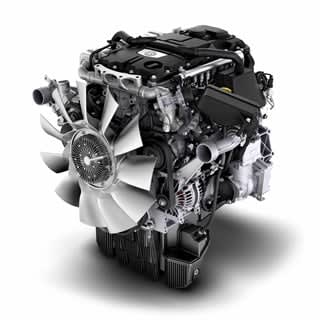
The four-liter DD5 is based on an engine that has been running in Europe for three years. Photo courtesy Daimler Trucks North America.
DTNA says engineers will be able to improve upon this base for future fuel economy improvements, to meet fuel economy regulations or maintain a competitive position in the industry.
The engine already has been certified to meet EPA’s 2017 greenhouse gas and fuel efficiency standards as well as all on-board diagnostic and near-zero criteria pollutant standards.
For phase two, in early 2018, in conjunction with the shift of D5 production from Mannheim, Germany, to its Detroit powertrain facility. Detroit will launch the larger displacement, six-cylinder DD8, which will have a range of 260 to 350 hp. At that time, the DD5 offerings will be extended to 240 hp and applications for power takeoffs will be available. At that point the engine also will be offered in DTNA’s step van and school bus offerings.
Diesel engines in general have gone through a lot of development over the years. “When you think there’s nothing more you can do to improve the engine, voila, the engineers come up with a way,” said Schaefer, who is an engineer herself.
One of the unusual features of the engine is that it is a four-cylinder.
“You may ask, why a four-cylinder?” Schaefer said. “Why not? We’re able to do the job and then some, so it makes for a better engine. It’s slightly shorter, offering better access for service especially at the rear of the engine.”
Less parts complexity, she said, helps improve endurance, reliability and durability.
Some of the engineering changes she cited include:
No cylinder liners
Ribs incorporated into the crankcase for stiffness instead of just adding more material and weight
Integrated oil cooler. “Managing the aftertreatment and regen process is all about managing those temperatures in the engine,” she said.
Optimized cylinder roundness and valves designed to allow high pressures.
A dual stage turbo for higher air flow, with the turbos in series, with no moving parts as on a variable geometry turbo. “Simple in design, the electronically controlled waste gate helps manage the pressure in the cylinder, which helps reduce the stress on the engine.”
Variable camshaft phasing (read more about VCP below)
The DD5 5.1-liter engine uses common design principles found on the heavy-duty platform, such as a deep rib block that provides robustness and minimizes noise.
The engine has undergone extensive development and testing in preparation for release and boasts an expected B10 life of 400,000 miles. (B10 and B50 life are the industry standard for measuring the life expectancy of an engine and indicate the miles of operation before an engine overhaul or replacement is required.)
DTNA is backing it up with a 3 year/250,000 mile engine and aftertreatment system warranty.
The engine introduces some technologies Daimler says are leading-edge, such as variable camshaft phasing. Variable cam phasing technology allows Detroit to optimize thermal management under low engine load conditions and improve the overall performance of the aftertreatment system.
This is a key benefit to keeping customers up and running trouble free in the pickup and delivery segment, where low-load stop-and-go operating conditions are common, DTNA notes.
As Schaefer explained, “VCP is unique for our engine design. It’s used at low engine speeds to increase exhaust temperatures going into the aftertreatment system. The aftertreatment system wants higher exists temperatures-- it performs better. I think this will be a differentiator for our engine.”
Schaefer said the designers paid a lot of attention to detail and considered customer requests in terms of servicabity and maintenance. For instance, cartridge-style fuel and oil filters are mounted above the rail for easy access.
DTNA says operators in short-haul pickup and delivery applications will have extended oil and fuel filter change intervals up to 45,000 miles. The engine will take the backward-compatible version of the new PC-11 engine oils, CK-4, when those become available late this year.
In addition, Detroit will provide DD5 customers its Detroit Connect Virtual Technician remote diagnostics system, the same system heavy-duty customers use.
More Fleet Management

Why Private Fleets Are Taking More Freight
Private fleets are putting their own trucks on demanding customers and high-cost lanes as companies seek greater control over service, costs, and capacity.
Read More →
Sponsored•September 16, 2026
Color Match Smarter: Tools That Restore & Perform
For fleet managers and collision repair professionals keeping heavy-duty trucks on the road, getting the color right the first time isn't just about appearance — it's about efficiency, turnaround time, and bottom-line results. Discover how today's digital color tools are transforming the repair process from guesswork to precision.
Read More →
FMCSA Pauses Biennial-Update Enforcement Amid Motus Transition
Carriers whose updates were due on or after June 1 have more time, while FMCSA works to stabilize its new registration system and warns of phishing sites impersonating its new carrier registration system, Motus.
Read More →


Sponsored•September 14, 2026
2026 Blueprint for Countering Smarter Supply Chain Theft
Cargo theft is no longer just the cost of doing business. It's a multi-billion-dollar criminal enterprise exploiting vulnerabilities across your fleet, drivers, and supply chain.
Read More →
Sponsored•September 1, 2026
How Telematics Improves Visibility, Control, and Performance in Refrigerated Fleets
Explore how telematics help refrigerated fleets improve visibility, uptime, efficiency, compliance, and cargo protection across connected cold chain operations.
Read More →
What the U.S.-Canada Trade War Means for Trucking
Escalating U.S.-Canada tariffs could disrupt cross-border freight, reduce truck volumes, raise costs, and create new uncertainty for carriers on both sides of the border.
Read More →
What Are Trucking’s Top Concerns for 2026?
The American Transportation Research Institute wants to know what's worrying trucking fleet managers, drivers, and other stakeholders in its annual Industry Issues survey.
Read More →
American Trucking Associations Looks for a New Leader
ATA President and CEO Chris Spear abruptly left his job at the association on August 21, at a pivotal time for the trucking industry.
Read More →
Public Wi-Fi Cybersecurity Risks: How Truck Drivers and Fleets Can Protect Their Data
Public Wi-Fi can expose truck drivers and fleets to credential theft, malware, and other cyber threats. Here’s how to reduce the risk on the road.
Read More →
For Nicky Cupp, Fleet Innovation Starts With Frustration
HDT Truck Fleet Innovator Nicky Cupp turns everyday pain points at Fraley & Schilling into opportunities for better technology and smarter processes.
Read More →