




Trucking Industry Groups Support Bill to Allow Younger Drivers
Over 100 companies and organizations in the trucking industry have expressed strong support of a new bill that proposes allowing drivers under the age of 21 to cross states lines.

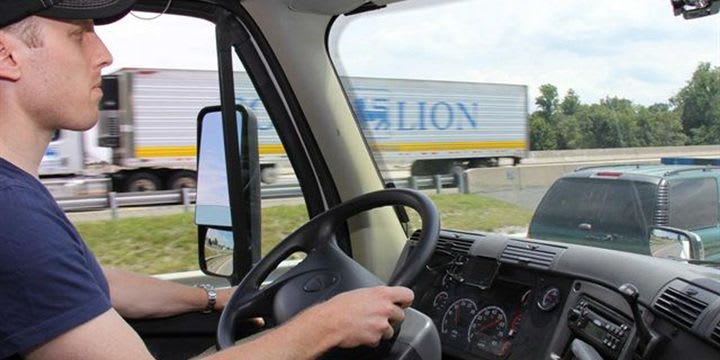
Over 100 companies and organizations in the trucking industry have expressed strong support of a new bill that proposes allowing drivers under the age of 21 to cross states lines.
Photo: Virginia Tech
In an April 14 letter addressed to members of Congress, the DRIVE-Safe Act Coalition — along with 117 companies and organizations in the trucking industry — have expressed strong support of a new bill that proposes allowing certified commercial truck driver’s under the age of 21 to cross states lines.
Although 49 states and the District of Columbia currently allow individuals under the age of 21 to obtain a commercial driver’s license and operate in intrastate commerce, these same individuals are prohibited from driving a truck across state lines until they turn 21. The proposed Developing Responsible Individuals for a Vibrant Economy (DRIVE-Safe) Act would change that through implementing a two-step program of additional training, which includes "rigorous performance benchmarks."
In the letter, the coalition urged members of the Senate Committee on Commerce, Science and Transportation and the House Committee on Transportation and Infrastructure to include the act in the forthcoming infrastructure legislative package and/or surface transportation reauthorization bill.
“This strongly bipartisan legislation, which garnered the support of more than one third of the House and Senate in the 116th Congress, will address the nation’s growing truck driver shortage by promoting opportunity and enhanced safety training for emerging members of the transportation workforce,” the coalition wrote.
According to a recent estimates listed by the coalition, the trucking industry needs an additional 60,800 truck drivers immediately—a deficit that is expected to grow to more than 160,000 by 2028. When anticipated driver retirement numbers are combined with the expected growth in capacity, the trucking industry will need to hire roughly 1.1 million new drivers over the next decade, or an average of nearly 110,000 per year, the coalition wrote.
“The COVID-19 pandemic further exacerbated the truck driver shortage, and the temporary closures of state DMV’s and truck driver training schools dried up the already fragile pipeline of new drivers entering the trucking industry,” according to the letter. “And as a result of the already crippling driver shortage, companies in supply chains across the economy are facing higher transportation costs, leading to increased prices for consumers on everything from electronics to food.”
The letter was signed by 117 organizations and companies in trucking, transportation, industry and related groups, including the Amerian Trucking Associations, Commerical Vechile Training Association, Fedex, Home Depot, Nestle, Truckload Carriers Association, UPS, Walmart, and the U.S. Chamber of Commerce. See the full list here.
More Drivers

Truck Drivers Need More Than Another Alert
Fleets have more visibility into truck health, safety events, and driver activity than ever. The next challenge is turning all that information into useful guidance for the person who has to decide what to do next.
Read More →
FMCSA Removes 110 Truck Driver Training Schools from Certified ELDT List
Federal regulators also are targeting more than 160 additional training providers and launching a nationwide audit of third-party CDL skills testers as part of a broader crackdown on trucking fraud.
Read More →
Hours of Service Pilot Programs: FMCSA Readies for 2027 Rollout
Two pilot programs could eventually reshape hours-of-service rules, giving truck drivers options to pause their 14-hour clock or use longer split sleeper rest periods.
Read More →
Medical Cards, English Proficiency Reshape Roadcheck Violations
Medical-card violations jumped to the top of the driver out-of-service list during CVSA’s 2026 International Roadcheck, while English-language proficiency violations appeared among the leading violations for the first time.
Read More →
Driver Trust Can Make or Break the Success of Fleet Safety Technology
New Teletrac Navman research suggests that onboarding, transparency about driver data, and positive feedback can play a significant role in how commercial drivers respond to safety and coaching technology.
Read More →
EEOC Sues KLLM Over Alleged Sex Discrimination in Driver Training
KLLM is facing a federal sex-discrimination lawsuit over policies the EEOC alleges put female truck driver trainees at a disadvantage.
Read More →
FMCSA Moves to Codify English Language Requirements for Commercial Drivers
By changing regulations on English-language proficiency requirements for commercial drivers, rather than relying on a guidance memo, the FMCSA said future administrations won't be able to walk back the Trump administration's stricter enforcement with just a memo.
Read More →
Drivers Put Western Star Trucks to the Test at Star Nation Experience
Watch to get an inside look at the Western Star trucks, technology, and community behind the Star Nation Experience 2026!
Read More →
Trump Administration Looks to Put More Veterans Behind the Wheel
The Freedom Haulers program pulls together existing and expanded programs at several federal agencies to recruit veterans to drive commercial heavy-duty trucks and cut the red tape for them to get a CDL, training, and employment.
Read More →
Putting Mack’s Command Steer to the Test
A test drive of Mack’s Command Steer active steering system evaluates how it can make truck driving easier and less tiring.
Read More →