





Electric-Truck Adoption Connected to Charging Infrastructure Development
Volvo to Start Production of VNR Electric Early in 2021
Full-scale production of Volvo's VNR Electric regional-haul tractors will begin in early 2021. The company aims to provide not just an electric truck, but a whole end-to-end solution, including charging and maintenance.
December 4, 2020
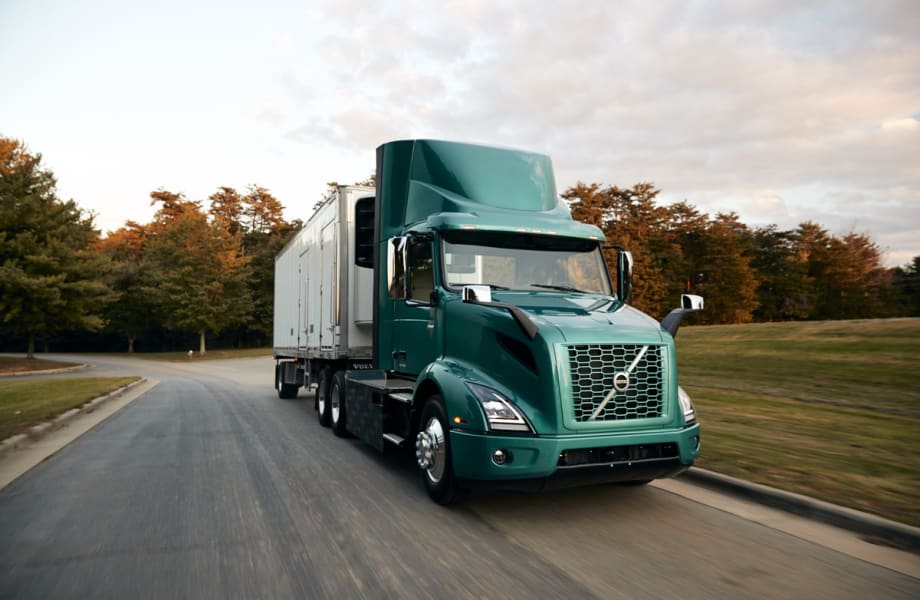
Production of Volvo's VNR Electric is set to begin in early 2021 at the New River Valley facility in Dublin, Virginia.
Photo: Volvo Trucks North America
6 min to read
Full-scale production of Volvo's VNR Electric regional-haul tractors will begin in early 2021 at its New River Valley assembly plant in Virginia. The first configurations slated for production include a single-axle straight truck with a gross vehicle weight rating of 33,200 pounds, a 4x2 tractor with a 66,000-pound GCWR, and 6x2 tractor with an up-to 82,000-pound GCWR in specific applications.
The VNR Electric models will be produced on the same assembly line as the diesel VNR to avoid any unnecessary tooling and to increase scalability, Volvo said.
“Today we launch our VNR electric truck and start sales,” said Peter Voorhoeve, president of Volvo Trucks North America, during a Dec. 2 virtual press briefing. “Being one of the first truck manufacturing companies in North America to begin prediction of zero-emission electric vehicles is a proud moment for Volvo Trucks. We are in the midst of an evolution in the way we think about transportation, and this moment is a key step in creating the future we all want to live in, a world we are proud to hand over to the next generation.”
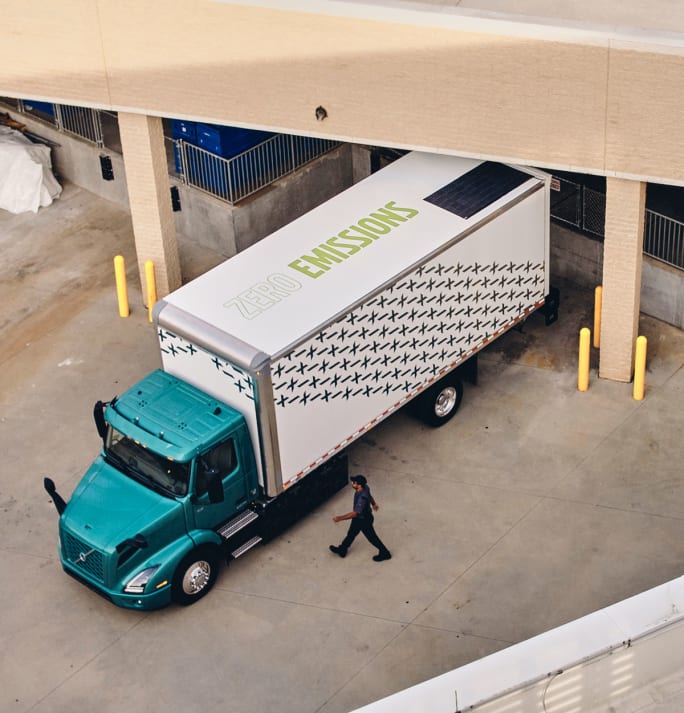
On this straight-truck version of the VNR Electric, solar panels mounted to the body roof help power the liftgate.
Photo: Volvo Trucks North America
The Volvo VNR Electric is designed for local and regional duty cycles, including food and beverage and pick-up and delivery routes of up to 150 miles. The truck is powered by 264-kWh lithium-ion batteries and driven by Volvo's fully integrated, proprietary motor through a two-speed variation of the I-Shift transmission. The motor is rated at 455 hp and can produce up to 4,051 lb.-ft. of torque. Regenerative braking can increase range by returning power up to 15% back into the battery, depending on the duty cycle, according to Volvo.
The batteries can charge up to 80% within 70 minutes using a 150-kW charger with either CCS (Combined Charging System) 1 or CCS 2 connectors. Brett Pope, director of electric vehicles at Volvo Trucks North America, told reporters the tare weight of the 6x2 day cab that will go into production next year is about 20,000 pounds. “With a battery-electric vehicle, typically we're seeing a little over 4,000 pounds heavier [compared to the diesel], and the increase in mass is due to the batteries,” he said.
Same VNR Chassis for Electric and Diesel Models
The VNR Electric features that same chassis as the diesel version, without the diesel engine and traditional transmission. It uses conventional drive axles with gear ratios matched to the application and speed of the motors. Drivers will find a familiar human-machine interface with a few differences in the gauge package, such as state-of-charge indicators, rather than tachometers, oil pressure gauges, etc.
All the familiar safety features found in the Volvo VNR model are retained in the Volvo VNR Electric model, including the high safety standards in the construction of the cab and chassis. The construction of the battery support carrier system was also designed with these same safety standards in mind. The VNR Electric features the same active safety systems as the VNR model, such as Volvo Active Driver Assist and lane-departure warning. In addition, the specifically designed location of the batteries on the side of the vehicle as well as the air compressor under the driver door enhance serviceability.
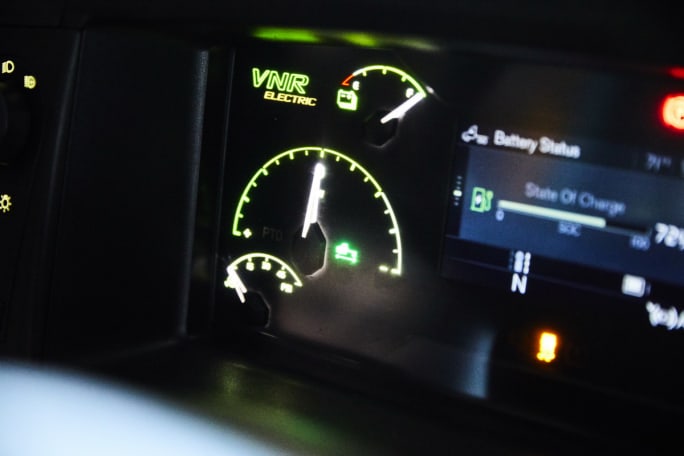
Volvo VNR Electric's Remote Diagnostics Battery Monitoring Dash Display.
Photo: Volvo Trucks North America
“This vehicle is covered by our uptime promise, including remote diagnostics, and a suite of connectivity services specific to energy management and battery performance for extra peace of mind,” said Volvo Trucks' John Moore. “But all of that’s what’s under the hood. There are great benefits to driving the VNR Electric, too. Electric improves the driver’s experience by reducing noise and giving a more responsive feel.”
Volvo Gold Contract Maintenance
Customers buying the VNR Electric will get the Volvo Gold Contract service offering. This offering is a consultative approach, including special easy-bundle payment options from Volvo Financial Services and premium uptime services from Volvo Trucks. The Volvo Gold Contract includes scheduled and preventative maintenance, towing and vehicle repair, including the lithium-ion batteries and complete electromobility system. It comes standard with the Volvo VNR Electric and is the first service contract of its kind from Volvo Trucks North America.
The Volvo Gold Contract includes the full Uptime Services bundle, which has been enhanced for the Volvo VNR Electric to include a new battery monitoring service. Customers will also receive 24/7 customer support through Volvo’s Remote Diagnostics, Volvo Action Service and ASIST via the Volvo Trucks Uptime Center.
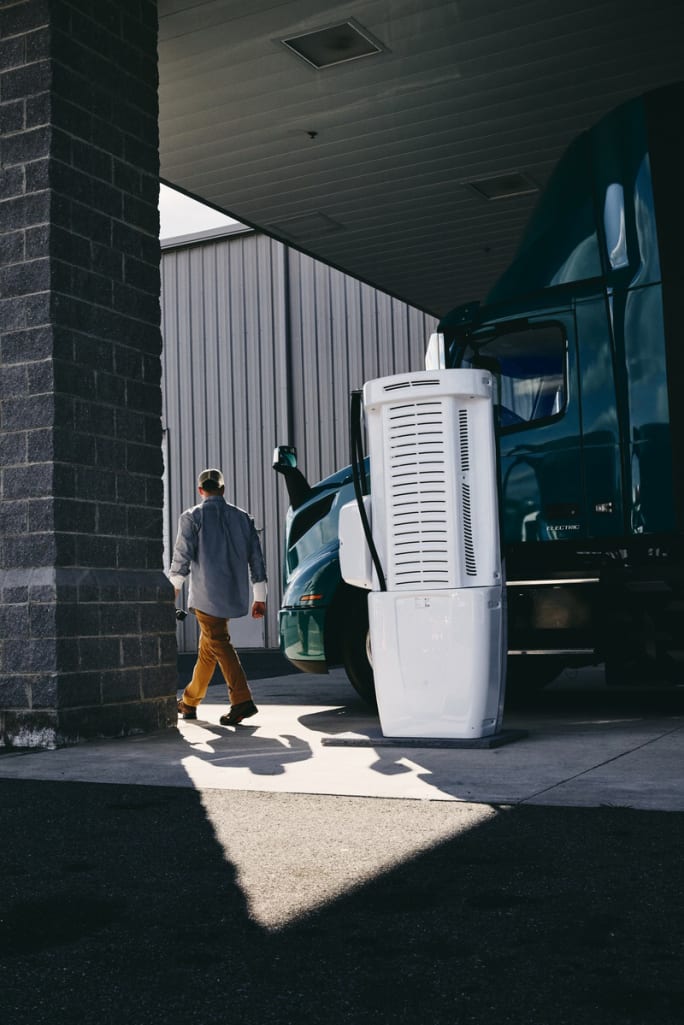
Volvo Trucks North America is offering a special financing option through Volvo Financial Services to help with the installation of the charging infrastructure.
Photo: Volvo Trucks North America
“Volvo Trucks has long-term global experience with proprietary service contracts and the value they bring to our customers,” said Mark Curri, senior vice president of uptime and customer support. “With the introduction of the Volvo VNR Electric, it’s more important than ever that we provide confidence, service and uptime support as our customers begin their transition to electromobility with us, especially with the electrical systems and components that are new to our industry.”
Curri said customers can opt to do some of their own maintenance in their own shops, such as lubrication and other chassis-related work. “We are including the Gold Contract purposefully to take the worry away from the customers, and so they don't need to adapt their shops and change their processes in order to properly maintain and service the trucks. We want to make the transition from diesel to electric as smooth as possible. It’s not that customers couldn’t – and in fact, some may choose to – but at least for now, during this transformation phase, we think it's very important that we handle that for them and take the worry away.”
Vehicle and Charging Infrastructure Financing
Volvo Financial Services offers flexible and competitive financing and leasing options for both the VNR Electric model and, for the first time, the charging stations needed to support the trucks. Because access to on-site charging is such an important consideration for customers transitioning to electric vehicles, VFS is committed to bringing multiple financing solutions for the installation of charging stations, along with the ability to bundle the VNR Electric truck payment with the monthly payment for the Volvo Gold Contract.
VFS is also offering access to insurance solutions for the VNR Electric in select U.S. markets via third-party licensed agents.
“VFS financing solutions cover the entire user experience, providing our customers with complete confidence as they integrate the Volvo VNR Electric into their fleet operations,” said Patrick Shannon, president, VFS North America. “By combining the capital for the truck purchase, charging stations and the full range of service and support into one package, VFS is making it easy to accelerate the transition to electromobility. And by supporting our dealer network with similar financing options, we have the entire ecosystem supported from end to end.”
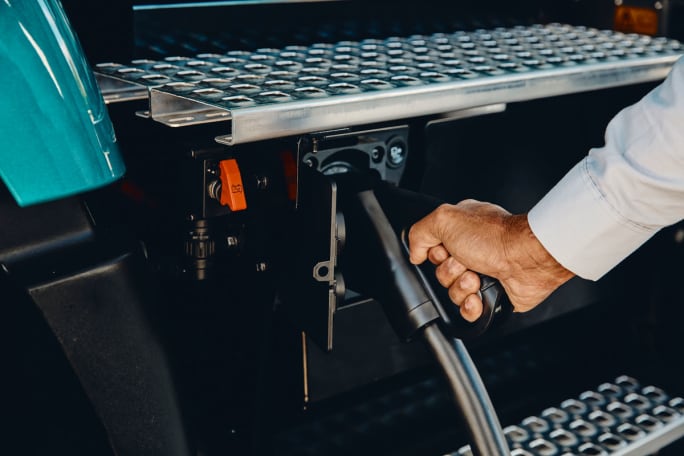
The VNR Electric charging location.
Photo: Volvo Trucks North America
As a result of the Volvo LIGHTS electric-truck demonstration project in California, Volvo concluded that electromobility means you're buying more than just a truck. It’s the whole transport solution from end to end.
“When you involve charging and the charging infrastructure, we have to have partnerships and relationships with charging supplier companies,” Pope said. “We walk through that with the customers to understand what their starting point is, what their site looks like, and what they will require. With VFS and the financial packaging, we can make arrangements to make it scalable for the customer’s [needs].”
More Equipment

How Volvo Updated Its D13 for EPA 2027 [Watch]
Volvo’s updated D13 promises lower emissions without sacrificing performance or fuel economy. Take a closer look at what changed inside the engine in this HDT Spotlight video.
Read More →
Michelin Tire Improves Efficiency and Durability for Regional Fleets
The Michelin X Multi Energy D2 is a regional haul drive tire engineered to help fleets improve fuel efficiency, durability and traction in demanding stop-and-go operations.
Read More →
ZF Expands Commercial Vehicle Push in North America
ZF is expanding its North American commercial-vehicle presence with new transmission applications, electrification, trailer technology and autonomous-driving systems.
Read More →
Tesla Wants a Self-Driving Semi. Are Cameras Enough?
Could Tesla’s camera-only autonomous driving technology work on an 80,000-pound Semi? In this commentary, HDT's Deborah Lockridge takes a look at Tesla, Cybercab, and how autonomous trucks see the road.
Read More →
Kodiak: Driverless Long-Haul Truck Launch on Track for 2026
Kodiak AI says its driverless long-haul safety case is 93% complete and it remains on track to begin commercial operations by year-end 2026.
Read More →
What DOT’s Automated Vehicle Strategy Means for Trucking
The U.S. Department of Transportation issued a new automated-vehicle strategy that outlines plans for driverless-truck regulations, cross-state freight corridors, and federal safety standards.
Read More →
East Coast Port Launches $45M Electric Truck Push
The Port Authority of New York and New Jersey announced millions in incentives for zero-emission drayage trucks, yard tractors, and new charging hubs near the port.
Read More →
PlusAI Going Public to Fund Autonomous Truck Launch
A SPAC deal could provide PlusAI with up to $300 million as it works toward a 2027 commercial launch of factory-built autonomous trucks.
Read More →
NHTSA Moves to Rewrite Truck Fuel-Economy Rules
The National Highway Traffic Safety Administration says it lacks authority to regulate medium- and heavy-duty truck engines separately from complete vehicles, but the existing standards have not yet been eliminated.
Read More →
Detroit Opens Orders for EPA 2027 Engines
Detroit isn’t starting from scratch to meet EPA 2027 diesel emissions standards. Its Gen 6 DD13 and DD15 engines keep much of today’s platform while updating the fuel and aftertreatment systems.
Read More →