


 MENU
MENU SEARCHMENUSEARCH
Loading data...

While early estimates for 2019 from the National Highway Traffic Safety Administration show an overall decrease in highway fatalities for the third consecutive year, fatalities involving trucks over 10,000 pounds rose slightly.
Read More →


The American Transportation Research Institute and the Owner-Operator Independent Driver Association Foundation have released research on the impacts of the COVID-19 pandemic on all aspects of trucking operations.
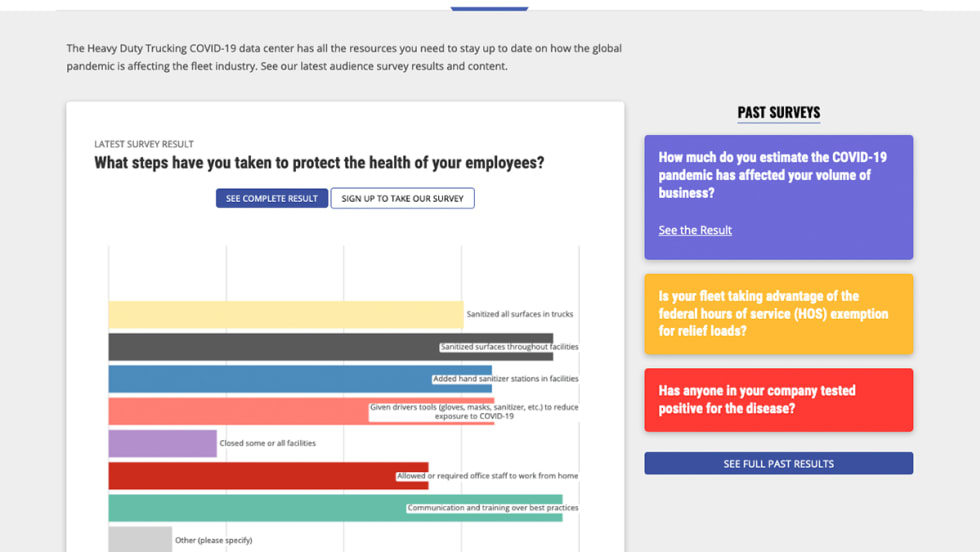
Read More →Heavy Duty Trucking has added a new COVID-19 Data Center and revamped its COVID-19 coverage hub to make it easier for readers to get the latest, most in-depth information on the pandemic.
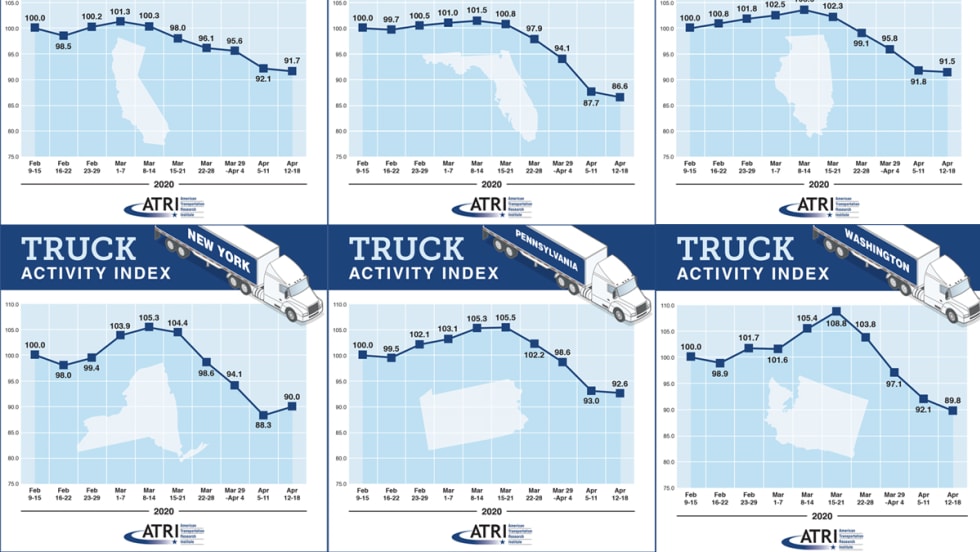
Read More →New data from the American Transportation Research Institute gives a snapshot of how commercial fleet activity is being affected by the COVID-19 outbreak.
Read More →Netradyne released findings from a recent online survey of commercial drivers that indicates commercial drivers feel safe but acknowledge they could be safer, and that AI-powered driving technology can be both beneficial and concerning.
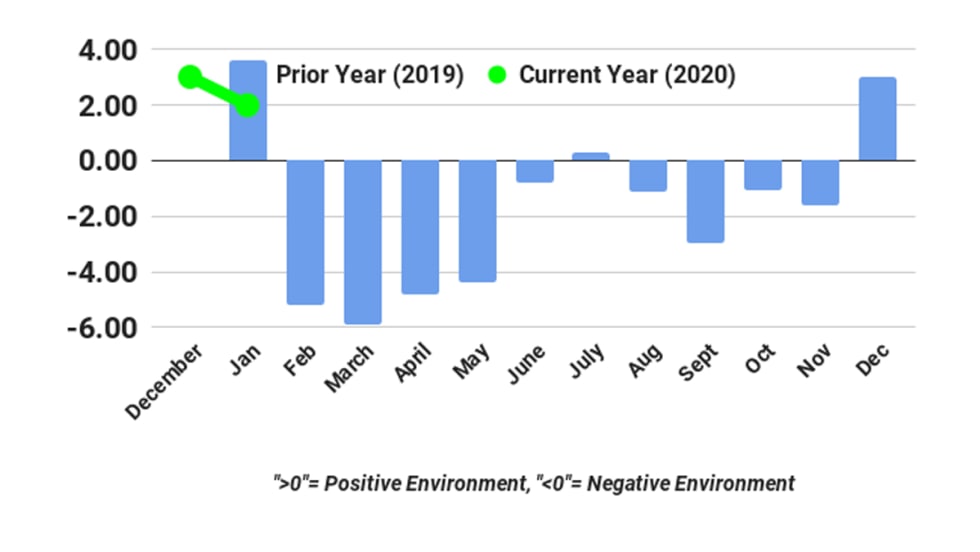
Read More →According to FTR’s projections for its Trucking Conditions Index, a combination of drastic declines in freight volumes, utilization, and rates due to the COVID-19 pandemic could lead to the worst overall trucking conditions on record during the second quarter of this year.
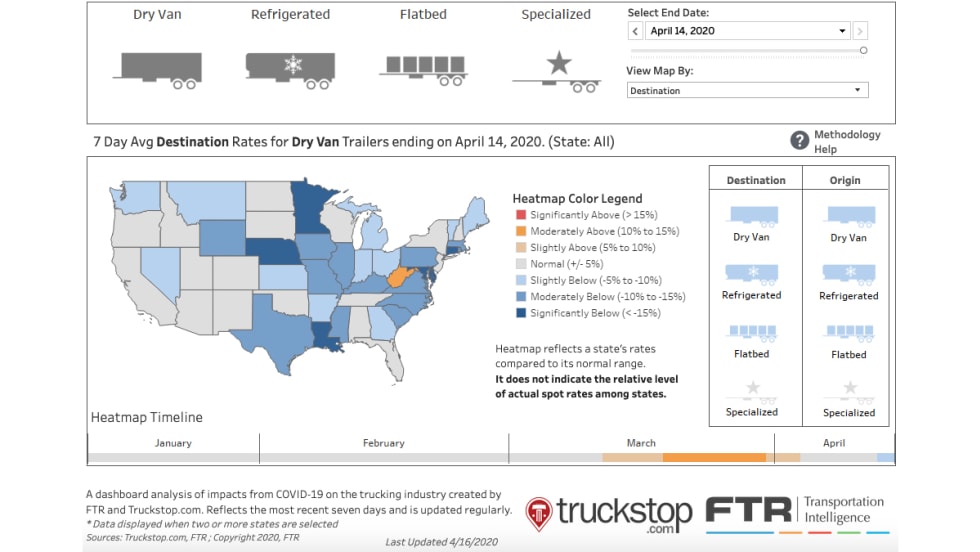
Read More →FTR’s COVID-19 Impact Heatmap has been updated to show truck load data in the spot market, providing state-level impacts on truck load volumes for four equipment types: dry van, refrigerated, flatbed, and specialized.
Read More →According to a recent report from FTR, preliminary trailer orders for March are still being impacted by the COVID-19 pandemic, falling 54% from February to 6,500 units for the month.
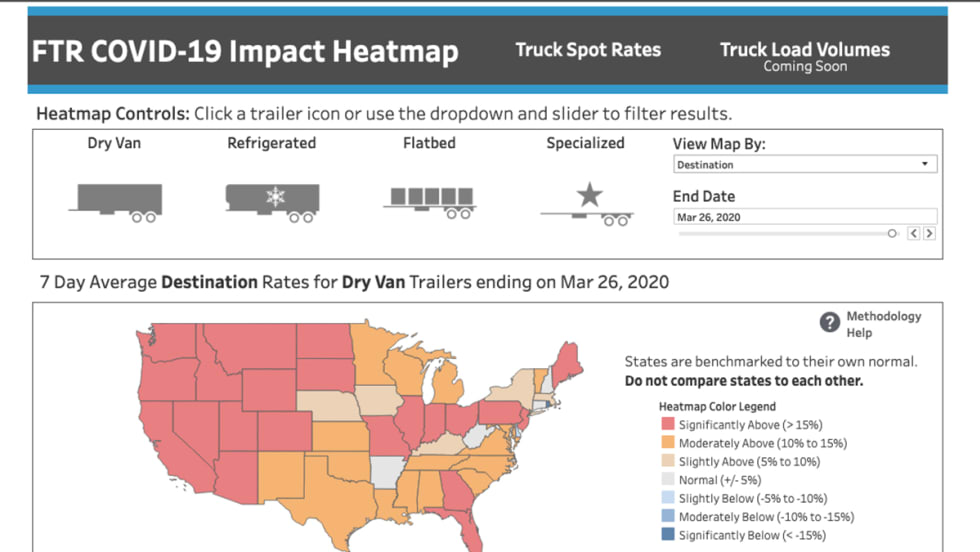
Read More →FTR has released the COVID-19 Impact Heatmap, which assesses the state-level rate impacts by four trucking equipment types – dry van, refrigerated, flatbed, and specialized – using Truckstop.com spot market data.
Read More →HDT has launched a survey to gain more insight to how the COVID-19 pandemic is affecting fleets in the commercial trucking industry.
Read More →