




Test Drive: Freightliner NG Cascadia 113
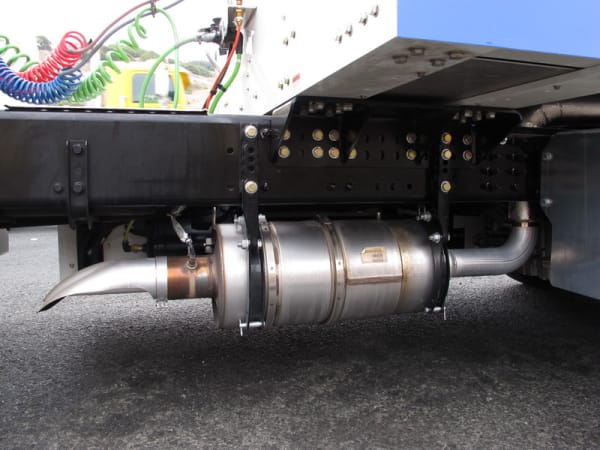
The passive three-way-catalyst exhaust aftertreatment system used on
spark-ignited natural gas engines like the ISX12G replaces the DPF and
SCR systems found on diesel engines. This aftertreatment system saves
close to 1,000 pounds and gives back a storage box under the passenger
door.
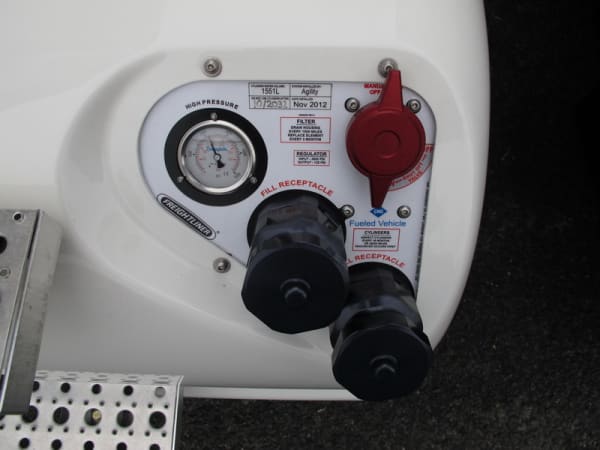
The aft section of the 40 DGE compressed natural gas fuel tank has two
fill ports; one for use at 95% of the retail CNG stations in North
America. The larger port is a Transit port, which evolved from the
transit industry, where they flow more fuel in a shorter period of time.
Not many retail CNG stations currently use Transit ports, but as new
stations are built, most are offering both fill ports. There's also a
tank pressure gauge and a fuel-flow shut-off valve.
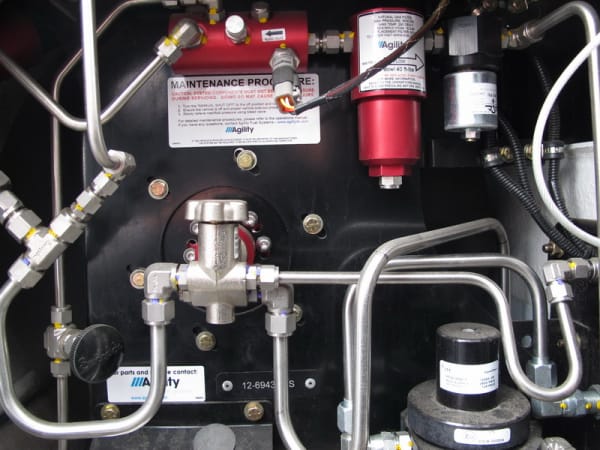
The fuel tank plumbing has been resized to facilitate faster and more
complete tank fills. The red-colored high-pressure fuel filter has been
relocated for easier maintenance access.
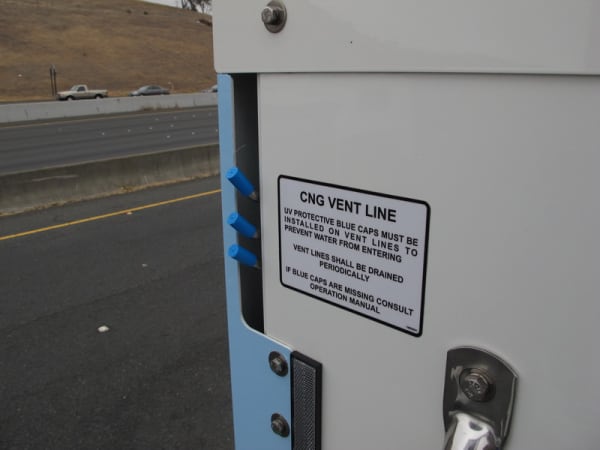
The tanks have pressure relief vents to blow off excessive pressure if
the truck remains shut off for extended periods. The fuel will warm over
time, causing the gas to expend and increase tank pressure.
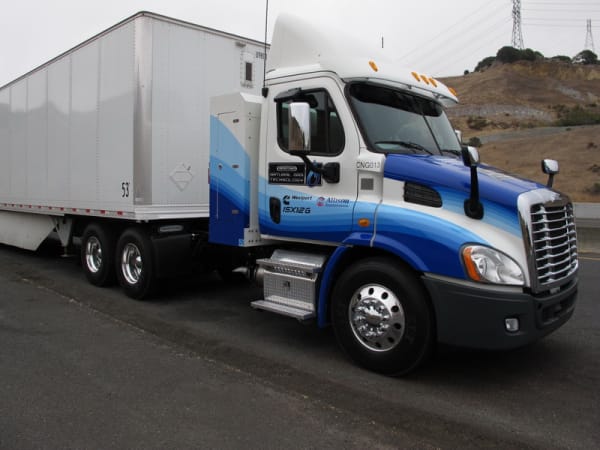
The CNG tanks located in the back-of-cab cabinet were redesigned to make
them shorter so they would fit better behind the cab. This will permit
the installation of an aerodynamic cab fairing to improve airflow around
the cabinet. The fairings will be available in 2014.
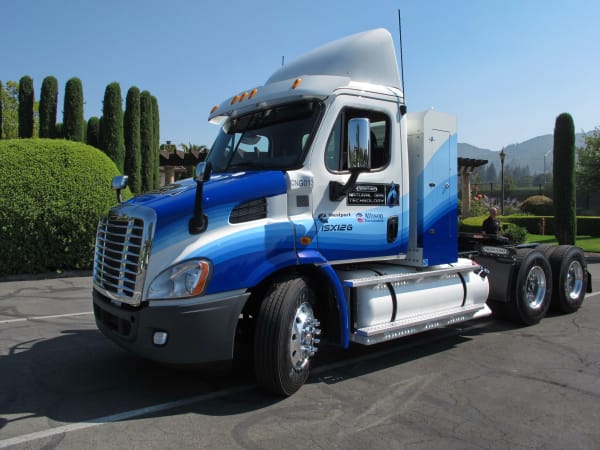
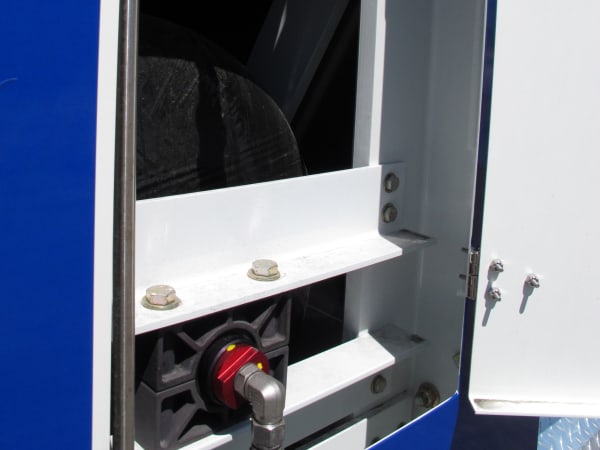
The CNG tank cabinet has a very robust steel subframe to secure and protect the tanks. It’s not airtight to prevent possible gas build up, but the doors rattle.
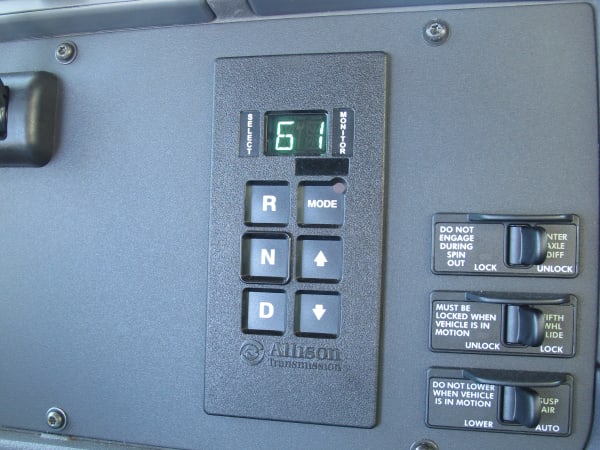
The Allison 4000 HS kept the engine revs down even in a good pull, making good use of the ISX12 G’s 1,450 pounds-feet of torque.