





From the Archives (2015): The Smart Road to Younger Drivers
Younger Driver Pilot Program: DOT Takes First Steps
The Biden administration is trying to fast-track a new pilot program to bring younger drivers into the trucking industry through an apprenticeship program.
January 7, 2022
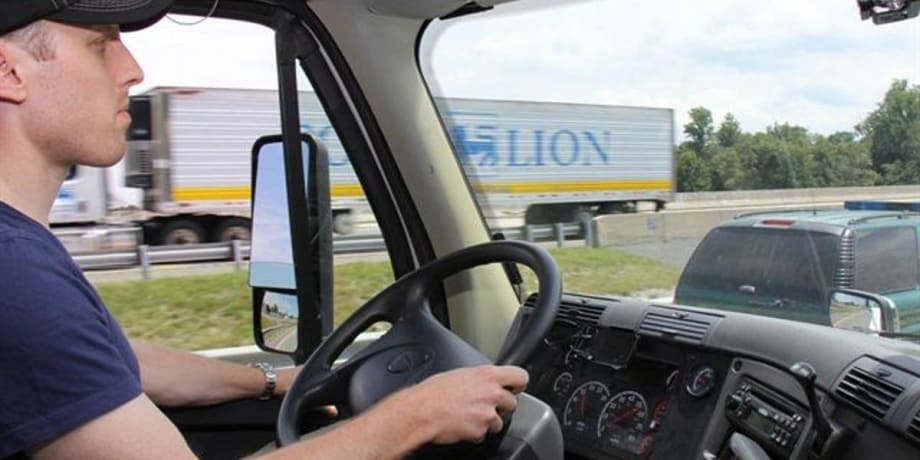
While age does have some impact on potential truck driver risk, commercial motor vehicle driving experience is more important when considering risk, according to a 2020 study from the Virginia Tech Transportation Institute.
File Photo: Virginia Tech
4 min to read
The Biden administration is trying to fast-track a new pilot program to bring younger drivers into the trucking industry through an apprenticeship program.
Current regulations require drivers to be at least 21 years old to drive a commercial motor vehicle in interstate commerce, limiting younger drivers to intrastate operations. Motor carriers have long complained that a 19-year-old could, for instance, legally drive all the way across a large state like Texas, but couldn’t cross the border from the Texas side of Texarkana to the Oklahoma side.
The recently passed Infrastructure Investment and Jobs Act requires the Department of Transportation to conduct a commercial driver apprenticeship pilot program for these younger drivers. In the first week of the new year, the Federal Motor Carrier Safety Administration published a notice indicating it’s taking the first step in establishing the program: an emergency requestfor the federal Office of Management and Budget to give it permission to begin collecting data from eventual motor carrier pilot program participants.
Identifying ways to bring younger drivers into the industry was one of a series of steps the Biden administration announced in mid-December that it is taking to address the truck driver shortage. That included making Registered Apprenticeships easier to set up, not only for this pilot program but for other entry-level drivers.
It's All About the Data
The FMCSA is asking for emergency permission to collect data from the motor carriers in the program in order to report the following to Congress.
The findings and conclusions on the ability of technologies or training provided to apprentices as part of the pilot program to successfully improve safety;
An analysis of the safety record of participating apprentices as compared to other CMV drivers;
The number of drivers that discontinued participation in the apprenticeship program before completion;
A comparison of the safety records of participating drivers before, during, and after each probationary period; and
A comparison of each participating driver’s average on-duty time, driving time, and time spent away from home terminal before, during, and after each probationary period.
According to the agency, "FMCSA will monitor the monthly data being reported by the motor carriers and will identify drivers or carriers that may pose a risk to public safety," so that it can remove them from the program as needed.
FMCSA and the Department of Labor's Employment and Training Agency will be partnering in the implementation of the Safe Driver Apprenticeship Pilot Program. All motor carriers who are approved for the program by FMCSA will also be required to become Registered Apprenticeships (RAs) under 29 CFR part 29 before they can submit information on their experienced drivers and apprentices.
More Details on the Younger-Driver Program
The notice explains that an “apprentice” for this program is defined as a person under the age of 21 who holds a commercial driver's license. These apprentices will complete two probationary periods where they may operate in interstate commerce under the supervision of an experienced driver in the passenger seat.
Those experienced drivers must be at least 26 years old and have held a CDL and been employed for at least the past two years, with at least five years of interstate CMV experience, along with other safety requirements.
The first probationary period will be 120 hours of on-duty time (at least 80 of which must be driving) in length, during which the motor carrier must evaluate the apprentice on the following:
Interstate, city traffic, rural 2-lane, and evening driving;
Safety awareness;
Speed and space management;
Lane control;
Mirror scanning;
Right and left turns; and
Logging and complying with rules relating to hours of service.
The second probationary period will be 280 hours of on-duty time (at least 160 of which must be driving), during which the motor carrier will evaluate the apprentice on the following:
Backing and maneuvering in close quarters;
Pre-trip inspections;
Fueling procedures;
Weighing loads, weight distribution, and sliding tandems;
Coupling and uncoupling procedures; and
Trip planning, truck routes, map reading, navigation, and permits.
Assuming the apprentice successfully completes both probationary periods, he/she will then be permitted to operate in interstate commerce unaccompanied.
In addition to data regarding successful completion of the probationary periods, FMCSA wants to collect data relating to any incident in which a participating apprentice is involved, as well as other data relating to the safety of apprentices. Additional data will include crash data (incident reports, police reports, insurance reports), inspection data, citation data, safety event data (as recorded by all safety systems installed on vehicles), as well as exposure data (record of duty status logs, on-duty time, driving time, and time spent away from home terminal). This data will be submitted monthly through participating motor carriers.
Trucks used in the program will have to be equipped with advanced driver assistance systems, automatic emergency braking systems, onboard monitoring systems, and forward-facing and in-cab video systems.
The agency is now seeking public comments on this request, which can be submitted online at regulations.gov under docket number FMCSA- 2022-0002, no later than Jan. 12.
More Drivers

From One Generation to the Next: How Mentorship Builds Safer Truck Drivers
After three decades in trucking, Harold Perry shares what he's learned about driver safety, mentorship, and helping the next generation build confidence behind the wheel.
Read More →
Truck Drivers Need More Than Another Alert
Fleets have more visibility into truck health, safety events, and driver activity than ever. The next challenge is turning all that information into useful guidance for the person who has to decide what to do next.
Read More →
FMCSA Removes 110 Truck Driver Training Schools from Certified ELDT List
Federal regulators also are targeting more than 160 additional training providers and launching a nationwide audit of third-party CDL skills testers as part of a broader crackdown on trucking fraud.
Read More →
Hours of Service Pilot Programs: FMCSA Readies for 2027 Rollout
Two pilot programs could eventually reshape hours-of-service rules, giving truck drivers options to pause their 14-hour clock or use longer split sleeper rest periods.
Read More →
Medical Cards, English Proficiency Reshape Roadcheck Violations
Medical-card violations jumped to the top of the driver out-of-service list during CVSA’s 2026 International Roadcheck, while English-language proficiency violations appeared among the leading violations for the first time.
Read More →
Driver Trust Can Make or Break the Success of Fleet Safety Technology
New Teletrac Navman research suggests that onboarding, transparency about driver data, and positive feedback can play a significant role in how commercial drivers respond to safety and coaching technology.
Read More →
EEOC Sues KLLM Over Alleged Sex Discrimination in Driver Training
KLLM is facing a federal sex-discrimination lawsuit over policies the EEOC alleges put female truck driver trainees at a disadvantage.
Read More →
FMCSA Moves to Codify English Language Requirements for Commercial Drivers
By changing regulations on English-language proficiency requirements for commercial drivers, rather than relying on a guidance memo, the FMCSA said future administrations won't be able to walk back the Trump administration's stricter enforcement with just a memo.
Read More →
Drivers Put Western Star Trucks to the Test at Star Nation Experience
Watch to get an inside look at the Western Star trucks, technology, and community behind the Star Nation Experience 2026!
Read More →
Trump Administration Looks to Put More Veterans Behind the Wheel
The Freedom Haulers program pulls together existing and expanded programs at several federal agencies to recruit veterans to drive commercial heavy-duty trucks and cut the red tape for them to get a CDL, training, and employment.
Read More →