




Volvo Unveils Second Electric Truck Model
Just three weeks after introducing its first electric truck, Volvo has unveiled its FL Electric model in Europe.

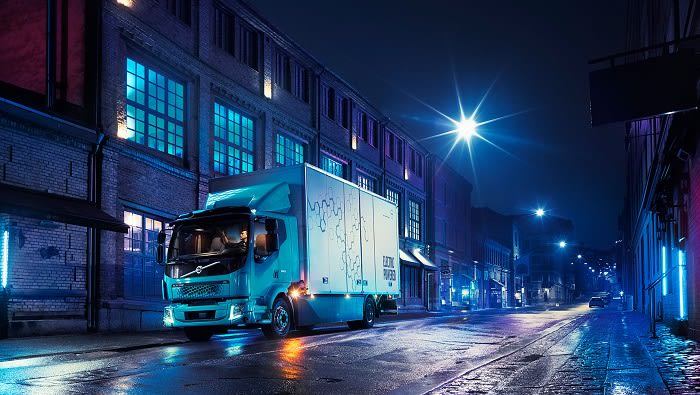
Volvo's new FL Electric Truck is designed for refuse collection and other urban applications. Photo: Volvo
According to Volvo Group's European division, just three weeks after the unveiling of Volvo Trucks’ first all-electric truck, the FL Electric, the OEM is expanding its product range with yet another electric truck. The Volvo FE Electric is designed for heavier city distribution and refuse transport operations with gross weights of up to 30 tons. Sales will commence in Europe in 2019.
“With the introduction of the Volvo FE Electric, we have a comprehensive range of electrically powered trucks for city operations and are taking yet another strategic step forward in the development of our total offer in electrified transport solutions," said Claes Nilsson, president of Volvo Trucks.
"This opens the door to new forms of cooperation with cities that target to improve air quality, reduce traffic noise, and cut congestion during peak hours since commercial operations can instead be carried out quietly and without tailpipe exhaust emissions early in the morning or late at night,” he added.
The first Volvo FE Electric, a refuse truck with a superstructure developed together with Europe's leading refuse collection bodybuilder, Faun, will start operating in early 2019 in Germany’s second-largest city, Hamburg.
“Hamburg, which in 2011 was named European Green Capital of the EU, has worked long and successfully on a broad front to enhance green and sustainable urban development. This applies not least in the transport sector, where electrified buses from Volvo are already being used in the public transport network," said Jonas Odermalm, product line vice president for the Volvo FL and Volvo FE. "The experiences and ambitions from this venture make Hamburg a highly interesting partner for us.” s
Rüdiger Siechau, CEO of Stadtreinigung Hamburg, the city's largest waste-removal provider, sees large potential for environmental benefits with electric trucks in the city. “Today, each of our 300 conventional refuse vehicles emits approximately 31.300 kg carbon dioxide every year," he said. "An electrically powered refuse truck with battery that stands a full shift of eight to ten hours is a breakthrough in technology. Another benefit is the fact that Stadtreinigung Hamburg generates climate-neutral electricity that can be used to charge the batteries.”
The new Volvo FE Electric will be offered in several variants for different types of operations. For instance,Volvo’s low-entry cab makes it easier to enter and exit the cab and gives the driver a commanding view of surrounding traffic. Volvo also said the working environment is improved thanks to the low noise level and vibration-free operation of electric power. Battery capacity can be optimized to suit individual needs, with charging taking place either via main power lines or quick-charge stations.
“Our solutions for electrified transport are designed to suit the specific needs of each customer and each city," said Volvo's Oldermalm. "In addition to the vehicles, we will offer everything from route analysis to services and financing via our network of dealers and workshops throughout Europe. We also have close partnerships with suppliers of charging infrastructure."
According to Volvo, features of its electric trucks include:
Volvo FE Electric
Fully electrically powered truck for distribution, refuse collectio,n and other applications in urban conditions; GVW of 30 tons.
Driveline-- Two electric motors with 370 kW max power (260 kW cont. power) with a Volvo 2-speed transmission. Max torque electric motors 626 lb-ft. Max torque rear axle 28 kNm.
Energy storage-- Lithium-ion batteries, 200–300 kWh.
Range-- Up to 124 miles.
Charging--: Two different charging systems are available. CCS2: Maximum charge power 150 kW DC. Low Power Charging: Maximum charge power 22 kW AC.
Charging time-- From empty to fully charged batteries (300 kWh): CCS2 150 kW appr. 1.5 hours, low power charging approximately 10 hours.
Volvo FL Electric
Fully electrically powered truck for distribution, refuse collection. and other applications in urban conditions; GVW of 17 tons.
Driveline-- Electric motor with 185 kW max power (130 kW cont. power) with a Volvo 2-speed transmission. Max torque electric motor 313 lb-ft. Max torque rear axle 16 kNm.
Energy storage-- Lithium-ion batteries, totaling 100–300 kWh.
Range-- Up to 186 miles.
Charging-- Two different charging systems are available. CCS2: Maximum charge power 150 kW DC. Low Power Charging: Maximum charge power 22 kW AC.
Charging time-- From empty to fully charged batteries: fast charge 1-2 hours (DC charging), night charge up to 10 hours (AC charging) with maximum battery capacity of 300 kWh.
For more information: http://www.volvotrucks.com/electromobility
Related: Volvo Unveils FE Electric Truck in Europe
More Fuel Smarts

Why Small Fuel Savings Matter in Trucking
Can better fuel economy help pay for driver raises? In this podcast, GP Transco explains how small efficiency gains create room to reinvest in its people.
Read More →
How GP Transco Cuts Trucking Fuel Costs, a Tenth of a Gallon at a Time
What’s another tenth of a mile per gallon worth? GP Transco shares how equipment upgrades and driver coaching turn small gains into meaningful fuel savings.
Read More →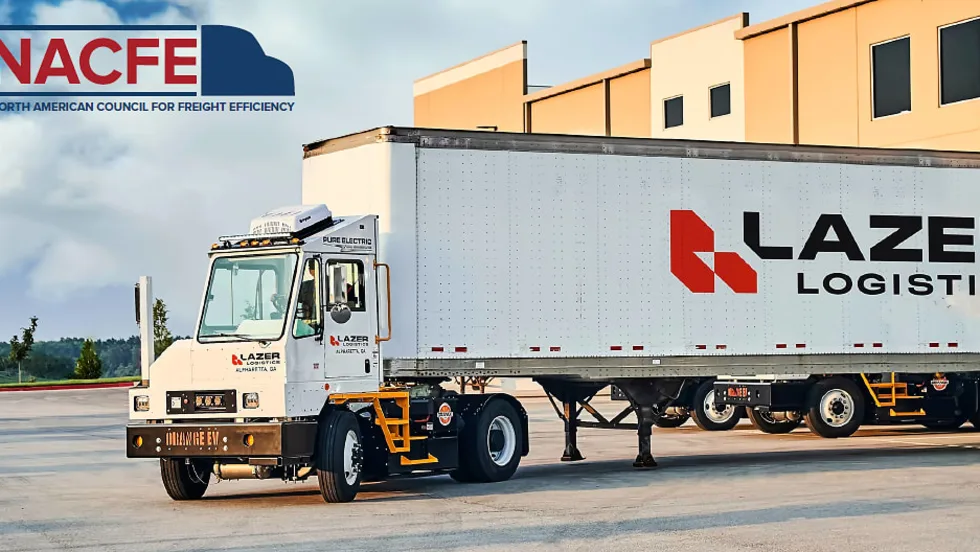
Electric Yard Tractors Move Beyond Pilots
Operating-cost savings have overtaken sustainability goals as the leading reason surveyed fleets are adopting battery-electric terminal tractors, according to new NACFE research.
Read More →
Geotab Links Fleet Card to Vehicle Data
The new card combines fuel discounts with telematics-based purchase controls. Geotab’s analysis also points to potential savings from choosing lower-priced fuel stops.
Read More →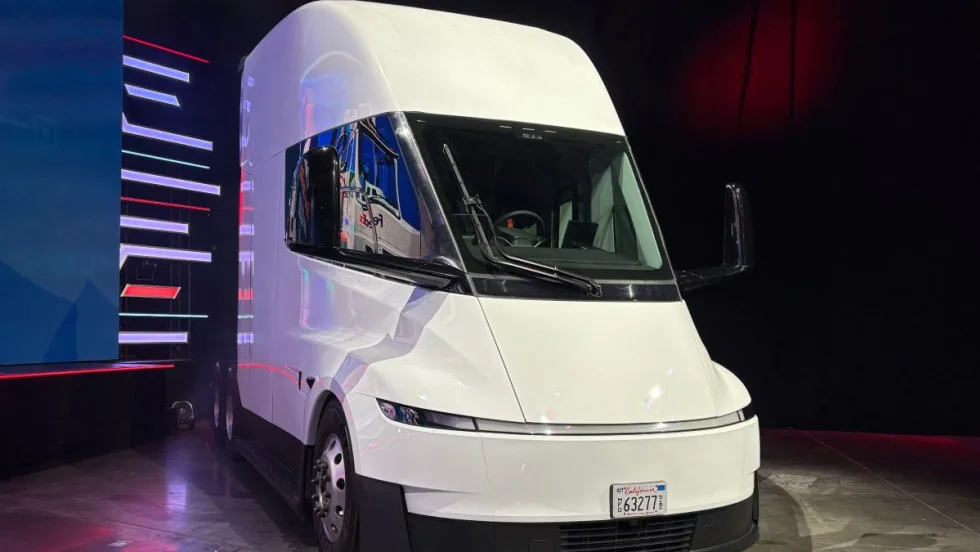
Fleet Economics Shape Electric Truck Outlook
ACT Research expects costs, charging infrastructure, and technology improvements to drive zero-emission commercial vehicle adoption as federal regulations and incentives retreat.
Read More →
Wex Adds Cardless Fuel Payments for Over-the-Road Customers
A new fuel card feature for Wex customers offers convenience and security.
Read More →
New California Law Could Shed Light on Electric Truck Prices
Why do battery-electric Class 8 trucks remain so expensive? A California bill signed by Gov. Gavin Newsom would give fleets and state agencies more visibility into what manufacturers charge.
Read More →
How Volvo Updated Its D13 for EPA 2027 [Watch]
Volvo’s updated D13 promises lower emissions without sacrificing performance or fuel economy. Take a closer look at what changed inside the engine in this HDT Spotlight video.
Read More →
Diesel Price Spike Shortens Payback for Natural Gas Trucks, Report Says
Energy Vision estimates fleets could recover the higher purchase price of an RNG-fueled Class 8 tractor in 1.3 to 2.8 years under current fuel-price scenarios.
Read More →
Calstart Becomes Catalyst Mobility, Reflecting Broader Focus
Calstart is now Catalyst Mobility, reflecting the nonprofit’s growing national role in clean transportation, including zero-emission trucks, infrastructure and incentive programs.
Read More →