




Volvo’s Enhanced 2016 VN Series Trucks Tout Increased Fuel Efficiency
Volvo announced several enhancements to the 2016 VN Series highway tractors designed to improve fuel efficiency compared to previous generations.
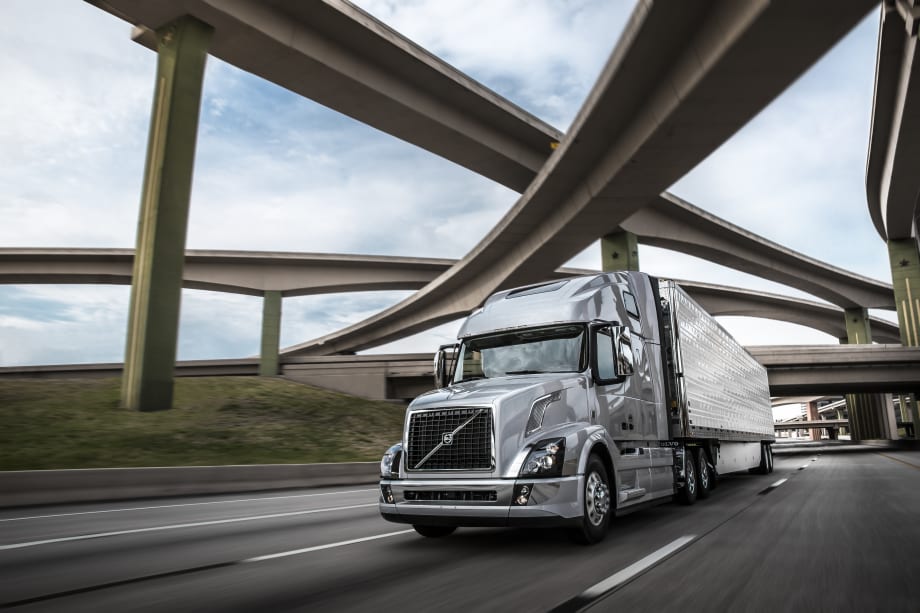
Photo courtesy of Volvo.
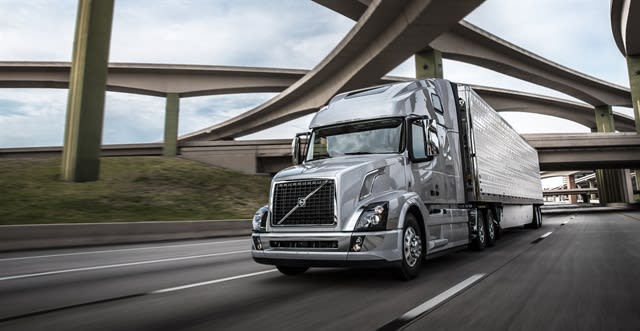
Photo courtesy of Volvo.
Volvo Trucks announced several enhancements to its 2016 VN Series highway tractors designed to improve fuel efficiency compared to previous generations.
Volvo made changes to both aerodynamics and powertrains in the VN trucks in order to deliver the increased fuel savings.
The bumper, chassis and roof fairings of 2016 VN models were adjusted to reduce air turbulence and improve airflow under the truck, around tires and over the trailer gap, increasing fuel efficiency up to 3.5%.
“In real-world operations, an aerodynamic tractor doesn’t guarantee optimal aerodynamics for the tractor-trailer combination,” said Jason Spence, Volvo Trucks product marketing manager. “We’ve made further enhancements at key exterior and interior locations of our model year 2016 vehicles to greatly improve the transfer of air from the tractor to the trailer, ultimately improving the total aerodynamic performance of the complete vehicle.”
Powertrain enhancements were made through adaptive gearing and torque management, which could improve fuel efficiency by up to 2.5%.
Building on its XE – eXceptional Efficiency – powertrain packages, Volvo will be offering an XE-Adaptive Gearing package that optimizes fuel efficiency whether a truck is fully loaded or empty.
The system is both a direct and overdrive driveline depending on rear axle load, which the system senses in real-time. When loaded, the transmission locks out the 12th gear and provides the performance and fuel efficiency benefits of direct drive, says the company.
During unloaded or lightly loaded trips, the driveline operates in overdrive, providing enhanced fuel efficiency and even greater driver comfort. Road speed limits can be set according to loaded and unloaded portions of a trip to fit each fleet's operating needs.
XE-Adaptive Gearing engine ratings will initially be available for Volvo’s D11 and D13 engines paired with an I-Shift automated manual transmission.
There will also be three new torque control features to increase fuel efficiency, prolong tire life, and decrease driveline stress. The control features use Volvo’s multi-torque engine profiles to manage torque for different operating environments.
More Fuel Smarts

East Coast Port Launches $45M Electric Truck Push
The Port Authority of New York and New Jersey announced millions in incentives for zero-emission drayage trucks, yard tractors, and new charging hubs near the port.
Read More →
California Bill Could Shed Light on Electric Truck Prices
Why do battery-electric Class 8 trucks remain so expensive? A California bill headed to Gov. Gavin Newsom would give fleets and state agencies more visibility into what manufacturers charge.
Read More →
Detroit Opens Orders for EPA 2027 Engines
Detroit isn’t starting from scratch to meet EPA 2027 diesel emissions standards. Its Gen 6 DD13 and DD15 engines keep much of today’s platform while updating the fuel and aftertreatment systems.
Read More →
Zero-Emission Truck Corridor Planned for West Coast
California, Oregon, Washington, British Columbia and Baja California are coordinating plans for truck charging and hydrogen fueling from Canada to Mexico.
Read More →
A Closer Look at Kenworth’s Electric T880E Vocational Truck [Video]
Learn more about Kenworth's T880E battery-electric vocational truck at the Paccar Technical Center, including its range, applications, upfitting considerations, and PTO options, in this HDT Spotlight video.
Read More →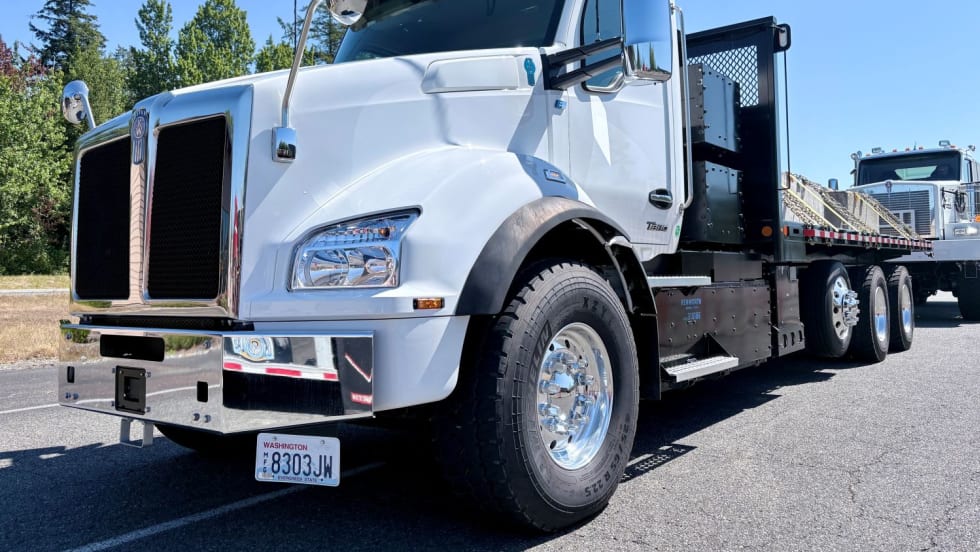
Kenworth T880E Brings EV Power to Vocational Trucks
A closer look at the Kenworth T880E’s range, charging, powertrain and upfit options — and where fleets are showing the most interest.
Read More →
Jennie Abarca Is Proving Electric Trucks Can Do the Job
HDT Truck Fleet Innovator Jennie Abarca is building confidence in fleet electrification one load at a time while openly sharing the challenges she encounters along the way as a small-fleet owner.
Read More →
Cummins Adjusts 2027 Engine Rollout After EPA Proposal
The engine maker will gradually introduce its new Model Year 2027 diesel engines while continuing to offer current models during the transition, citing the EPA's proposed emissions rule changes.
Read More →
EPA Proposal Could Ease 2027 Truck Costs and Buying Uncertainty
The proposal doesn't change the tougher NOx standard, but it would revise key implementation requirements that manufacturers say have driven up costs and complicated fleet purchasing decisions.
Read More →
Cummins, Paccar Ease DEF Derates After EPA Guidance
Updated diesel engine software gives truck operators more time to address emissions-system issues while staying compliant with EPA emissions standards.
Read More →