





Related: Volvo Integrates Advanced Collision Mitigation Into Dash Display
Volvo Demos Active Driver Assist, Available on VN Series
Called Wingman Fusion by Bendix, the system uses radar and a forward-facing camera to detect and identify obstacles ahead, then warn the driver and soon apply the brakes.
October 24, 2016

Car ahead slowed and stopped, but Volvo's ADA, aka Bendix Wingman Fusion Advanced, avoided a collision without driver input except steering.
4 min to read
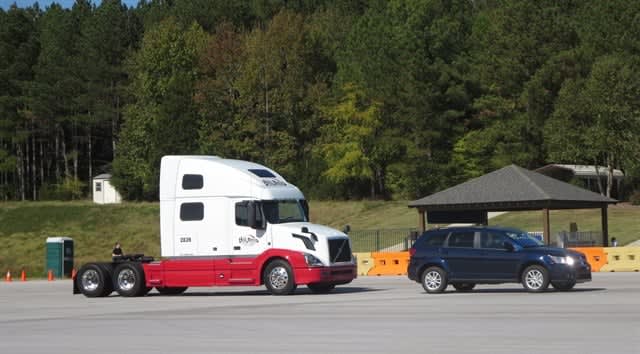
Active Driver Assist senses vehicles ahead and adjusts the truck's speed to match theirs, or stop if need be. Photos: Tom Berg
With safety a priority of Volvo Trucks since its inception 90 years ago, the company Monday rolled out its latest accident reduction offering, Active Driver Assist, at Michelin Tire’s proving grounds near Laurens, South Carolina.
Executives from Volvo Trucks North America and the supplier, Bendix Commercial Vehicle Systems, demonstrated the product’s capabilities and further defined its operating parameters following previous demos this past summer by Bendix.
Also known as Bendix’s Wingman Fusion, the system uses radar and a forward-facing camera to detect and identify obstacles ahead, then starts adjusting the truck's speed by dethrottling while it warns the driver. If he or she fails to take corrective action, it sounds and flashes an alert, and will soon apply the brakes.
Volvo Active Driver Assist also includes an enhanced lane departure warning system that tells drivers if they’re straying from a travel lane.
Volvo engineers have integrated the warnings and other signals into the information display on the dashboard just ahead of the driver so he or she needn’t look to the side to see what it’s saying on an accessory screen. Beeping further alerts the driver that a situation is developing ahead. Intervals of 1.5 to 3.5 seconds can be set before auto-braking comes on, with the longer time for highway speeds and a shorter time for urban situations.
“Camera and radar – two brains working together” to enhance safety, said Ash Makki, Volvo’s product development manager. The camera’s view is 42 degrees ahead and the radar’s beam is 22 degrees wide. The radar sees through smoke, dust, fog, rain and snow, while the camera sees what the driver does.
Video from the camera is constantly recorded. A 20-second portion, 10 seconds before an event and 10 seconds after, is automatically saved when a defined event triggers the mechanism. An event can be anything from a fast lane change and swerving to a collision. A driver can also push a button to record a longer sequence if he deems it useful. Videos are saved on servers at Bendix and accessible by fleet managers.
A Volvo customer, McKenzie Tank Lines of Tallahassee, Florida, used a video to prove its driver was not at fault in an incident, said its vice president of maintenance, Jim Kennedy. He showed one in which an oncoming pickup truck had crossed a double-yellow line and was in the McKenzie rig’s lane. The rig’s driver swerved onto the shoulder to avoid a head-on crash, but the pickup clipped the trailer’s rear tandem, then ran off the road.
“The pickup’s driver swore we were in his lane,” Kennedy related, “and our insurance people said everybody was getting lawyered up… The video showed otherwise and the lawyers all began peeling away.”
McKenzie is an early adopter of safety technology and is ordering tractors with the new system, Kennedy said. Since it started using previous forward collision mitigation systems in 2003, McKenzie has reduced frontal collisions, “where we hit the rear of another vehicle,” from 10 per year to none so far this year. And all the tractors that had those accidents lacked the radar-based warning systems, he noted, because the new systems were being introduced on newer trucks.
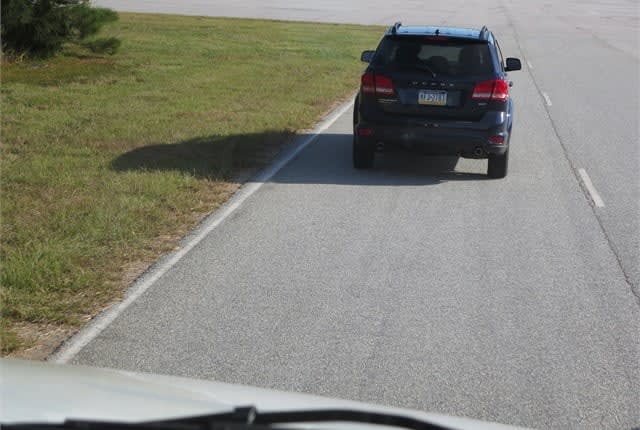
Car ahead slowed and stopped, but Volvo's ADA, aka Bendix Wingman Fusion Advanced, avoided a collision without driver input except steering.
The radar antenna is mounted in a tractor’s front bumper and the radar detects metallic objects. It feeds signals to the system’s electronic controls, which analyze them with help from camera images; they verify that the object is a car or other motor vehicle, explained Fred Andersky, Bendix’s director of customer solutions and government affairs. It does that by seeing tail lights and a license plate, among other features.
If a car is crossways in the road ahead, the camera will probably not recognize it, because it is more complex and variable, he continued. Brakes will not automatically apply because it might not be a vehicle at all, but a railway or highway overpass, he explained, “and you wouldn’t want the brakes to come on at highway speeds just because there’s an overpass up there.”
Limits to what the system does helps retain professional drivers’ role in operating the truck, he and others explained. That’s also why braking at speeds below 15 mph is curtailed unoless it’s obvious that a collision is imminent. The system is being refined to recognize other objects, including speed limit signs so it can warn of a driver speeding.
Volvo Active Driver Assist is available now on Volvo VNL and VNM road tractors, and is being integrated into other highway models, said Wade Long, director of product marketing.
More Products

More Trailer Data Through the Same Seven-Way [Video]
Can trucking’s standard seven-way connector handle more cameras and trailer data? Grote’s Adam Slade shows HDT how the company is using new technology with its 4See trailer system, not only to add a new backup camera but also to expand other capabilities — without adding another connection.
Read More →
FlowBelow Redesigns Trailer AeroSlider to Cut Fuel Use
The lighter trailer aerodynamic system installs in less than 45 minutes, according to the company, with potential payback in under a year depending on fuel prices and trailer mileage.
Read More →
Shell Prepares Rotella Oils for 2027
New CL-4 and FB-4 formulations will begin arriving in early 2027, with improved protection against oil breakdown, wear and deposits, according to Shell.
Read More →
Einride Driverless Electric Trucks Begin Daily Freight Operations in Ohio
Two cabless electric trucks are hauling freight between EASE Logistics facilities in Marysville, Ohio, as part of a multi-state truck automation project.
Read More →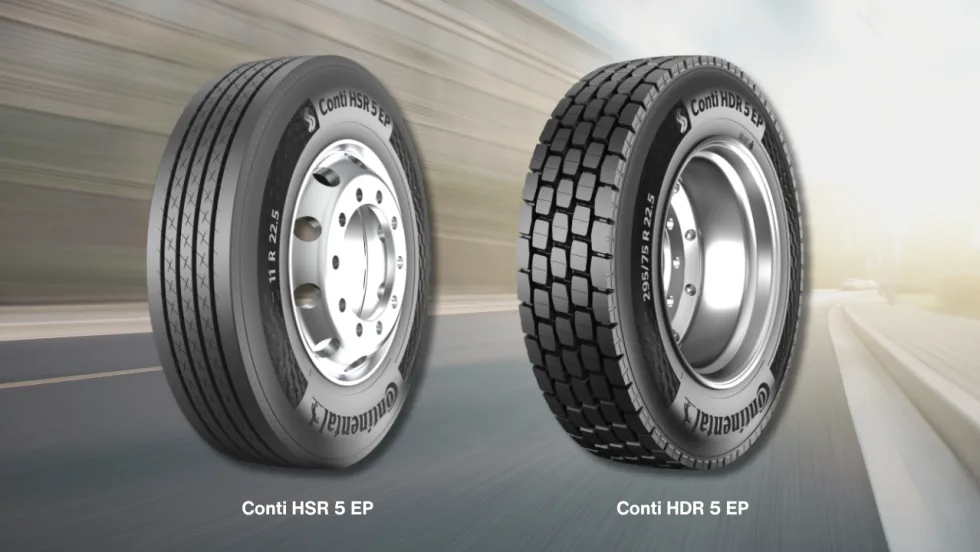
Continental Introduces New Regional Truck Tires
Continental says its new Generation 5 steer and drive tires for regional operations offer longer tread life, with estimated mileage gains of 22% and 19%, respectively.
Read More →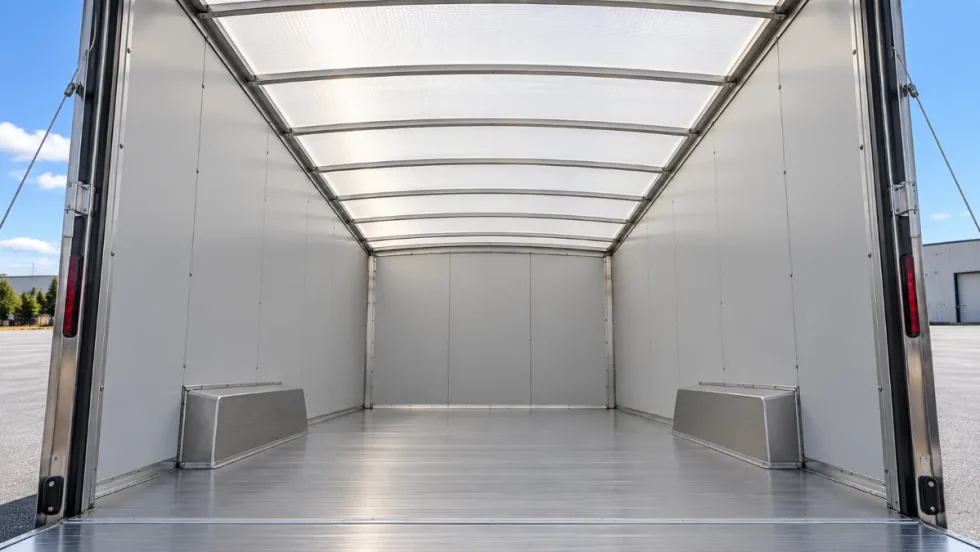
Tekmodo Introduces CargoBright Brand for Translucent Trailer Roofs
CargoBright is designed to diffuse daylight across the cargo area while performing as a working vehicle roof.
Read More →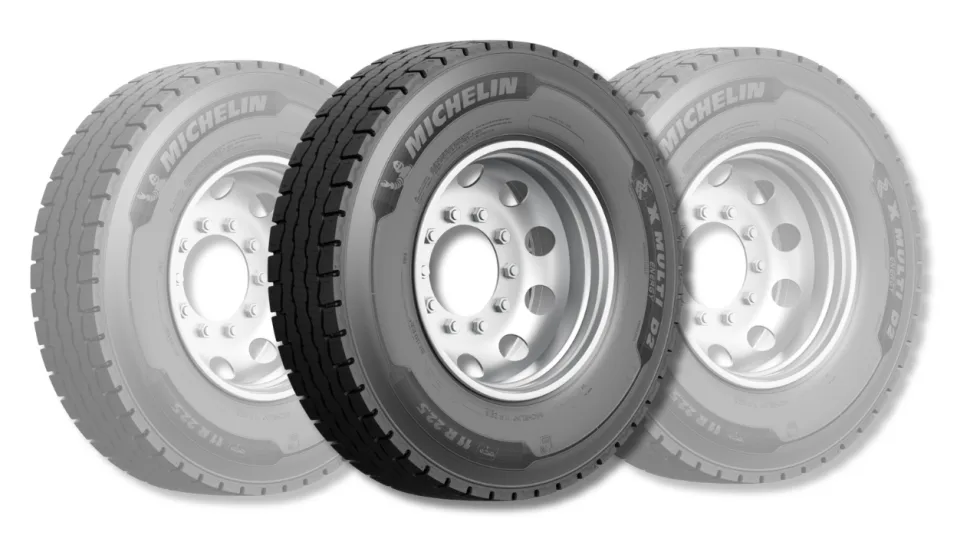
Michelin Tire Improves Efficiency and Durability for Regional Fleets
The Michelin X Multi Energy D2 is a regional haul drive tire engineered to help fleets improve fuel efficiency, durability and traction in demanding stop-and-go operations.
Read More →
What Geotab's New AI Connector Means for Fleets
Fleets can now ask their usual AI assistants questions about maintenance, safety, fuel use, and vehicle performance, using their live Geotab data, and take action on the answers without leaving their preferred AI tool.
Read More →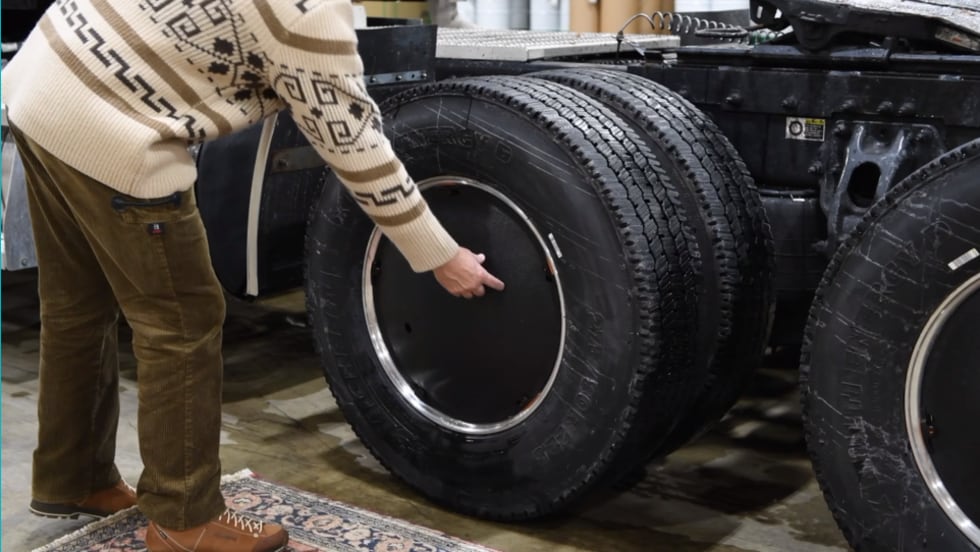
Deflecktor: Hubbub Aerodynamic Wheel Cover Cost-Effective Even for Trailers
Aerodynamic wheel covers can deliver small but meaningful fuel-economy gains for fleets, and Deflecktor says its latest design aims to make the technology easier and more affordable to deploy.
Read More →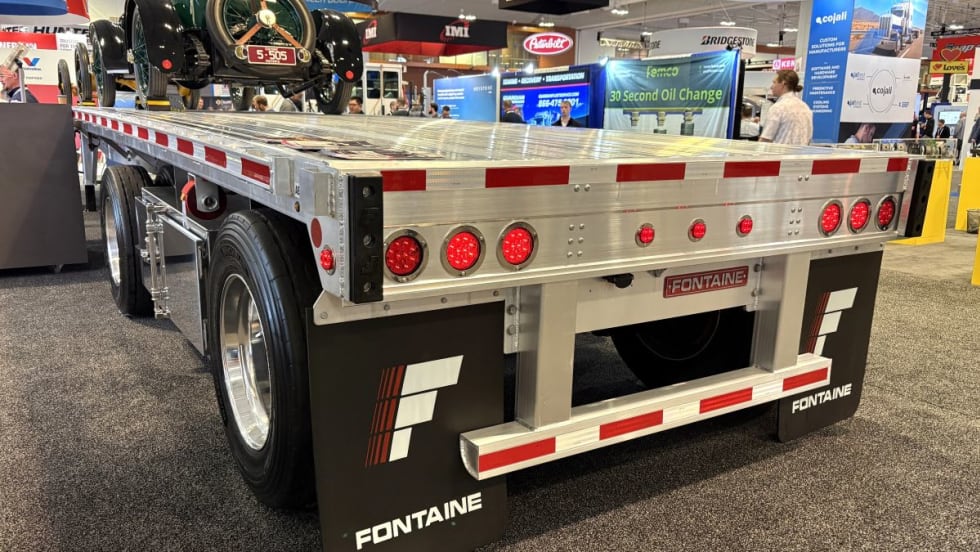
Fontaine Expands Flatbed Lineup with New Fleet-Focused Models, Eyes 2027 Launch
Fontaine is broadening its flatbed lineup with new models aimed at fleets, including a lightweight aluminum trailer expected in 2027 that emphasizes durability, repairability, and lower cost.
Read More →