




Virginia Tech Transportation Institute Awarded $55 Million from FMCSA, NHTSA
The Virginia Tech Transportation Institute has been awarded two federal contracts worth a combined potential $55 million to further study safety efforts for commercial truck drivers and conduct research in the field of automated vehicles.

Richard Hanowski
The Virginia Tech Transportation Institute has been awarded two federal contracts worth a combined potential $55 million to further study safety efforts for commercial truck drivers and conduct research in the field of automated vehicles.
The contracts are being awarded by the Federal Motor Carrier Safety Administration, with a ceiling of $30 million for a five-year period, and the National Highway Traffic Safety Administration, at a maximum of $25 million also over five-years. The contracts are the largest of their kind awarded to the institute in its 25-year history.
“These awards are a testament to the growth of this institute and to the dedication of our researchers who continually strive to be forward thinkers, to take into consideration the greatest transportation challenges not only of today but those of the future,” said Tom Dingus, director of the Virginia Tech Transportation Institute and an endowed professor of Civil and Environmental Engineering at the College of Engineering at Virginia Tech.
The $30 million award builds on a previous five-year, $10 million contract from the FMCSA. Among the work from the previous contract was research concluding that text messaging while driving increases the risk of a crash or near-crash event by 23 times for truck and bus drivers, according to VTTI, as well as separate research that helped shape current hours-of-service rules, both headed by Richard Hanowski, director of the institute’s Center for Truck and Bus Safety.
Hanowski will head the new research. Among the areas outlined by the Federal Motor Carrier Safety Administration are research into driver performance, such as fatigue and distraction.
The work is expected to take multiple years and includes the use of a naturalistic driving video capture technique, according to the institute, which places multiple cameras inside and outside a vehicle, unobtrusively recording the participant driver as they interact with the vehicle and the road while traveling.
Much of the institute’s current crop of research, from distracted driving to research involving the actions of teen and senior motorists, has stemmed from using video capture, with more than 40 million miles of data analyzed.
Additional potential tasks include vehicle handling and braking, vehicle dynamics, and other characteristics that influence driver behavior, said Hanowski.

Richard Hanowski
“We have a strong team in place to explore, clarify, or resolve human factors and other safety issues that require human behavior and performance data, collected using on-road instrumented vehicles, field settings, and simulation in advanced driving simulators,” he said. “The institute has conducted several important studies for the Federal Motor Carrier Safety Administration that have helped shape transportation policy in the U.S. and worldwide, and we are excited for the opportunity to continue our relationship with the agency through this new award.”
The $25 million contract from the National Highway Traffic Safety Administration is being awarded to Myra Blanco, who heads the institute’s new Center for Automated Vehicle Systems.
The award focuses on research, including safety protocols, of automated-vehicle technology that is expected to flood the automotive market during the next decade and beyond.

Myra Blanco
Blanco will study vehicle electronic systems, including electronic controls of the vehicle, seek reinforcements to block potential hacking of vehicles, and identify potential safety issues, including fail-safe systems, according to VTTI.
“We are going to take a wide-view approach at looking at the different sub-systems inside the vehicle, and we’re going to look at the human interactions with the vehicle, as well as the several key reliability aspects,” said Blanco.
Work by Blanco will build upon previous collaborations between the institute and General Motors and Google, according to VTTI, including research focusing on how motorists interact with automated vehicles, such as letting the car autonomous programming take driving control duties, and the need or possibility of the a human commandeering the operation of the car.
More Safety & Compliance
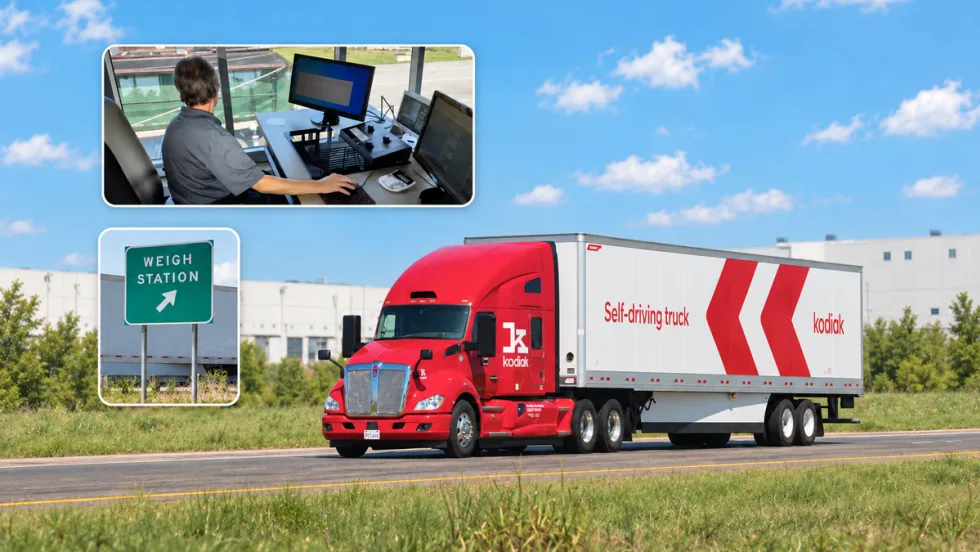
PrePass, Kodiak Connect Driverless Trucks to Roadside Enforcement
The system will allow enforcement agencies to verify Enhanced Inspection information and decide whether Kodiak’s autonomous trucks can bypass roadside screening sites.
Read More →
From One Generation to the Next: How Mentorship Builds Safer Truck Drivers
After three decades in trucking, Harold Perry shares what he's learned about driver safety, mentorship, and helping the next generation build confidence behind the wheel.
Read More →
FMCSA Pauses Biennial-Update Enforcement Amid Motus Transition
Carriers whose updates were due on or after June 1 have more time, while FMCSA works to stabilize its new registration system and warns of phishing sites impersonating its new carrier registration system, Motus.
Read More →
ZF Expands Commercial Vehicle Push in North America
ZF is expanding its North American commercial-vehicle presence with new transmission applications, electrification, trailer technology and autonomous-driving systems.
Read More →
Truck Drivers Need More Than Another Alert
Fleets have more visibility into truck health, safety events, and driver activity than ever. The next challenge is turning all that information into useful guidance for the person who has to decide what to do next.
Read More →
Tesla Wants a Self-Driving Semi. Are Cameras Enough?
Could Tesla’s camera-only autonomous driving technology work on an 80,000-pound Semi? In this commentary, HDT's Deborah Lockridge takes a look at Tesla, Cybercab, and how autonomous trucks see the road.
Read More →
What DOT’s Automated Vehicle Strategy Means for Trucking
The U.S. Department of Transportation issued a new automated-vehicle strategy that outlines plans for driverless-truck regulations, cross-state freight corridors, and federal safety standards.
Read More →
NYC Expands Speed, Pedestrian Safety Tech Across Fleet
New York City is expanding intelligent speed assistance and pedestrian-alert systems across its municipal fleet, moving the technologies from pilot programs into vehicle procurement and retrofit requirements.
Read More →
FMCSA Removes 110 Truck Driver Training Schools from Certified ELDT List
Federal regulators also are targeting more than 160 additional training providers and launching a nationwide audit of third-party CDL skills testers as part of a broader crackdown on trucking fraud.
Read More →
Beyond DOT Compliance: What Makes a Trucking Fleet Truly Safe?
A trucking fleet can follow every rule and still make unsafe decisions. The real test comes when safety conflicts with freight, productivity, or cost.
Read More →