





Owner-Operator Model in Trucking Continues to Face Challenges
Truck Leasing Task Force: Congress Should Ban Lease-Purchase Programs
In a damning report, the Truck Leasing Task Force assembled by the Federal Motor Carrier Safety Administration recommended that Congress ban motor carrier lease-purchase agreements with truck drivers, calling these programs “irredeemable tools of fraud and driver oppression.”
January 22, 2025
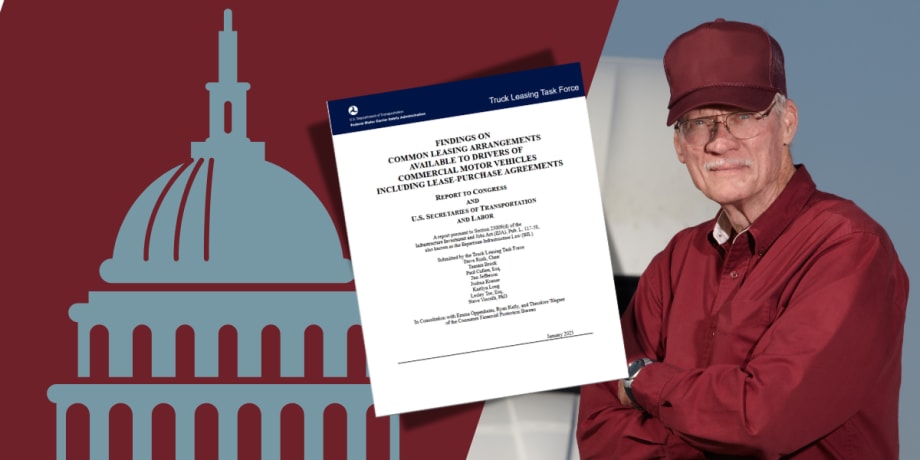
Are motor carrier lease-purchase programs a path for truck drivers to become an owner-operator? Or do they only benefit the carrier?
HDT Graphic
6 min to read
In a damning report, the Truck Leasing Task Force assembled by the Federal Motor Carrier Safety Administration recommended that Congress should ban motor carrier lease-purchase agreements with truck drivers, calling these programs “irredeemable tools of fraud and driver oppression.”
Motor carriers have long tried to help create owner-operators through lease-purchase programs. And truck drivers have long complained that many of these programs are predatory.
A Truck Leasing Task Force formed by the Federal Motor Carrier Safety Administration under the Biden administration has issued a report to Congress recommending that they pass a law to ban such programs – or at least create more significant oversight.
However, with a new, more regulation-averse administration and Congress in Washington, D.C, it's unclear if the report will lead to any changes.
The Truck Leasing Task Force
Created and authorized by a provision in the most recent highway bill, the Infrastructure Investment and Jobs Act, the TLTF examined lease-purchase programs involving a motor carrier or the motor carrier’s affiliate.
It did not address third-party truck lease-purchase programs.
If Congress decides not to ban motor carrier lease-purchase programs, the task force recommended significant Congressional and agency oversight of the programs by FMCSA, the Department of Labor, and the Consumer Financial Protection Bureau.
The transportation attorneys at Scopelitis, Garvin, Light, Hanson & Feary noted in an email alert that the task force had a significant presence from the Owner-Operator Independent Drivers Association and the Teamsters Union, staunch opponents of lease-purchase programs.
“The makeup of the TLTF was generally prescribed by Congress but the individuals were selected by the FMCSA,” it said.
They also noted that many of the task force’s recommendations would require legislation by Congress or regulations by FMCSA to implement.
“Given the prescriptive nature of the recommendations… it is unclear how much appetite there will be for further economic regulation of the industry,” said the Scopelitis alert.
On the other hand, President Trump’s nominee for secretary of labor has expressed support for unions.
Are Owner-Operator Lease-Purchase Programs 'Designed to Fail'?
The Truck Leasing Task Force report was issued to Congress, the U.S. Department of Transportation, and the U.S. Department of Labor on January 16.
The Owner-Operator Independent Drivers Association hailed the report, which it said “unequivocally calls for an end to predatory truck lease-purchase agreements.
“During several meetings hosted by the Federal Motor Carrier Safety Administration, the task force characterized these programs as fraudulent and oppressive, concluding that they are irredeemable and should be banned,” OOIDA said.
OOIDA has voiced similar concerns for decades.
In a report for the task force, the Consumer Financial Protection Bureau documented how these truck leases differ from conventional financing agreements for automobiles and other vehicles, including confusing earnings and expenses projections, broad default provisions, and inducing drivers to relinquish trucks, according to OOIDA.
“Drivers make payments but accrue no equity,” said Ryan Kelly of CFPB in an OOIDA news release. “With a 90% failure rate, these programs are designed to fail — not by accident, but by intent.”
A Damning Picture of Lease-Purchase Programs
The task force report painted a damning picture of lease-purchase programs.
Defenders of lease-purchase agreements argue that these programs are a pathway for many truck drivers who lack capital and business experience to buy a truck and become a successful small-business owner.
But the task force consensus was that such programs, where a motor carrier controls the work, compensation, and debts of the driver, should be prohibited.
“Lease-purchase programs are regularly established to enrich motor carriers at the expense of drivers,” said the report.
“Currently there are no effective checks on these programs or remedies for drivers harmed by them. Litigation, currently the only avenue for relief, can provide some remedy for the drivers involved, but has not led to reform of these programs.
“The Task Force heard no evidence that lease-purchase arrangements were an important means for drivers to achieve truck ownership or to become small business owners,” said the task force in the report.
“In fact, all the comments and data TLTF saw suggested that driver success is rare enough that programs seem designed to ensure failure for the overwhelming majority of drivers. Lease-purchase contracts appear to be drafted with only the motor carrier’s profitability and mitigation-of-risk in mind.”
Data TLTF collected that suggests that fewer than 1 in 100 drivers who participate in a lease-purchase end up owning the truck.
If lease-purchase programs are allowed to continue, said the task force, they should be subject to a number of conditions “that mitigate the inherent power imbalance of motor carriers over drivers and ensure that drivers understand the likely outcomes of the contracts they will be signing.”
What Are Lease-Purchase Programs in Trucking?
The lease-purchase programs that the task force was focused on are the arrangements between a motor carrier (or an affiliated company) and a truck driver.
The truck driver obtains a truck through a financing arrangement with the motor carrier, then signs another agreement to work for the motor carrier, all with the promise that they will earn the income needed to meet the financial obligations under the truck financing agreement, including payments for the truck and most or all of the expenses and repairs associated with its operation, explained the task force report.
"These drivers are almost always classified by the motor carrier as an independent contractor despite the fact that the carrier has near or total control over the driver and their operation," it said.
“While the term lease-purchase contains the word “purchase,” drivers often mistakenly believe that they are accruing equity in the truck,” the report said.
“Sometimes a lease may contain language that allows the driver to buy the truck by making a payment at the end of the lease equal to the value of the truck. In the evidence presented to the Task Force, very few drivers make it to the end of the lease-purchase agreement and take possession of a truck.
"At the (often early) end of their lease-purchase relationship with motor carriers, drivers are often surprised to learn that they have accrued no equity in the truck.”
If lease-purchase programs are allowed to exist, the task force recommended that motor carriers be required to disclose, among other things, how these issues function when the driver is reviewing the contract before signing it.
Recommended Oversight of Motor Carrier Lease-Purchase Programs
The task force suggested that as an alternative to banning lease-purchase programs that Congress put significant oversight in place. The report detailed a long list of recommended oversights, for example:
Congress should pass whistleblower protection legislation for drivers reporting lease purchase programs to FMCSA, the Consumer Financial Protection Bureau, and the Department of Labor.
FMCSA should mandate detailed records of the experience of individuals who signed agreements, including numbers such as take-home pay, average mileage, the number of drivers who complete a lease term and/or buy out a truck; information on the deductions fleets take from these drivers’ settlements.
FMCSA and the Department of Labor should create educational materials for drivers.
FMCSA should develop a Model or Required Disclosure Form for lease-purchase agreements, as well as a Model or Required Set of Contract Provisions.
DOL should conduct targeted audits and enforcement of companies deploying lease-purchase programs to ensure compliance with DOL regulations concerning employee misclassification and independent contractor status.
DOL should support National Labor Relations Board actions that support unions in the trucking industry.
The Consumer Financial Protection Bureau should exercise its authority to enforce its regulations governing financial products and services to lease-purchase programs in trucking including the Truth in Lending Act.
More Drivers

Truck Drivers Need More Than Another Alert
Fleets have more visibility into truck health, safety events, and driver activity than ever. The next challenge is turning all that information into useful guidance for the person who has to decide what to do next.
Read More →
FMCSA Removes 110 Truck Driver Training Schools from Certified ELDT List
Federal regulators also are targeting more than 160 additional training providers and launching a nationwide audit of third-party CDL skills testers as part of a broader crackdown on trucking fraud.
Read More →
Hours of Service Pilot Programs: FMCSA Readies for 2027 Rollout
Two pilot programs could eventually reshape hours-of-service rules, giving truck drivers options to pause their 14-hour clock or use longer split sleeper rest periods.
Read More →
Medical Cards, English Proficiency Reshape Roadcheck Violations
Medical-card violations jumped to the top of the driver out-of-service list during CVSA’s 2026 International Roadcheck, while English-language proficiency violations appeared among the leading violations for the first time.
Read More →
Driver Trust Can Make or Break the Success of Fleet Safety Technology
New Teletrac Navman research suggests that onboarding, transparency about driver data, and positive feedback can play a significant role in how commercial drivers respond to safety and coaching technology.
Read More →
EEOC Sues KLLM Over Alleged Sex Discrimination in Driver Training
KLLM is facing a federal sex-discrimination lawsuit over policies the EEOC alleges put female truck driver trainees at a disadvantage.
Read More →
FMCSA Moves to Codify English Language Requirements for Commercial Drivers
By changing regulations on English-language proficiency requirements for commercial drivers, rather than relying on a guidance memo, the FMCSA said future administrations won't be able to walk back the Trump administration's stricter enforcement with just a memo.
Read More →
Drivers Put Western Star Trucks to the Test at Star Nation Experience
Watch to get an inside look at the Western Star trucks, technology, and community behind the Star Nation Experience 2026!
Read More →
Trump Administration Looks to Put More Veterans Behind the Wheel
The Freedom Haulers program pulls together existing and expanded programs at several federal agencies to recruit veterans to drive commercial heavy-duty trucks and cut the red tape for them to get a CDL, training, and employment.
Read More →
Putting Mack’s Command Steer to the Test
A test drive of Mack’s Command Steer active steering system evaluates how it can make truck driving easier and less tiring.
Read More →